
 Call Us Now!
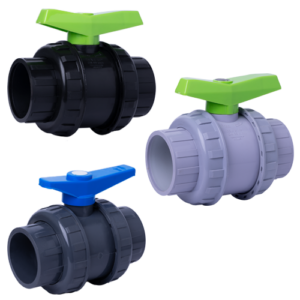
A union ball valve is specifically designed to be removed, inspected, and replaced without cutting a single pipe. It is the valve of choice for systems that require regular maintenance, chemical dosing lines that need periodic servicing, and any installation where future access cannot be sacrificed for the sake of a slightly lower unit price. But buying union ball valves incorrectly is a surprisingly common and consistently costly mistake — one that defeats the very purpose of choosing a union configuration in the first place. From specifying the wrong connection size to ignoring seat material compatibility, from overlooking pressure ratings to accepting uncertified products from unverified suppliers, the errors made during procurement show up later as leaks, seized union nuts, chemical damage, premature seal failure, and maintenance jobs that take three times longer than they should because the wrong valve is installed in the wrong place. In this complete buyer’s guide, you will learn the 11 most common mistakes made when buying union ball valves — and exactly what to do instead. Whether you are specifying valves for a new installation or replacing existing valves in a maintenance programme, this guide will protect your specification, your budget, and your system’s long-term performance.
Table of Contents
ToggleWhat Is a Union Ball Valve and Why Does the Buying Decision Matter?
A union ball valve is a quarter-turn shut-off valve with removable union end connections on one or both sides — allowing the valve body to be completely disconnected from the pipeline without cutting the pipe, without draining large sections of the system, and without specialist tooling. The union nuts unscrew, the valve body is removed, and a replacement slides in.
This makes union ball valves the preferred choice for chemical dosing systems, water treatment plants, pool and spa circulation, irrigation networks, and any industrial piping system where the valve will need periodic inspection, cleaning, or replacement during its operational life.
The global plastic valve market is projected to exceed USD 12 billion by 2028, driven by growing demand in water treatment, agriculture, and chemical processing sectors. With demand growth comes market complexity — and union ball valves from dozens of manufacturers are now available at every price point, with wildly different quality levels hidden behind similar catalogue descriptions and product photography.
The buying decision matters because a union ball valve that is incorrectly specified, poorly manufactured, or made from incompatible materials does not simply underperform — it actively undermines the maintenance advantage you purchased it to gain. The 11 mistakes below are the ones that most consistently turn a smart engineering choice into an expensive problem.
Union Ball Valve vs Standard Ball Valve — Key Differences
Understanding what makes a union ball valve different from a standard two-piece ball valve is essential before exploring the mistakes buyers make. This comparison clarifies why the union design commands a price premium — and why that premium is almost always justified for maintenance-intensive applications:
| Feature | True Union Ball Valve | Standard Two-Piece Valve |
|---|---|---|
|
Valve removal method |
Unscrew union nuts — no pipe cutting required |
Must cut the pipe on both sides to remove |
|
Maintenance access |
Full valve body removable in minutes |
Requires pipe cutting and re-jointing |
|
System downtime |
Minimal — only the valve section is isolated |
Significant — extended shutdown to re-pipe |
|
Replacement ease |
Direct body swap — same union connections |
Full re-installation required |
|
Best application |
Chemical dosing, water treatment, pool systems |
Fixed permanent installations, low-access |
|
Long-term maintenance cost |
Lower — fast in-place servicing |
Higher — labour-intensive replacement |
|
Initial cost |
Higher (10–25% premium over two-piece) |
Lower upfront price |
Why Buying Mistakes Happen So Often with Union Ball Valves
Union ball valves involve more specification variables than standard two-piece valves — body material, seat material, union nut thread standard, end connection type, bore configuration, pressure-temperature rating, and certification requirements all interact. In a busy procurement environment, these variables are often under-specified, assumed, or simply overlooked.
Add to this the market complexity of dozens of suppliers at every price point using near-identical catalogue descriptions — and the conditions for specification errors are almost guaranteed. The 11 mistakes below cover the full spectrum, from basic sizing errors to subtle material compatibility failures that only manifest months after installation.
Mistake 1 — Confusing Union Ball Valves with Standard Two-Piece Valves
The most fundamental mistake is ordering a standard two-piece PVC ball valve when a true union valve is required — or vice versa. Both products are often listed with similar descriptions, similar photographs, and similar prices on online procurement platforms. Without specifying “true union” explicitly, suppliers may fulfil an order with whatever is in stock.
How to Avoid It
- Always specify “True Union Ball Valve” explicitly in your purchase order — not just “union” or “plastic ball valve”
- A true union valve has two removable union end adaptors held by union nuts — confirm this in the product description or technical datasheet
- If ordering from a new supplier, request a product photograph showing the union nut connection before confirming the order
- Verify that the valve can be removed from the pipeline without cutting — this is the defining functional test
Mistake 2 — Selecting the Wrong Pipe Connection Size
Union ball valves are available in sizes from 1/4 inch to 4 inches and above. Specifying the wrong size results in a valve that either does not fit the pipeline or — more dangerously — appears to fit but is either over-sized for the flow requirement or under-sized in a way that creates excessive pressure drop and flow restriction.
A second common size error is confusing the valve’s nominal pipe size with the actual internal bore. Full port (full bore) union ball valves have an internal bore matching the pipe bore — giving unrestricted flow. Standard port valves have a smaller internal bore — fine for most applications but incorrect for systems requiring maximum flow or for pigging/cleaning operations.
How to Avoid It
- Always specify the nominal pipe size AND whether full port or standard port is required
- Verify the union end connection diameter matches the pipe outside diameter for the pipe schedule being used
- For chemical dosing systems, confirm the internal bore is sized for the required flow rate at operating pressure
- Never assume that a valve’s nominal size corresponds to a specific bore diameter — always check the datasheet
Mistake 3 — Ignoring the Pressure-Temperature Rating
Every union ball valve carries a maximum pressure rating — but that rating applies at a specific temperature, typically 23°C (73°F) for plastic body valves. As operating temperature increases, the allowable working pressure drops significantly. This relationship — shown on a Pressure-Temperature (P-T) Derating Curve — is one of the most consistently overlooked specifications in plastic valve procurement.
A PVC union ball valve rated at 150 PSI at 23°C may only be rated at 60 PSI at 60°C. Specifying that valve on a hot water system running at 90 PSI and 55°C is specifying a valve operating outside its safe range — and the failure mode is typically a gradual joint weep that progresses to a full leak or burst union nut.
How to Avoid It
- Obtain the P-T Derating Curve from the manufacturer before finalising specification
- Identify both your maximum operating temperature AND your maximum operating pressure — not just one
- Apply a minimum safety factor of 1.5x when calculating the required pressure rating at operating temperature
- For applications above 60°C, evaluate CPVC or polypropylene union ball valves rather than standard PVC
Mistake 4 — Choosing the Wrong Body Material
Union ball valves are manufactured in a range of body materials — standard PVC, CPVC, polypropylene (PP), PVDF, and stainless steel. Each material has a defined temperature range, chemical resistance profile, and mechanical property set. Choosing the wrong body material for the operating environment can cause rapid degradation, chemical attack, or mechanical failure.
| Material | Max Temp | Max Temp | Avoid For | Relative Cost |
|---|---|---|---|---|
|
PVC / UPVC |
60°C / 140°F |
Cold water, mild chemicals, irrigation |
Hot water, aromatic solvents |
Lowest |
|
CPVC |
93°C / 200°F |
Hot water, chemical process, fire systems |
Ketones, THF, aromatic solvents |
Medium |
|
Polypropylene (PP) |
80°C / 176°F |
Acids, alkalis, food-grade, pharmaceutical |
Strong oxidisers, aromatic hydrocarbons |
Medium |
|
PVDF |
130°C / 266°F |
Aggressive chemicals, high-purity systems |
Strong bases at high concentration |
High |
Mistake 5 — Selecting an Incompatible Seat Material
Inside every union ball valve are two seat rings — soft elastomer or PTFE seals that press against the ball to create a leak-proof closure. Seat material must be chemically compatible with the process fluid. An incompatible seat will swell, soften, or disintegrate — causing leakage and contamination of the fluid stream.
Seat Material Selection Guide
- EPDM seats: Excellent for water, hot water, mild acids, alkalis, and ketones. Not compatible with oils, petroleum, or chlorinated solvents
- PTFE seats: Broadest chemical resistance — compatible with most acids, alkalis, solvents, and aggressive chemicals. Slightly more susceptible to cold-flow under high cycle load
- FKM / Viton seats: Excellent for oils, petroleum products, fuels, and chlorinated solvents. Not suitable for ketones, acetone, or strong bases
- EPDM with PTFE encapsulation: Combines flexibility of EPDM with PTFE chemical resistance — premium option for aggressive applications
Always consult the manufacturer’s chemical resistance chart for your specific fluid, concentration, and operating temperature before specifying seat material. Generic compatibility assumptions are one of the leading causes of premature seat failure in union ball valve installations.
Mistake 6 — Overlooking End Connection Type
Union ball valves connect to the pipeline through their end adaptors — and these adaptors come in multiple connection types. The wrong end connection type creates installation problems that are expensive to resolve once the valve has been ordered.
Common End Connection Errors
- Ordering socket/solvent weld ends when the system has threaded connections — or vice versa
- Specifying BSP threads when the pipeline uses NPT threads — these are not interchangeable
- Ordering Schedule 40 socket ends for a Schedule 80 pipeline — different bore dimensions
- Failing to confirm the union nut thread standard matches the existing installation for replacement valves
Always confirm the pipe standard (ASTM, BS, DIN), thread standard (BSP or NPT), and pipe schedule (40 or 80) before specifying end connection type. For replacement valves, physically measure the existing union nut thread diameter and pitch before ordering.
Mistake 7 — Skipping Certification Verification
Certification claims on a product listing or supplier website are easy to make and impossible to verify without the actual certificate documents. Yet the majority of buyers never request certificates before ordering — creating the conditions for non-compliant products to enter regulated piping systems.
Key Certifications for Union Ball Valves
- ISO 9001:2015 — Quality management system covering the manufacturer’s facility and processes
- NSF/ANSI 61 — Potable water contact certification — mandatory for drinking water and irrigation applications
- WRAS (UK) — Water Regulations Advisory Scheme approval for UK water supply installations
- ASTM D1784 — Material compliance for rigid PVC and CPVC compounds
- FDA compliance — Required for food-grade and pharmaceutical contact applications
Request the actual certificate documents — not a website badge or a catalogue claim. Verify every certificate number on the issuing body’s public register. A manufacturer who cannot provide certificate documents within 48 hours of a request is almost certainly not in compliant possession of those certifications.
Mistake 8 — Buying on Price Alone
Union ball valves are maintenance valves — their entire value proposition is the ability to be removed and replaced quickly in service. A union ball valve that costs 30% less but seizes after 12 months, cracks under thermal cycling, or has a union nut that strips on its second removal has not saved money — it has eliminated the primary reason for choosing a union design in the first place.
The total cost of a union ball valve failure in a chemical dosing or water treatment system includes emergency repair labour, system downtime, chemical waste, potential contamination, and the cost of the replacement valve — typically 10 to 20 times the original valve price.
How to Evaluate True Value
- Request service life data and field failure statistics from the manufacturer
- Compare total cost of ownership over a 10-year system life, not just unit price
- Ask for customer references from similar applications — speak directly to maintenance engineers
- Evaluate whether the union nut action is smooth and repeatable — test on a sample valve before committing to volume
Mistake 9 — Ignoring Union Nut Thread Compatibility
If you are replacing existing union ball valves in an installed system, the union nut thread standard of the new valve must match the end adaptors already solvent-welded or threaded into the pipeline. There is no standard thread specification for union nut connections — different manufacturers use different thread forms, pitches, and diameters. A replacement valve from a different manufacturer may look identical but have a union nut that does not engage correctly with the installed end adaptors.
How to Avoid It
- When replacing an existing union ball valve, always quote the original manufacturer and model number
- If the original brand is unavailable, physically measure the installed end adaptor thread — diameter, pitch, and thread form (parallel or tapered)
- Purchase a replacement valve and test the union nut engagement on the installed adaptor before committing to volume replacement orders
- Where possible, standardise on a single brand of union valve and end adaptors across an installation to eliminate cross-brand compatibility risk
Mistake 10 — Not Accounting for Thermal Expansion
Plastic piping systems expand and contract significantly with temperature changes. A CPVC pipe carrying 80°C water expands at approximately 0.06mm per metre per degree Celsius — meaning a 10-metre run can expand by 36mm between cold start and operating temperature. Union ball valves installed in long plastic pipe runs without expansion provision experience progressive stress at the union connections — eventually causing joint fatigue, leakage, or body cracking.
How to Avoid It
- Install expansion loops or expansion joints in long pipe runs — particularly in CPVC hot water systems
- Use flexible connections or expansion couplings adjacent to union ball valves in systems with significant temperature cycling
- Do not over-tighten union nuts during installation — thermal expansion requires some freedom of movement at the connection
- Consult the pipe manufacturer’s thermal expansion calculation guide for your pipe material and operating temperature range
Mistake 11 — Skipping the Manufacturer Quality Check
The final and most systemic mistake is treating union ball valve procurement as a commodity purchase with no supplier qualification. Two union ball valves with identical dimensions, identical material descriptions, and identical catalogue photography may differ significantly in wall thickness tolerances, union nut thread quality, seat precision, and the rigour of pre-dispatch testing.
Minimum Quality Standards to Expect
- ISO 9001:2015 certified manufacturing facility — documented quality management system
- 100% hydrostatic body pressure test before dispatch — not batch sampling
- 100% seat leakage test at rated pressure — zero permissible leakage
- Smooth, repeatable union nut action tested across multiple assembly and disassembly cycles
- Material test certificates available per production batch
- Written warranty of minimum 12 months — 24 months is the quality manufacturer benchmark
11 Common Union Ball Valve Buying Mistakes — Summary Table
| Mistake | Consequence | How to Avoid It |
|---|---|---|
|
Confusing union with standard two-piece valve |
Wrong product received — cannot be removed without pipe cutting |
Specify ‘True Union Ball Valve’ explicitly on every order |
|
Wrong connection size or bore type |
Valve does not fit or creates flow restriction |
Specify nominal size AND full port or standard port |
|
Ignoring pressure-temperature derating |
Valve operates above rated pressure at temperature — failure risk |
Always obtain and review the P-T Derating Curve |
|
Wrong body material for application |
Chemical attack, deformation, or premature failure |
Match body material to temperature and chemical service |
|
Incompatible seat material |
Seat swells, degrades, and leaks — fluid contamination |
Verify seat compatibility with process fluid from a chemical chart |
|
Wrong end connection type |
Valve cannot be installed — rework and delay costs |
Confirm pipe standard, thread standard, and schedule before ordering |
|
Skipping certification verification |
Non-compliant system — regulatory penalties on regulated projects |
Request and verify actual certificate documents before purchase |
|
Buying on price alone |
Premature failure eliminates maintenance advantage — high TCO |
Calculate 10-year total cost of ownership, not unit price |
|
Union nut thread incompatibility |
Replacement valve does not engage with installed end adaptors |
Match thread to existing installed adaptor; test before bulk order |
|
No thermal expansion provision |
Joint stress, leakage, and body cracking from thermal cycling |
Install expansion provisions; do not over-tighten union nuts |
|
Skipping manufacturer quality check |
Inconsistent quality, seized union nuts, early failure |
Verify ISO 9001, 100% pressure test, and written warranty |
Pre-Purchase Checklist for Union Ball Valves
Use this checklist on every union ball valve order — whether you are buying 5 units for a maintenance stock or 500 for a new installation:
| Check Item | What to Verify | Pass Criteria | Fail = Do Not Order |
|---|---|---|---|
|
Valve type |
Confirm ‘True Union’ — not standard two-piece |
Removable union nuts on both ends |
Listed as ‘union’ without clarification |
|
Size and bore |
Nominal pipe size + full port or standard port |
Matches pipeline bore and flow requirement |
Size assumed, bore type unspecified |
|
P-T rating |
Review P-T derating curve at operating temperature |
Rated above system pressure x 1.5 factor |
Only room-temperature rating provided |
|
Body material |
Match to operating temperature and chemical environment |
Correct material for temp and chemistry |
Material listed as ‘PVC’ without grade |
|
Seat material |
Verify compatibility with process fluid from chem chart |
Compatible seat confirmed by chart |
Default seat assumed without checking |
|
End connection |
Pipe standard, thread standard (BSP/NPT), schedule |
Exact match to pipeline specification |
End type assumed or unspecified |
|
Certifications |
Request ISO 9001, NSF/ANSI 61, WRAS certificates |
Valid documents provided and verifiable |
Claims only — no documents available |
|
Thread compatibility |
Confirm union nut thread matches installed adaptors |
Test fit on installed adaptor before bulk order |
Thread standard assumed or unverified |
|
Quality / warranty |
Request ISO cert, pressure test record, written warranty |
ISO 9001 + 100% test + 12-month warranty |
No documentation or verbal warranty only |
Our Union Ball Valve Range — Engineered to Eliminate Every Mistake
Every mistake in this guide has a direct solution — and the right supplier makes avoiding all 11 of them straightforward. Here is how our union ball valve range is designed to protect your specification from the start:
- True union design clearly specified on all products — genuine removable union nut ends as standard
- Full range of sizes from 1/2 inch to 4 inch — full port and standard port variants available
- Published P-T Derating Curves for all valve models — no guesswork on temperature and pressure
- Body material options: PVC, CPVC, and polypropylene — matched to your temperature and chemical service
- Seat material options: EPDM, PTFE, and FKM — chemical compatibility review provided with every enquiry
- End connections: socket/solvent weld, BSP and NPT threaded — all in consistent union nut thread standard
- NSF/ANSI 61, ISO 9001:2015, and ASTM D1784 certified — certificate documents provided with every order
- 100% hydrostatic pressure and seat leakage tested before dispatch — no exceptions
- Union nut thread dimensions published on technical drawings — full dimensional documentation available
- 24-month written product warranty — clear claims process, 48-hour response commitment
Trusted by over 2,500 engineers and maintenance teams across water treatment, chemical processing, agriculture, and building services. Request free samples, a specification review, or our full technical documentation pack — including P-T curves, chemical resistance data, dimensional drawings, and certificate documents — today.
Frequently Asked Questions (FAQs)
A true union ball valve has removable union end fittings on one or both sides of the valve, held in place by union nuts that can be unscrewed without tools. This allows the complete valve body to be removed from the pipeline without cutting any pipe — making servicing, inspection, and replacement far faster and less disruptive. A standard two-piece or three-piece ball valve is permanently connected to the pipeline by solvent weld, threaded, or flanged ends and can only be removed by cutting the pipe or disconnecting the entire fitting. For any system requiring future maintenance access, true union is almost always the correct specification.
For most chemical dosing applications, PTFE seats are the safest and most versatile choice — PTFE has excellent resistance to the widest range of acids, alkalis, and oxidising agents at moderate temperatures. For applications specifically involving oils, petroleum products, or chlorinated solvents, FKM (Viton) seats are the correct specification. EPDM seats work well in water, hot water, and mild chemical service but should be avoided in oil or solvent contact. Always verify the specific fluid, concentration, and temperature against the manufacturer’s chemical resistance chart before finalising seat material.
Union nut thread dimensions are not standardised across manufacturers — different brands use different thread diameters and pitches. To confirm compatibility, obtain the dimensional drawing of the replacement valve’s union nut and compare it to the installed end adaptor thread specification. If drawings are not available, measure the installed end adaptor thread manually — use a thread gauge to confirm diameter and pitch. The safest approach for bulk replacement is to purchase a single unit and physically test the union nut engagement on the installed adaptor before committing to a full order.
For water treatment applications at ambient temperature, a standard PVC union ball valve rated at 150 PSI (10 bar) at 23°C typically provides adequate pressure capability with a comfortable safety margin. For applications with elevated temperatures or where pressure surges are likely, apply a minimum safety factor of 1.5 to your maximum system pressure and obtain the P-T Derating Curve to confirm the valve is rated above that value at your operating temperature. For systems with water hammer risk, consult the manufacturer’s hydraulic transient pressure guidance before finalising specification.
Standard PVC and CPVC union ball valves have moderate UV resistance and will gradually degrade with prolonged direct sunlight exposure — becoming brittle, discolouring, and eventually cracking at stress points. For outdoor or exposed installations, specify UV-stabilised grades of PVC or CPVC where available, or plan to install protective covers, insulation, or shading around the valve. For permanently exposed outdoor applications in hot climates, polypropylene body valves with better inherent UV resistance may be the most durable choice. Always confirm UV resistance requirements with the manufacturer’s technical team before specifying for outdoor service.
Conclusion
Union ball valves are one of the most thoughtful engineering choices you can make for a maintainable piping system — but that choice only delivers its full value when the valve is correctly specified, properly manufactured, and sourced from a supplier who genuinely understands the product. The 11 mistakes in this guide represent the gap between a union valve that works as designed for 20 years and one that creates the maintenance headache it was purchased to prevent.
 Previous Post