
 Call Us Now!
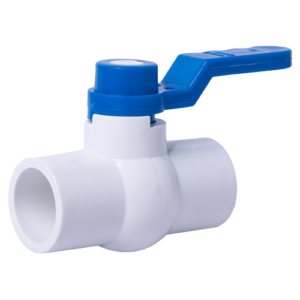
Selecting the right valve is not a minor procurement decision. In industrial piping systems, the wrong valve type can cause pressure failures, accelerated corrosion, unexpected downtime, and significant replacement costs over time. Among the most common questions engineers and procurement managers face is a straightforward one: should I use a UPVC ball valve or a gate valve for this system? Both valve types serve the fundamental purpose of controlling fluid flow, but they do so through different mechanisms, materials, and design principles. The confusion often arises because both are widely available, both are considered reliable, and both are used across industries ranging from water treatment to chemical processing. However, choosing correctly between a UPVC ball valve vs gate valve depends on the specific demands of your system — including fluid type, pressure range, frequency of operation, chemical exposure, and installation environment. This guide breaks down the complete comparison between UPVC ball valves and gate valves across every relevant parameter. By the end, you will have a clear, application-specific answer for your procurement or engineering decision — not a vague recommendation, but a practical framework you can use immediately.
Table of Contents
ToggleWhat Is a UPVC Ball Valve?
A UPVC ball valve is a quarter-turn flow control device with a body manufactured from Unplasticised Polyvinyl Chloride (UPVC) — a rigid, chemical-resistant thermoplastic material. The valve uses a hollow, perforated ball as the closing element. When the ball’s bore aligns with the pipe, fluid flows freely. A 90-degree turn of the handle rotates the ball perpendicular to the flow path, creating an immediate and complete seal.
UPVC as a material is chosen specifically for its outstanding resistance to a wide spectrum of chemicals, including chlorine, acids, alkalis, salts, and aggressive industrial solvents. Unlike metal valves, UPVC does not corrode, rust, or scale, making it particularly suitable for systems where fluid purity must be maintained and metal contamination is unacceptable.
Key Components of a UPVC Ball Valve
- UPVC body: Provides corrosion-free structural housing
- Hollow ball: The primary flow-controlling element, typically made from UPVC or PVC
- PTFE seats: Polytetrafluoroethylene seats provide superior sealing and chemical resistance
- Stem and handle: The actuating mechanism for manual or automated operation
- Threaded or socket ends: Enable integration into standard UPVC piping systems
UPVC ball valves are rated for operating temperatures up to 60°C under standard conditions, and are commonly available in sizes ranging from 15mm (1/2 inch) to 200mm (8 inches) and beyond, depending on the manufacturer.
What Is a Gate Valve?
A gate valve is a linear motion valve that controls fluid flow by raising or lowering a flat gate (also called a wedge or disc) perpendicular to the flow direction. Unlike ball valves, gate valves require multiple turns of a handwheel to move the gate from the fully open to the fully closed position. This multi-turn operation makes gate valves inherently slower to actuate.
Gate valves are manufactured in a range of materials including cast iron, ductile iron, carbon steel, stainless steel, and bronze, depending on the application. Their design allows for full-bore, unrestricted flow when open, with a pressure drop comparable to the pipe itself — making them a preferred choice in high-volume flow systems where flow resistance must be minimized.
Key Components of a Gate Valve
- Body: Cast iron, ductile iron, or steel construction for heavy-duty service
- Gate/wedge: The flat disc that rises to open or drops to seal the flow path
- Stem: Rising or non-rising type connecting the handwheel to the gate
- Handwheel: Multi-turn actuating element — slower to operate than a ball valve handle
- Packing and seals: Gland packing provides stem sealing — a common maintenance point
Gate valves are traditionally specified for oil and gas systems, steam lines, water mains, and heavy industrial processes where pressure and temperature requirements exceed the range of plastic valves.
How They Work: Mechanism Comparison
UPVC Ball Valve Operation
The UPVC ball valve operates on a quarter-turn principle. The hollow ball sits within PTFE seats inside the valve body. In the open position, the ball’s bore is in line with the pipe, and fluid flows through without any obstruction. A 90-degree handle rotation moves the ball so the solid wall faces the flow direction, instantly sealing it. This mechanism provides zero dead volume, a tight seal, and instantaneous shut-off with minimal operator effort.
The simplicity of the ball valve mechanism means there are very few moving parts — significantly reducing the risk of mechanical failure and maintenance requirements over time.
Gate Valve Operation
Gate valves use a threaded stem connected to a handwheel. Turning the handwheel clockwise lowers the gate into the flow path, progressively restricting flow until the gate seats fully and creates a seal. Counterclockwise rotation raises the gate, restoring flow. This multi-turn operation typically requires 8 to 20+ full handwheel rotations depending on valve size.
While gate valves can theoretically be used to throttle flow by partially opening the gate, this is strongly discouraged by most manufacturers. Operating a gate valve in a partially open position causes the gate to vibrate under fluid pressure, leading to accelerated wear on seats and the gate surface, and eventual leakage.
Full Comparison Table: UPVC Ball Valve vs Gate Valve
| Factor | UPVC Ball Valve | Gate Valve |
|---|---|---|
|
Operation Type |
Quarter-turn (90°) |
Multi-turn (rising stem) |
|
Flow Control |
Fully open / fully closed |
Can throttle partially |
|
Operating Speed |
Very fast (seconds) |
Slow (multiple rotations) |
|
Pressure Drop |
Minimal — full bore design |
Low when fully open |
|
Chemical Resistance |
Excellent (UPVC body) |
Moderate (depends on material) |
|
Corrosion Resistance |
Very high |
Moderate to low |
|
Temperature Range |
Up to 60°C standard |
Higher range possible |
|
Maintenance Frequency |
Very low |
Moderate to high |
|
Sealing Performance |
Superior (PTFE seats) |
Good but degrades with use |
|
Installation Cost |
Lower |
Comparable |
|
Best Application |
Chemical, water, irrigation |
Oil, gas, heavy industrial |
|
Leakage Risk |
Very low |
Higher over time |
|
Weight |
Lightweight |
Heavier |
|
Lifespan |
10–20+ years with care |
Depends on material/use |
Key Differences Explained in Detail
Material and Corrosion Resistance
The most fundamental difference between these valve types is often the body material. UPVC ball valves are inherently corrosion-free. The UPVC polymer does not react with water, chlorine, dilute acids, alkalis, or most industrial chemicals. This makes them the standard choice for chemical plants, water treatment facilities, desalination systems, and agricultural irrigation where long-term corrosion is a constant concern.
Gate valves in cast iron or carbon steel are susceptible to internal corrosion when used with aggressive media or even clean water over extended periods. Rust particles from corroding gate valves can contaminate the fluid system, clog filters, and cause downstream equipment damage. While stainless steel gate valves eliminate corrosion, their cost is significantly higher and they are often over-engineered for standard water and chemical applications.
Speed of Operation
In process industries, emergency shut-off speed is a critical safety parameter. UPVC ball valves provide instantaneous full isolation with a single 90-degree handle turn — achievable in under two seconds. This rapid actuation is essential in chemical dosing systems, irrigation manifolds, and water treatment plants where flow must be stopped immediately in response to system conditions.
Gate valves, by design, cannot match this speed. Their multi-turn mechanism means that even an experienced operator needs 30 to 60 seconds to fully close a large gate valve. In emergency scenarios, this delay has operational and safety consequences that make gate valves unsuitable as primary isolation valves in fast-response systems.
Sealing Performance and Leak Risk
UPVC ball valves with PTFE seats deliver a bi-directional bubble-tight seal that is consistent throughout the valve’s service life. The PTFE seat material is chemically inert, has an extremely low coefficient of friction, and does not deform under normal operating pressures. This design results in negligible leakage, even after thousands of open-close cycles.
Gate valves depend on metal-to-metal or rubber-seated sealing between the gate wedge and the valve seat ring. Over time, particulate matter in the fluid, scale deposits, and mechanical wear degrade this seal. Gate valves that have been partially operated or left in an intermediate position for extended periods often develop seat damage that is difficult to reverse without a complete overhaul.
Maintenance Requirements
Maintenance costs represent a major component of total valve ownership cost over the system lifetime. UPVC ball valves require virtually no scheduled maintenance. The PTFE seats are self-lubricating, the stem seals are robust, and the UPVC body does not scale or corrode. Periodic inspection and occasional operation (cycling the valve to prevent the ball from freezing in position) are typically all that is required.
Gate valves have a higher maintenance burden. The gland packing on the stem requires periodic re-tightening or replacement to prevent stem leakage. The seating surfaces in gate valves are subject to wear, particularly if the valve is operated in a partially open position or used to throttle flow. In large infrastructure systems, this maintenance accumulates into significant lifecycle costs.
Industry and Application Suitability
| Application | Recommended Valve | Reason |
|---|---|---|
|
Chemical processing plants |
UPVC Ball Valve |
UPVC resists aggressive acids and alkalis |
|
Municipal water supply |
UPVC Ball Valve |
Safe, non-toxic, corrosion-free |
|
Irrigation systems |
UPVC Ball Valve |
Lightweight, fast operation, cost-effective |
|
Swimming pool systems |
UPVC Ball Valve |
Chlorine-resistant and easy to maintain |
|
Oil & gas pipelines |
Gate Valve (metal) |
High pressure and temperature needs |
|
Steam lines |
Gate Valve (metal) |
High-temp applications beyond UPVC range |
|
Slurry or abrasive media |
Gate Valve (metal) |
Handles solid-laden flows better |
|
Fire suppression systems |
Gate Valve |
Specific fire-rated certifications required |
Where UPVC Ball Valves Excel
- Water treatment and distribution: Chlorine-resistant, non-toxic, zero contamination risk
- Chemical processing: Resistant to acids, alkalis, and industrial solvents at standard temperatures
- Agriculture and irrigation: Lightweight, easy to operate, UV-stabilized grades available
- Pharmaceutical and food processing: Non-reactive, hygienic, easy to clean
- Swimming pools and aquaculture: Resistant to chlorine, salt water, and water treatment chemicals
- HVAC chilled water systems: Corrosion-free operation in closed-loop water circuits
Where Gate Valves Are the Better Choice
- High-pressure steam systems: Operating beyond 60°C or at pressures above 10 bar where metal is mandatory
- Oil and gas mainline isolation: Regulatory compliance and pressure class requirements specify metal valves
- Fire suppression systems: UL/FM-listed fire-rated gate valves are specified by standard
- Large-diameter municipal water mains: Very large sizes where gate valves remain more economical than ball valves
Advantages of UPVC Ball Valves
Superior Chemical Resistance
UPVC is resistant to a broad spectrum of chemicals including hydrochloric acid, sulphuric acid (dilute), sodium hypochlorite, caustic soda, and most organic solvents. This chemical inertness makes UPVC ball valves the default specification in any system where the fluid could attack metal components.
Lightweight and Easy Installation
UPVC ball valves weigh a fraction of equivalent metal valves. A 50mm UPVC ball valve weighs approximately 0.3 to 0.5 kg, compared to several kilograms for a cast iron gate valve of the same size. This weight advantage reduces installation labor costs, eliminates the need for additional pipe supports in many installations, and makes handling safer for field technicians.
Low Total Lifecycle Cost
The combination of low initial cost, negligible maintenance requirements, and an expected service life of 15 to 20 years under proper operating conditions makes UPVC ball valves economically superior to metal gate valves in most chemical and water applications. The absence of corrosion means there is no valve degradation over time from internal or external rust — a common source of premature metal valve replacement.
Rapid Actuation and Process Safety
Quarter-turn operation significantly reduces the time required for flow isolation. In automated systems using pneumatic or electric actuators, UPVC ball valves integrate easily with standard actuator interfaces, enabling remote operation, process automation, and emergency shutdown systems that cannot be practically implemented with multi-turn gate valves.
Tight Shut-Off with PTFE Seats
The PTFE seating in UPVC ball valves provides an ISO 5208 Class VI (bubble-tight) shut-off rating — the highest sealing classification. This is essential in chemical dosing, water treatment, and pharmaceutical applications where even minor internal leakage is unacceptable.
Advantages of Gate Valves
Full-Bore Flow with Minimum Restriction
When fully open, a gate valve presents essentially no obstruction to flow — the gate is completely retracted into the bonnet. This full-bore design means the internal diameter of the valve matches the pipe bore precisely, resulting in near-zero pressure drop across the valve. For large-diameter, high-volume systems where hydraulic efficiency is paramount, gate valves remain a valid choice.
High-Temperature and High-Pressure Capability
Metal gate valves can be engineered to handle steam at temperatures exceeding 300°C and pressures above 100 bar. No plastic valve technology, including UPVC, can approach these operating conditions. In refineries, power plants, and heavy industrial installations where extreme process conditions are the norm, gate valves in appropriate alloys remain the only technically viable option.
Large-Diameter Availability
Gate valves are commonly available and well-proven in very large diameters — DN400, DN600, and above — where they are used in dams, water treatment plants, and distribution mainlines. While large UPVC ball valves do exist, gate valves remain more economical and structurally suited at very large diameters.
Limitations of Each Valve Type
UPVC Ball Valve Limitations
- Temperature ceiling: Standard UPVC grades are limited to approximately 60°C continuous service
- Not suitable for steam: Cannot handle steam, high-pressure gas, or cryogenic applications
- UV degradation: Standard UPVC can degrade under prolonged direct UV exposure unless UV-stabilized grades are used
- Abrasion sensitivity: In slurry or highly abrasive fluid systems, the ball surface may be scratched over time
Gate Valve Limitations
- Slow operation: Multi-turn mechanism is inherently slow and unsuitable for emergency shut-off
- Not suitable for throttling: Partial opening causes seat and gate wear, leading to premature failure
- Corrosion in water: Cast iron and carbon steel gate valves corrode internally in water systems
- Higher maintenance: Gland packing, seating surfaces, and rising stem require regular inspection
- Heavier and larger: Significantly more weight and installation space required
Selection Guide: Which Valve Should You Choose?
Choose a UPVC Ball Valve if:
- Your system handles water, chemical solutions, dilute acids, alkalis, or chlorinated fluids
- Operating temperature stays below 60°C
- You need fast, reliable flow isolation with minimal operator effort
- System uptime is critical and maintenance windows are limited
- You want to eliminate corrosion risk from the valve system
- The system is automated or semi-automated with actuators
- Your industry includes: water treatment, irrigation, chemical processing, HVAC, pharmaceuticals
Choose a Gate Valve if:
- Operating conditions exceed 60°C or 10 bar
- The application involves steam, high-pressure gas, or oil and gas service
- Regulatory or insurance requirements specify metal valves
- The system requires very large diameter valves (DN300 and above)
Why Ashok Polymers UPVC Ball Valves Are the Right Choice
For businesses, contractors, and engineers working within the application range where UPVC ball valves are the correct specification, the quality and reliability of the valve manufacturer makes a significant difference to system performance and total cost of ownership.
Ashok Polymers manufactures a comprehensive range of UPVC ball valves engineered for Indian industrial and infrastructure conditions. Each valve is manufactured from virgin-grade UPVC compound, ensuring consistent material properties and long-term dimensional stability. The PTFE seats are sourced from approved suppliers and tested for chemical compatibility across a wide range of process fluids.
What Differentiates Ashok Polymers UPVC Ball Valves
- Manufactured from virgin-grade UPVC — no recycled material that could compromise chemical resistance
- PTFE seats with ISO-rated bubble-tight Class VI shut-off performance
- Available in sizes from 15mm to 150mm across threaded and socket-end configurations
- Full compatibility with standard UPVC piping systems for seamless installation
- Application-specific grades available including UV-stabilized for outdoor and agricultural installations
- Backed by Ashok Polymers’ manufacturing expertise and quality assurance protocols
Whether you are specifying valves for a water treatment plant, a chemical dosing system, an agricultural irrigation network, or an HVAC installation, Ashok Polymers UPVC ball valves provide the performance, reliability, and value that industrial applications demand.
Explore the complete UPVC ball valve range at ashokpolymers.com or contact the Ashok Polymers technical team for product selection support.
Frequently Asked Questions (FAQs)
The primary difference lies in their operating mechanism and material. A UPVC ball valve uses a quarter-turn rotating ball to open or close flow, offers near-instantaneous shut-off, and is made from chemical-resistant UPVC with PTFE seats. A gate valve uses a multi-turn rising or non-rising gate mechanism and is typically manufactured from metal such as cast iron or carbon steel. UPVC ball valves excel in corrosion resistance, operating speed, and maintenance-free service, while gate valves are preferred for high-pressure, high-temperature, and heavy industrial applications.
Yes, in most water supply applications operating below 60°C and at standard municipal pressures, a UPVC ball valve is a direct and superior replacement for a gate valve. UPVC ball valves offer better sealing performance, require no maintenance, will not corrode or scale internally, and provide faster operation. Many modern water treatment plants, distribution networks, and building plumbing systems have transitioned from gate valves to UPVC ball valves for these reasons. The only exception would be very large diameter mainlines where gate valves may still be specified.
For most chemical handling applications at standard temperatures, the UPVC ball valve is the clearly superior choice. UPVC material is chemically resistant to a broad range of industrial chemicals including dilute acids, alkalis, chlorinated compounds, and saline solutions. Metal gate valves corrode when exposed to the same chemicals, contaminating the process fluid and requiring frequent replacement. For aggressive chemicals at high temperatures, specialist alloy valves may be required, but for the majority of chemical plant fluid handling, UPVC ball valves provide the safest and most cost-effective solution.
No. Gate valves are designed exclusively for fully open or fully closed service and should never be used for flow throttling. When a gate valve is partially opened, the fluid velocity through the narrow gap between the gate and seat creates turbulence that causes severe vibration of the gate. This vibration causes rapid erosion of the gate and seat surfaces, leading to leakage, loss of sealing ability, and premature valve failure. If flow regulation is required, a dedicated globe valve, needle valve, or diaphragm valve should be specified instead. UPVC ball valves also are not designed for throttling — they are isolation valves.
Standard UPVC ball valves are rated for continuous service at temperatures up to 60°C. Beyond this temperature, the UPVC material begins to soften, and the structural integrity and dimensional stability of the valve may be compromised. Some specialized CPVC (Chlorinated Polyvinyl Chloride) valves extend this range to approximately 93°C, but for applications above these thresholds, metal valves — stainless steel, carbon steel, or appropriate alloys — must be specified. Always verify the temperature rating with the manufacturer when operating near the limit.
UPVC ball valves have significantly lower maintenance costs over their service life. The PTFE seats are self-lubricating and do not require external lubrication. The UPVC body does not corrode, scale, or pit. The simple quarter-turn mechanism has minimal wear points. In normal service conditions, a UPVC ball valve may operate maintenance-free for its entire service life of 10 to 20 years. Gate valves require periodic gland packing adjustment or replacement to prevent stem leakage, seat re-facing when wear occurs, and general overhaul after extended service — all of which add to lifecycle costs.
Standard UPVC has limited resistance to prolonged direct UV exposure, which can cause surface degradation and slight colour change over time. For outdoor applications with direct sunlight exposure — such as agricultural irrigation systems, rooftop installations, or outdoor chemical storage — UV-stabilized UPVC grades or opaque UPVC formulations should be specified. These grades incorporate UV absorbers that significantly extend outdoor service life without compromising chemical resistance or mechanical performance. Ashok Polymers offers UV-stabilized UPVC ball valve options for outdoor and agricultural applications.
In appropriate service conditions, UPVC ball valves typically have a service life of 15 to 20 years or more, with minimal maintenance. Metal gate valves in corrosive service (such as water or chemical systems) often require replacement or major overhaul within 8 to 12 years due to internal corrosion, seat wear, and stem packing failure. In non-corrosive service conditions — such as high-pressure steam lines — metal gate valves can last considerably longer. The key factor is matching the valve material to the service conditions. UPVC ball valves in chemical-resistant applications consistently outperform metal gate valves on a lifecycle cost basis.
Conclusion
The question of UPVC ball valve vs gate valve does not have a single universal answer — but for the majority of industrial, municipal, agricultural, and chemical processing applications in India, the UPVC ball valve is the technically and economically superior choice. Its combination of chemical resistance, rapid operation, zero-maintenance PTFE sealing, and long service life makes it the modern standard for fluid isolation in the temperature and pressure range where it operates.
Gate valves retain their relevance in high-temperature steam, high-pressure oil and gas, and very large-diameter mainline applications where material strength and pressure class requirements exceed what plastic valves can deliver. Understanding this boundary is the foundation of correct valve selection.
For procurement engineers, facility managers, and system designers sourcing UPVC ball valves for water treatment, chemical processing, irrigation, or HVAC applications, Ashok Polymers provides a certified, high-quality product range engineered for India’s demanding industrial environment.
Get in Touch with Ashok Polymers
Explore our complete UPVC ball valve range for your industrial, irrigation, and chemical handling requirements.
 Previous Post
 Next Post