
 Call Us Now!
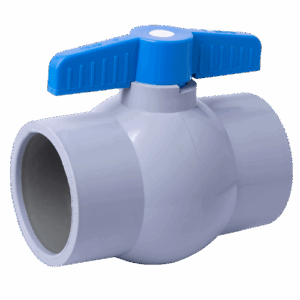
Walk through almost any industrial facility in India — a water treatment plant, a chemical processing unit, a pharmaceutical manufacturing line, a food processing factory, or an agricultural irrigation pump house — and you will find the same component installed at hundreds of control points: the PVC ball valve. It rarely gets noticed, it rarely fails when correctly specified, and it almost never appears in a facility’s marketing material. Yet it is one of the most consequential components determining whether a plant runs reliably or suffers recurring downtime. The industries that rely on PVC ball valves span an extraordinarily wide range — from heavy process industries handling aggressive chemicals to delicate pharmaceutical lines requiring contamination-free flow, from vast agricultural irrigation networks covering thousands of hectares to compact swimming pool filtration systems. What unites all of these applications is a shared set of requirements: corrosion resistance, chemical compatibility, low maintenance, and dependable quarter-turn operation — exactly what PVC ball valves deliver. This guide takes you through the ten major industries where PVC ball valves have become the standard specification, explaining the specific application points within each industry, the reasons PVC outperforms metal alternatives in that sector’s operating conditions, and the size and specification considerations relevant to each industry. Whether you are a procurement manager specifying valves for a new facility, an engineer reviewing your plant’s valve standards, or a contractor sourcing components for a project across multiple sectors, this guide gives you the sector-specific knowledge to make confident, correct valve specifications.
Table of Contents
ToggleWhy PVC Ball Valves Have Become an Industrial Standard
For most of the twentieth century, industrial valve specifications defaulted to metal — brass for general service, cast iron for larger mains, stainless steel for chemical resistance, and bronze for marine applications. This was not because metal was always the best choice; it was because thermoplastic materials with sufficient mechanical strength and chemical resistance for industrial service simply did not exist at scale until PVC manufacturing matured in the second half of the century.
Once UPVC (Unplasticised PVC) ball valves became widely available with BIS, ASTM, and ISO certifications, industries began re-evaluating their valve standards — and the results were consistent across sectors. Plants that switched from brass to PVC ball valves on water lines reported corrosion-related failures dropping to near zero. Chemical processing facilities found that PVC valves on acid and alkali transfer lines outlasted brass valves by a factor of three to five times. Agricultural projects found that PVC valve installation costs — labour plus material — were a fraction of equivalent metal valve installations across thousands of field control points.
The shift has been gradual but decisive. Today, across the ten industries covered in this guide, PVC ball valves are not a budget alternative chosen when metal is unavailable — they are the engineered specification of choice for the majority of flow control points, with metal valves reserved for the specific high-pressure, high-temperature, or open-flame applications where PVC’s operating limits genuinely apply.
Understanding why this shift happened — and which applications within each industry benefit most — requires understanding the core material properties that PVC ball valves bring to industrial flow control. We cover these in the next section before moving through each industry in detail.
What Makes PVC Ball Valves Suited to Industrial Flow Control
Across every industry covered in this guide, the case for PVC ball valves rests on the same core set of material properties. Understanding these properties helps explain why the specific applications described in each industry section make sense — and helps you evaluate whether PVC is the right choice for applications not explicitly covered here.
| Property | Why It Matters Across Industries |
|---|---|
|
Corrosion Immunity |
Will not rust, pit, or scale in any water chemistry — eliminates the single largest cause of industrial valve failure. |
|
Chemical Resistance |
Resists acids, alkalis, salts, and most industrial chemicals — broad compatibility across process industries. |
|
Lightweight Construction |
40-50% lighter than brass or steel — reduces installation labour, pipe support load, and shipping cost. |
|
Low Cost of Ownership |
Lower purchase price plus zero maintenance (no greasing, replating, or anti-rust treatment) over a 10-20 year service life. |
|
Smooth Internal Bore |
Minimal friction loss and no scale build-up — maintains consistent flow coefficient (Cv) over the valve’s lifetime. |
|
Electrical Non-Conductivity |
Does not require bonding/grounding like metal valves — useful in electronics, labs, and hazardous-area installations. |
|
Wide Size & Pressure Range |
Available from 1/2 inch to 8 inch+ and Schedule 40/80 ratings to suit low and medium pressure industrial systems. |
These properties combine differently in importance depending on the industry. In water treatment, corrosion immunity and certification for potable water contact dominate the decision. In chemical processing, chemical resistance and compatibility with specific reagents are paramount. In agriculture, low cost across thousands of valve points and UV resistance for outdoor exposure are the deciding factors. The sections that follow examine each industry’s specific priorities and application points in detail.
Water Treatment & Municipal Water Supply
Water treatment plants and municipal water supply networks represent one of the largest and most established applications for PVC ball valves anywhere in the world. From the intake screens at a river source to the final distribution point in a household, PVC ball valves appear at hundreds of control points throughout a typical municipal water system.
Why Water Treatment Relies on PVC Ball Valves
Water treatment involves continuous contact with treated water containing residual chlorine, chloramines, and — during cleaning cycles — concentrated disinfectants such as sodium hypochlorite. These chemicals are notoriously aggressive toward brass, causing dezincification (the leaching of zinc from brass alloys) and accelerated corrosion of cast iron and galvanised steel components. PVC is completely immune to this degradation, making it the default material for valves in direct contact with treated water and disinfectant chemicals.
Beyond chemical compatibility, water treatment plants operate hundreds to thousands of individual valve points across filtration galleries, chemical dosing rooms, clarifier outlets, and distribution headers. The cumulative cost difference between PVC and metal valves across a plant with this many control points is substantial — both in initial procurement and in the ongoing maintenance labour that corrosion-prone metal valves demand.
Specific Application Points
- Chemical dosing systems: valves controlling chlorine, alum, lime, and polymer dosing lines — all in direct contact with concentrated treatment chemicals
- Filter backwash valves: large-diameter PVC ball valves controlling the high-flow backwash cycle that cleans sand and media filters
- Distribution main isolation: zone isolation valves on the distribution network allowing sections to be shut down for repair without affecting the entire supply area
- Sample point valves: small PVC ball valves at water quality testing points throughout the treatment process
- Sludge and waste handling: valves on sludge transfer lines from clarifiers and thickeners to dewatering equipment
For municipal water supply specifically, PVC ball valves used in potable water contact should carry NSF/ANSI 61 certification or the equivalent Indian standard certification confirming the material does not leach harmful substances into drinking water — an essential requirement for any valve specified for public water supply infrastructure.
Chemical Processing & Manufacturing
The chemical processing industry was an early and enthusiastic adopter of PVC ball valves, driven by the simple economics of valve replacement frequency. A brass or carbon steel valve on an acid transfer line in a chemical plant might need replacement every 12 to 18 months due to corrosion. The equivalent PVC ball valve, correctly specified for the chemical in question, routinely lasts 8 to 10 years or more in the same service.
Why Chemical Plants Rely on PVC Ball Valves
PVC’s broad chemical resistance covers a significant proportion of the chemicals handled in general chemical manufacturing — including most mineral acids at working concentrations, caustic solutions, brine and salt solutions, and many organic compounds at moderate temperatures. This breadth of compatibility means a single valve material specification can cover a large proportion of a plant’s process lines, simplifying inventory, maintenance training, and spare parts management.
The temperature limitation of standard PVC — approximately 60°C continuous service — is the primary factor that determines whether PVC or CPVC is specified for a given chemical line. Many chemical processes do operate within this range, particularly storage tank transfer, dilution, and ambient-temperature reaction processes, making standard PVC ball valves widely applicable even within high-temperature plants for the cooler sections of the process.
Specific Application Points
- Acid and alkali storage tank outlets: isolation valves on bulk chemical storage tanks for sulphuric, hydrochloric, and phosphoric acid, and caustic soda solutions
- Chemical transfer and metering lines: valves controlling the transfer of process chemicals between storage, mixing, and reaction vessels
- Scrubber and effluent treatment systems: valves on gas scrubber recirculation lines and effluent neutralisation systems handling acidic or alkaline wastewater
- Cooling water systems: valves on open and closed-loop cooling water circuits, particularly where cooling water treatment chemicals are dosed
- Sampling and analytical systems: small-bore PVC ball valves on process sampling lines feeding laboratory analysis points
Agriculture & Irrigation
Agriculture represents perhaps the highest-volume application of PVC ball valves by sheer number of units installed. A single modern drip irrigation system covering 100 hectares might incorporate several hundred individual ball valves across main isolation points, zone controls, fertigation systems, and lateral flush points.
Why Agriculture Relies on PVC Ball Valves
The economics of agricultural irrigation make PVC ball valves an obvious choice: the cost differential between PVC and brass, multiplied across hundreds of valve points on a single farm, represents a significant proportion of total system cost. Beyond cost, PVC’s resistance to the variable water chemistry found in Indian borewell water — ranging from acidic to highly saline depending on region — and its resistance to the fertilisers and crop protection chemicals used in fertigation make it functionally superior to brass for almost all on-farm applications.
UV-stabilised UPVC grades address the outdoor exposure that every agricultural valve experiences, providing 10+ years of service life even with permanent sun exposure — a requirement that standard indoor-rated PVC does not meet.
Specific Application Points
- Drip and sprinkler zone control: the primary application — isolating irrigation zones for sequential operation across a farm
- Pump outlet and distribution headers: controlling flow from borewell or surface water pumps to multiple distribution lines
- Fertigation injection systems: controlling the bypass and injection lines for liquid fertiliser and chemical application through irrigation water
- Farm pond and rainwater harvesting: inlet, outlet, and overflow control on on-farm water storage systems
- Greenhouse and polyhouse nutrient systems: precise flow control for hydroponic and fertigation systems in protected cultivation
A detailed treatment of PVC and UPVC ball valve applications in agriculture — including sizing charts, installation guidance, and a full selection framework — is available in our dedicated agricultural irrigation guide, which complements the sector overview provided here.
Swimming Pool & Aquaculture Systems
Swimming pool filtration and circulation systems, along with commercial aquaculture (fish and shrimp farming) operations, represent a specialised but substantial application area for PVC ball valves — driven primarily by constant contact with chlorinated water and, in aquaculture, saline or brackish water.
Why Pool and Aquaculture Systems Rely on PVC Ball Valves
Swimming pool water is continuously dosed with chlorine or bromine-based sanitisers, creating an environment that rapidly degrades brass and most metal alloys through chlorine-induced stress corrosion cracking. PVC is entirely unaffected by pool chemical concentrations, making it the standard material for pool plumbing worldwide — pumps, filters, heaters, and the ball valves that isolate each of these components for maintenance.
In aquaculture, the combination of saline or brackish water, biological fouling, and the need for frequent system maintenance (cleaning biofilters, replacing pumps, servicing aerators) makes true-union PVC ball valves — which allow complete valve removal without cutting pipework — particularly valuable. The corrosion resistance that protects pool plumbing applies equally to the saline conditions of shrimp and fish farming systems.
Specific Application Points
- Filter and pump isolation: true-union ball valves on both sides of pool pumps and filters allow these components to be serviced or replaced without draining the system
- Multiport valve bypass: ball valves controlling bypass routes around heaters, chlorinators, and UV sanitisation units
- Backwash and waste lines: valves directing filter backwash flow to waste drainage
- Aquaculture pond inlet/outlet: valves controlling water exchange rates between ponds, biofilters, and treatment systems
- Aeration and oxygenation systems: valves controlling air and oxygen injection lines in intensive aquaculture systems
Pharmaceutical & Healthcare Facilities
Pharmaceutical manufacturing and healthcare facility infrastructure place some of the most stringent requirements on materials in contact with water and process fluids — and PVC ball valves, particularly in NSF-certified and lead-free grades, meet these requirements across a significant range of applications.
Why Pharmaceutical Facilities Rely on PVC Ball Valves
Lead content is an absolute disqualifier for many pharmaceutical water systems, ruling out standard brass valves for purified water, water-for-injection feed systems, and other pharmaceutical-grade water applications. PVC’s inherent lead-free composition, combined with its smooth internal bore that resists bacterial biofilm formation, makes it suitable for a range of pharmaceutical utility water applications — though high-purity water systems (USP Purified Water, Water for Injection) typically specify PVDF or stainless steel for the highest purity loops, with PVC serving pre-treatment and utility water roles.
In healthcare facility infrastructure more broadly — hospital plumbing, laboratory drainage, and HVAC condensate systems — PVC ball valves offer the same lead-free, corrosion-resistant advantages that make them suitable for any application where drinking water safety and chemical compatibility with cleaning agents and disinfectants used throughout healthcare facilities are required.
Specific Application Points
- Pre-treatment water systems: valves on reverse osmosis feed water, softener, and carbon filtration systems feeding pharmaceutical water purification trains
- Clean-in-place (CIP) system bypass: isolation valves on CIP supply and return lines for process equipment cleaning
- Laboratory drainage and acid waste: valves on laboratory sink drainage lines handling diluted acid and solvent waste
- HVAC condensate and chilled water: valves on air handling unit condensate drainage and chilled water distribution in pharmaceutical clean rooms
- Hospital plumbing isolation: general plumbing isolation valves throughout healthcare facility water supply and drainage systems
Food & Beverage Processing
Food and beverage processing facilities handle a combination of process water, cleaning chemicals, and food products that creates demanding requirements for valve materials — requirements that food-grade PVC ball valves meet across a wide range of utility and process applications.
Why Food & Beverage Processing Relies on PVC Ball Valves
Food processing facilities undergo frequent and aggressive cleaning cycles using hot water, caustic cleaners, and sanitising chemicals such as peracetic acid and chlorine-based sanitisers. These cleaning regimes are corrosive to many metal valve materials over time, while food-grade PVC — manufactured to FDA 21 CFR compliance for food contact materials — withstands repeated exposure to these cleaning chemicals without degradation.
The smooth internal bore of PVC ball valves also supports food safety objectives directly: smooth surfaces resist bacterial adhesion and biofilm formation better than the surface finish achievable on many cast metal components, supporting hygienic design principles that are increasingly mandated in food processing facility design standards.
Specific Application Points
- Process water distribution: valves on potable and process water lines feeding washing, blanching, and cooling operations
- CIP supply and return lines: isolation valves on clean-in-place systems for tanks, pipelines, and processing equipment
- Cooling and refrigeration systems: valves on glycol and chilled water circuits for refrigeration and cold storage
- Wastewater pre-treatment: valves on effluent collection and pre-treatment systems handling food processing wastewater before discharge or further treatment
- Beverage dilution and blending: valves on water lines feeding beverage dilution and blending systems where lead-free material is essential
HVAC & Building Services
Heating, ventilation, and air conditioning systems in commercial and institutional buildings represent a major application area for PVC ball valves, particularly in chilled water distribution, condensate drainage, and cooling tower water treatment systems.
Why HVAC Systems Rely on PVC Ball Valves
Chilled water systems in large buildings operate as closed loops with treated water that, over years of operation, can become mildly aggressive toward metal components due to the chemical treatment used to control scale and biological growth in the circuit. PVC ball valves on chilled water isolation points avoid this corrosion concern entirely while providing the quarter-turn isolation needed for zone control and equipment maintenance across large building HVAC distribution networks.
Cooling tower systems present an even more aggressive environment — the evaporative cooling process concentrates dissolved minerals and treatment chemicals in the circulating water, accelerating corrosion in metal components. PVC ball valves on cooling tower makeup water, blowdown, and chemical dosing lines are now standard specification in most cooling tower water treatment system designs.
Specific Application Points
- Chilled water zone isolation: ball valves isolating individual floors or zones of a building’s chilled water distribution network for maintenance
- Cooling tower chemical dosing: valves on biocide, scale inhibitor, and pH adjustment dosing systems for cooling tower water treatment
- Condensate drainage: valves on air handling unit and fan coil unit condensate drainage lines throughout commercial buildings
- Cooling tower makeup and blowdown: valves controlling fresh water makeup and the blowdown of concentrated cooling water to drain
- Domestic hot and cold water riser isolation: zone isolation valves on building plumbing risers serving multiple floors
Mining & Mineral Processing
Mining and mineral processing operations handle some of the most chemically and physically aggressive fluids of any industry — acidic mine water, mineral slurries with high solids content, and process chemicals used in flotation and leaching circuits. PVC ball valves, particularly heavy-duty UPVC Schedule 80 grades, find substantial application in this sector despite the demanding conditions.
Why Mining Operations Rely on PVC Ball Valves
Acid mine drainage and process water in many mineral processing operations is highly acidic — pH levels below 3 are common in operations involving sulphide ore processing. This acidity rapidly destroys mild steel and significantly degrades many stainless steel grades through pitting corrosion. PVC and UPVC, by contrast, are unaffected by this acidity across the typical pH ranges encountered in mineral processing water circuits.
For slurry applications — where the fluid contains suspended solid particles at significant concentration — standard PVC ball valves face abrasion concerns from the solid particles passing through the valve seat area. For these applications, abrasion-resistant lined valves, UPVC Schedule 80 with reinforced seats, or specialised slurry valve designs are specified rather than standard PVC ball valves. PVC remains the correct choice for the many mining applications involving clear process water, acidic solutions, and reagent dosing where abrasive solids are not present.
Specific Application Points
- Acid mine water management: valves on acidic mine drainage collection, treatment, and discharge systems
- Reagent dosing systems: valves on flotation reagent, flocculant, and pH adjustment chemical dosing lines in mineral processing plants
- Process water distribution: valves on clear process water lines feeding wash water, dilution, and equipment cooling applications
- Tailings water management: valves on tailings pond water recovery and recycling systems handling clarified process water
- Dust suppression systems: valves on water spray systems for dust control at crushing, screening, and conveying points
Construction & Real Estate Plumbing
The construction and real estate sector — covering residential, commercial, and institutional building plumbing — is perhaps the most familiar application of PVC ball valves to the general public, and represents enormous volume given the scale of construction activity across India’s growing cities.
Why Construction Relies on PVC Ball Valves
Building plumbing systems require thousands of isolation points across water supply risers, individual unit isolation valves, fixture isolation, and drainage system access points. The economics of PVC ball valves at this scale are compelling: lower material cost, dramatically lower installation labour (no soldering, threading, or specialised tools required for solvent-weld connections), and elimination of the corrosion-related plumbing failures that historically generated significant warranty claims in residential and commercial buildings.
Modern building codes and green building certification standards increasingly favour PVC and UPVC plumbing systems for their lead-free composition, supporting both regulatory compliance and the marketing positioning of new developments around water quality and sustainability.
Specific Application Points
- Water supply riser isolation: ball valves at each floor isolating that floor’s water supply from the main riser for maintenance
- Individual unit/apartment isolation: valves controlling water supply to each residential or commercial unit, allowing isolation without affecting other units
- Fixture supply isolation: angle stop valves (a ball valve variant) at each fixture — toilets, basins, sinks — for individual fixture servicing
- Underground main distribution: larger ball valves on underground water supply mains serving multiple buildings within a development
- Rainwater harvesting and greywater systems: valves on rainwater collection, storage, and greywater recycling systems increasingly incorporated into new developments
Marine, Desalination & Coastal Infrastructure
Marine vessels, port infrastructure, desalination plants, and coastal industrial facilities operate in one of the most corrosive environments for any material — constant exposure to saltwater, salt-laden air, and, for desalination plants, concentrated brine. PVC ball valves, in appropriately specified grades, perform reliably in conditions that would rapidly destroy most metal alternatives.
Why Marine and Desalination Facilities Rely on PVC Ball Valves
Saltwater is one of the most corrosive common fluids for metal components — chloride ions actively attack the passive oxide layers that protect stainless steel, and accelerate galvanic corrosion between dissimilar metals in seawater systems. PVC has no galvanic corrosion mechanism and is entirely unaffected by chloride concentration, making it ideal for seawater intake, distribution, and discharge systems.
Desalination plants — whether reverse osmosis or thermal processes — handle seawater feed, concentrated brine reject, and permeate (product water) streams, each with different but demanding material requirements. PVC ball valves are widely used on seawater intake screening systems, brine transfer and discharge lines, and permeate distribution, with the corrosion resistance of PVC eliminating a major maintenance burden compared to the metal valve standards used in older desalination plant designs.
Specific Application Points
- Seawater intake and screening: valves on seawater intake lines feeding desalination plant pre-treatment and screening systems
- Brine reject discharge: valves on concentrated brine transfer and outfall discharge systems from desalination processes
- Permeate (product water) distribution: valves on the treated water distribution system from desalination plants to storage and onward supply
- Marine vessel bilge and ballast systems: valves on bilge pump discharge and ballast water transfer systems on vessels
- Coastal industrial cooling water: valves on once-through and recirculating seawater cooling systems for coastal power and industrial facilities
Choosing the Right PVC Ball Valve for Your Industry
Having reviewed the specific application points across ten industries, the following selection guide consolidates size and specification recommendations to help procurement and engineering teams quickly identify the right starting specification for their sector:
| Industry | Recommended Size | Key Specification Notes |
|---|---|---|
|
Water treatment / municipal supply |
2″ to 8″ PVC ball valve |
Full-bore, Schedule 40/80, flanged ends for large mains; verify NSF/IS 9890 certification |
|
Chemical processing |
1/2″ to 4″ PVC ball valve |
Confirm chemical compatibility chart; consider CPVC if temperature exceeds 60°C |
|
Agriculture & irrigation |
1/2″ to 4″ PVC ball valve |
UV-stabilised for outdoor exposure; full-bore for main lines, reduced-bore acceptable for laterals |
|
Swimming pools & aquaculture |
1.5″ to 3″ PVC ball valve |
True union ends for filter/pump servicing; confirm chlorine compatibility for pool chemicals |
|
Pharmaceutical & healthcare |
1/2″ to 2″ PVC/CPVC valve |
Lead-free, NSF-certified; consider clear PVC for visual flow confirmation in critical lines |
|
Food & beverage processing |
1/2″ to 3″ PVC ball valve |
Food-grade FDA-compliant material; smooth bore for CIP (clean-in-place) compatibility |
|
HVAC & building services |
1″ to 6″ PVC ball valve |
Schedule 40 for chilled water; verify insulation compatibility for condensation control |
|
Mining & mineral processing |
2″ to 8″ PVC ball valve |
Abrasion-resistant lining or upgrade to UPVC Schedule 80 for slurry lines with high solids content |
|
Construction & real estate plumbing |
1/2″ to 4″ PVC ball valve |
Match to UPVC pipe standard (IS 4985); solvent weld for permanent risers, union for serviceable points |
|
Marine & desalination |
1″ to 6″ PVC ball valve |
UV and saltwater resistant grades; reinforced PVC or CPVC for elevated brine temperatures |
General Specification Questions for Any Industry
Regardless of which industry your application falls within, these questions help refine the final valve specification:
- What is the maximum operating temperature? Above 60°C continuous service requires CPVC rather than standard PVC.
- What is the maximum operating pressure? Schedule 40 covers most applications up to 10 bar; Schedule 80 extends this range and adds mechanical robustness for buried or high-stress installations.
- Does the fluid contain suspended solids or abrasive particles? Standard ball valve seats may wear quickly in slurry or high-sediment applications — consider abrasion-resistant designs.
- Is the valve in contact with potable water, food products, or pharmaceutical fluids? Confirm NSF, FDA, or equivalent certification for the specific material grade.
- Will the valve be exposed to direct sunlight for extended periods? Specify UV-stabilised PVC/UPVC for any permanently outdoor-exposed installation.
- Will the valve need to be removed for maintenance? Specify true-union or three-piece designs for any valve on equipment that requires periodic servicing — pumps, filters, dosing systems.
Our Recommended PVC Ball Valve Range for Industrial Use
Ashok Polymers manufactures and supplies a comprehensive range of PVC and UPVC ball valves designed to serve every industry covered in this guide — from municipal water treatment to agricultural irrigation, chemical processing to pharmaceutical utility systems, and coastal desalination to building construction projects.
Our industrial PVC ball valve range includes Schedule 40 and Schedule 80 valves from 1/2 inch through 8 inch, available in solvent weld, threaded, true-union, and flanged end configurations to match the connection requirements of any system. UV-stabilised grades are available for all outdoor and agricultural applications, and NSF-compliant food and pharmaceutical-grade variants are available for sectors with potable water and food contact requirements.
All valves in our industrial range are manufactured to BIS IS 9890 standards and are independently pressure-tested before dispatch. Our technical team works with procurement and engineering teams across all ten industries covered in this guide to confirm chemical compatibility, recommend the correct schedule rating for application pressures and temperatures, and provide bulk pricing for project-scale procurement.
Ashok Polymers supplies water treatment contractors, chemical processing plants, agricultural infrastructure developers, pharmaceutical and food processing facility builders, HVAC contractors, mining operations, real estate developers, and marine and desalination project contractors across India. With consistent stock availability across our full size range and technical support for sector-specific specification questions, we are positioned to be your single-source PVC ball valve supplier regardless of which industry your project serves.
Browse our complete industrial PVC ball valve range on our product page to download datasheets, view certifications, check chemical compatibility resources, and request a quotation for your project.
Frequently Asked Questions (FAQs)
Water treatment and municipal water supply, agriculture and irrigation, and construction and real estate plumbing represent the highest-volume applications of PVC ball valves by unit count, due to the very large number of individual control points in each of these sectors. Chemical processing and pharmaceutical manufacturing represent significant applications by value, given the higher specification requirements and certification needs in those sectors.
Standard Schedule 40 PVC ball valves are rated to approximately 10 bar at ambient temperature, while Schedule 80 valves extend this to 12-16 bar depending on size. For industrial applications above these pressures, or at elevated temperatures where pressure ratings derate significantly, metal valves or specialised high-pressure thermoplastic valves should be considered. The majority of industrial flow control applications across the ten industries covered in this guide operate within Schedule 40 and 80 PVC pressure ratings.
Standard PVC ball valves are rated for continuous service up to approximately 60 degrees Celsius. For hot water applications above this temperature — common in HVAC, food processing, and chemical process heating — CPVC ball valves, which are rated to 93 degrees Celsius, are the correct specification. Neither PVC nor CPVC is suitable for steam service; steam applications require metal valves rated for the relevant steam pressure and temperature.
For the large proportion of chemical plant process lines operating within PVC’s temperature range (below 60°C) and handling chemicals within PVC’s compatibility range, PVC ball valves offer equivalent or superior chemical resistance to stainless steel at a fraction of the cost, with no risk of pitting or stress corrosion cracking from chloride-containing process streams. Stainless steel remains the correct choice for high-temperature lines, very high-pressure applications, and chemicals outside PVC’s compatibility range.
PVC ball valves manufactured to food-grade specifications, compliant with FDA 21 CFR regulations for food contact materials, are suitable for use in food and beverage processing applications including process water distribution, CIP systems, and product dilution lines. Always confirm the specific food-grade certification with your supplier, as not all PVC compounds are manufactured to food-contact standards.
A correctly specified and installed PVC ball valve in industrial service typically lasts 10 to 20 years, depending on the application. Valves in chemical service within PVC’s compatibility range, water treatment applications, and agricultural irrigation routinely achieve 10+ years of service. The main factors that reduce lifespan are exposure to chemicals outside PVC’s compatibility range, operating temperatures consistently above 60°C, UV degradation in non-stabilised grades used outdoors, and abrasive wear from suspended solids in slurry applications.
PVC ball valves require minimal maintenance compared to metal valves — no greasing, anti-corrosion treatment, or replating is needed. Recommended maintenance includes periodic full-cycle operation to maintain seat lubrication (particularly for valves that remain in a fixed position for extended periods), visual inspection for UV degradation in outdoor installations, and flushing after exposure to concentrated chemicals in dosing applications to prevent residue accumulation on seats.
Yes, PVC ball valves are well suited to marine and saltwater applications because PVC has no galvanic corrosion mechanism and is unaffected by chloride concentration — unlike metal valves, which experience accelerated corrosion in seawater through both direct chemical attack and galvanic effects between dissimilar metals. For permanently submerged or continuously sun-exposed marine installations, UV-stabilised and appropriately rated PVC or UPVC grades should be specified.
Conclusion
The breadth of industries that rely on PVC ball valves — from municipal water treatment plants serving millions of people to individual farm irrigation systems, from pharmaceutical manufacturing lines to coastal desalination plants — reflects a simple underlying truth: the combination of corrosion immunity, broad chemical resistance, low cost, and minimal maintenance that PVC ball valves provide addresses the most common and most expensive failure modes that affect industrial flow control across virtually every sector.
For procurement teams and engineers evaluating valve standards across water treatment, chemical processing, agriculture, swimming pool and aquaculture systems, pharmaceutical and healthcare facilities, food and beverage processing, HVAC and building services, mining and mineral processing, construction and real estate, and marine and desalination applications, the question is rarely whether PVC ball valves can be used — it is which specific grade, schedule, end connection, and certification matches the application’s temperature, pressure, chemical exposure, and regulatory requirements.
This guide has covered the specific application points, selection considerations, and sector-specific priorities across all ten industries to help you make that specification decision with confidence. Whatever sector your project serves, the right PVC ball valve specification — correctly matched to your application’s operating conditions — will deliver years of reliable, low-maintenance flow control performance.
 Previous Post