
 Call Us Now!
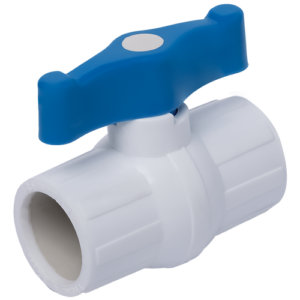
A UPVC ball valve that worked perfectly for years suddenly starts dripping, or refuses to turn, or no longer shuts off the flow completely — and the first instinct of many homeowners, farmers, and maintenance teams is to assume the valve is simply worn out and needs replacing. In many cases, that assumption is wrong. The majority of UPVC ball valve problems have specific, identifiable causes, and a significant proportion can be resolved without replacing the valve at all — if you know what you are looking at and how to respond correctly. UPVC ball valve problems and how to fix them is one of the most searched topics among people maintaining irrigation systems, plumbing networks, and industrial process lines, precisely because a stuck, leaking, or partially-functioning valve can disrupt an entire system — and because the wrong response (forcing a stiff handle, ignoring a small leak, or replacing a valve that just needed flushing) can turn a five-minute fix into an expensive repair. This guide covers the eight most common UPVC ball valve problems encountered in residential, agricultural, and industrial installations. For each problem, you will find the symptoms to look for, the most likely causes ranked by frequency, and a clear step-by-step fix. We also cover a preventive maintenance routine that avoids most of these problems before they start, and a repair-versus-replace framework to help you make the right call when a fix isn’t straightforward.
Table of Contents
ToggleWhy UPVC Ball Valves Fail — and Why Most Failures Are Preventable
UPVC ball valves are among the most reliable components in any water distribution system — when correctly specified and installed, a quality UPVC ball valve will routinely deliver 10 to 20 years of service with minimal attention. Yet valve problems remain one of the most common maintenance call-outs in residential plumbing, agricultural irrigation, and light industrial systems.
The gap between the theoretical reliability of UPVC ball valves and the frequency of real-world problems comes down to a small number of recurring root causes, almost all of which trace back to installation practices, water quality issues, or simple neglect — not to a fundamental weakness in the material or design itself. A valve installed without adequate pipe support develops joint stress that eventually leaks. A valve left closed for an entire season without being cycled can develop a stiff handle from settled debris or PTFE seat set. A valve in a line without upstream filtration accumulates grit on its sealing surfaces, eventually preventing full closure.
Each of these scenarios is preventable — either through correct installation practice from the outset, or through a simple periodic maintenance routine. The cost of ignoring early warning signs compounds quickly: a small stem packing drip left unaddressed can, over months, lead to water damage around the valve location; a stiff handle that is forced with a wrench can snap the stem and require full valve replacement when a gentle flush would have resolved the stiffness; a valve that doesn’t fully close, if not flushed and cleared early, can develop permanently scored seats that require replacement rather than simple cleaning.
Understanding the mechanism of how a ball valve operates — covered in the next section — helps you correctly diagnose which of the eight common problems you are facing, so that you apply the right fix the first time rather than guessing.
How a UPVC Ball Valve Works (So You Can Diagnose Faults Correctly)
A UPVC ball valve consists of a small number of components, and most problems can be traced to one specific component once you understand the basic mechanism.
The Core Components
- Body: the outer housing, typically two-piece or three-piece construction, that contains all other components and connects to the pipe
- Ball: the spherical element with a bore through its centre that rotates to open and close the flow path
- Seats: PTFE rings on either side of the ball that create the seal when the valve is closed and provide a low-friction bearing surface as the ball rotates
- Stem: the shaft connecting the handle to the ball, transmitting the quarter-turn rotation
- Stem packing: a seal (often PTFE) around the stem where it passes through the body, preventing leaks at the point where the stem exits the valve
- Handle: the external lever, typically a flat blade, that the user operates
Mapping Symptoms to Components
Most UPVC ball valve problems can be traced to one of these components based on where the symptom appears:
- Leaks at the body or where the valve meets the pipe → body, socket joint, or solvent weld issue
- Leaks around the handle when the valve is operated or stationary → stem packing
- Valve does not stop flow when closed → ball seats (PTFE seals)
- Handle is difficult to turn → ball-to-seat friction, debris in the chamber, or pipe-induced stress on the ball
- Visible damage to the body (cracks, discolouration, chalking) → material degradation, usually UV-related
With this mental model in place, the following eight sections work through each common problem in detail — the symptoms, the ranked causes, and the specific fix for each.
Valve Leaking at the Body or Joint
This is the most commonly reported UPVC ball valve problem, and it is almost always traceable to the installation rather than the valve itself. A leak that appears at the point where the pipe enters the valve body — visible as moisture, drips, or a damp patch around the joint — has a small number of specific causes.
Symptom
Water visible at the joint between the pipe and the valve body, ranging from a damp patch or white mineral deposit to an active drip or spray under pressure.
Likely Causes
- Insufficient or uneven solvent cement application during installation, leaving gaps in the bond
- Joint disturbed (moved or flexed) before the solvent cement fully cured
- Mechanical stress on the joint from unsupported pipe weight pulling on the valve socket
- Wrong type of solvent cement used (e.g., standard PVC cement on a CPVC valve, or vice versa)
- Pipe cut at an angle rather than square, creating an uneven seating surface inside the socket
How to Fix It
- Isolate the line and drain the section containing the leaking joint completely before attempting any repair.
- Cut out the leaking joint section cleanly using a pipe cutter or fine-tooth hacksaw, removing both the valve (if the joint is at the valve socket) and the affected pipe section.
- Deburr and chamfer the new pipe end, and dry-fit the replacement valve and pipe to confirm correct alignment before applying any cement.
- Apply primer to both the pipe end and the valve socket, followed by an even coat of solvent cement matched to the material (PVC cement for UPVC, CPVC cement for CPVC) on both surfaces.
- Insert the pipe into the socket with a quarter-turn twist to spread the cement evenly, and hold the joint steady for at least 30 seconds without movement.
- Allow the joint to cure for the time specified by the cement manufacturer — typically a minimum of 15 minutes before careful handling and 24 hours before full pressure is applied.
- Before backfilling or closing up the installation, install or check pipe supports within 200-300mm of the valve on both sides to prevent the same mechanical stress from recurring.
- Pressure test the repaired section at 1.5 times normal operating pressure for at least 30 minutes, checking the repaired joint and all adjacent joints for any sign of seepage.
Valve Handle Stiff or Hard to Turn
A handle that requires significantly more effort than usual to turn — or that appears completely seized — is the second most common UPVC ball valve problem, and it is also the problem most likely to be made dramatically worse by an incorrect response.
Symptom
The handle requires noticeably more force than normal to rotate, moves in small jerky increments, or appears completely immovable by hand.
Likely Causes
- Debris (sand, sediment, scale) lodged between the ball and the PTFE seats, creating friction
- The valve has been left in one position (open or closed) for an extended period, allowing the PTFE seat to take a permanent compression set against the ball
- Pipe misalignment is placing a side-load on the ball, increasing friction against the seats unevenly
- Mineral deposits (common in hard water areas) have built up on the stem or within the ball chamber
- The valve is genuinely past its service life and the PTFE seats have degraded
How to Fix It
- STOP — do not apply a wrench, pipe, or any lever extension to the handle. A standard UPVC ball valve handle is designed for one-hand operation only; forcing it is the single most common cause of broken stems and cracked valve bodies.
- Relieve line pressure if possible by closing an upstream isolation valve, reducing the force the ball is pressing against the seats.
- Apply gentle, steady pressure to the handle in small increments — a slight back-and-forth rocking motion (a few degrees each way) can help break loose minor debris without requiring full rotation force.
- If the valve begins to move, complete a full open-to-close-to-open cycle slowly, allowing the PTFE seats to redistribute and clear any minor debris from the seating surface.
- If the valve does not move with gentle pressure, flush the line at the highest available velocity (with the valve in its current position) to clear sediment from the chamber, then retry the gentle operation method.
- For valves in hard water areas with visible mineral deposits, a mild descaling solution (consult the valve manufacturer for compatibility) flushed through the line before attempting operation can help dissolve scale.
- If the valve remains immovable after these steps, do not continue forcing it — this indicates either a structural issue (pipe misalignment creating significant side-load) or seat degradation that requires valve replacement rather than continued attempts at operation.
Valve Does Not Fully Shut Off (Internal Leak)
This problem is particularly frustrating because the valve appears to operate normally — the handle turns smoothly through its full range — but water continues to flow (or drip) through the valve even when it is in the fully closed position. This indicates the sealing surfaces between the ball and the PTFE seats are no longer creating a complete seal.
Symptom
The handle moves freely and indicates the valve is closed (handle perpendicular to the pipe), but flow continues downstream — either as a reduced trickle or, in less severe cases, only detectable as a slow pressure drop over time on the downstream side.
Likely Causes
- Grit, sand, or sediment particles are lodged between the ball and the seat at the point of closure, preventing complete contact
- The PTFE seat surface has been scored or scratched by hard particles passing through the valve over time, creating permanent micro-channels that leak even when clean
- Overtightening of the stem packing gland in a previous repair attempt has distorted the ball’s seating alignment
- Thermal expansion/contraction has caused slight dimensional changes affecting the ball-to-seat fit (more common in valves exposed to large temperature swings)
How to Fix It
- With the valve in the closed position, open it fully and then close it again several times with deliberate, full-range motion — this can dislodge loose debris that is merely sitting on the seat rather than embedded.
- Flush the upstream line at maximum available flow velocity with the valve open, to clear any sediment that might re-enter the valve chamber when it is next closed.
- After flushing, close the valve fully and check again for through-flow. If the leak has stopped or significantly reduced, the cause was loose debris — install or clean an upstream Y-strainer to prevent recurrence.
- If the leak persists after flushing, check whether the stem packing gland nut has been overtightened in any previous repair — if so, loosen it slightly (no more than a quarter turn) and recheck the seal.
- If through-flow continues after these steps, the PTFE seats are likely scored or permanently damaged. This is not field-repairable on most standard ball valve designs — the valve requires replacement.
- Before installing the replacement valve, install (or verify the presence of) an upstream Y-strainer or filter appropriate for your water source, to prevent the same scoring damage from recurring on the new valve.
Dripping or Seeping Around the Stem/Handle
If you notice moisture specifically around the base of the handle, where the stem passes through the valve body — rather than at the pipe joints — the issue is with the stem packing, the seal that prevents leakage along the rotating shaft.
Symptom
A small but persistent drip or damp area specifically around the stem/handle base, often most visible when the valve is under pressure or immediately after operation.
Likely Causes
- The stem packing (typically a PTFE seal with a live-loading mechanism) has worn from repeated operation over years
- The packing gland nut has loosened over time due to vibration or thermal cycling
- The valve was operated while under excessive pressure beyond its rating, stressing the stem seal
- Manufacturing defect in the original stem seal (rare in BIS-certified valves but possible in uncertified products)
How to Fix It
- Locate the packing gland nut — typically a small nut or collar at the base of the handle, around the stem.
- Using an appropriately sized spanner, tighten the gland nut by a small increment — no more than one-quarter turn — and observe whether the drip stops or reduces.
- Operate the valve through a full cycle after tightening to confirm the handle still turns smoothly; overtightening can cause the stiff-handle problem described in Problem 2.
- If the drip stops, monitor over the following days — gland nuts can require minor re-tightening as the PTFE packing settles.
- If tightening the gland nut by a quarter turn does not stop the drip, do not continue tightening further — this risks distorting the ball seating (see Problem 3) without resolving the stem leak.
- If the drip persists after one careful quarter-turn adjustment, the PTFE stem packing has likely worn beyond what tightening can compensate for, and the valve should be replaced — stem packing is not a field-replaceable component on most standard UPVC ball valves.
Cracked, Brittle, or Discoloured Valve Body
A valve body that appears chalky, faded, or shows fine surface cracks (crazing) — particularly on valves installed outdoors or in direct sunlight — is showing signs of material degradation that, left unaddressed, will progress to structural failure.
Symptom
The valve body or handle has a faded, powdery, or chalky surface appearance compared to its original colour; fine surface cracks may be visible, particularly on the sun-facing side of the valve; in advanced cases, the body may crack fully when handled or operated.
Likely Causes
- UV (ultraviolet) degradation from prolonged direct sunlight exposure — the most common cause for outdoor-installed valves
- Standard (non-UV-stabilised) UPVC was used in an outdoor application where UV-stabilised grade was required
- Mechanical impact damage (from tools, machinery, or accidental knocks) creating stress points that develop into cracks over time
- Use of an incompatible solvent cement that chemically attacked the valve body material during installation
How to Fix It
- Assess the severity: light chalking with no visible cracks is an early-stage warning; any visible crack, however fine, means the valve’s structural integrity is compromised and pressure testing or continued operation is not advisable.
- For early-stage chalking with no cracks: install a UV-protective cover, sleeve, or valve box around the valve to halt further degradation, and plan replacement at the next convenient maintenance window.
- For any valve with visible cracking: isolate the line, drain the section, and replace the valve — do not attempt to operate or pressure-test a cracked UPVC valve body, as sudden failure under pressure can cause injury and significant water loss.
- When installing the replacement valve, specify UV-stabilised UPVC if the installation location receives direct sunlight for any significant portion of the day — this is a different (and only marginally more expensive) material grade from standard UPVC.
- For all outdoor valve installations going forward, install valve boxes, covers, or locate valves in shaded positions where practical, to extend the service life of even UV-stabilised materials.
- If mechanical impact is suspected as the cause (rather than UV), review the valve’s location relative to foot traffic, machinery movement, or storage areas, and relocate or protect the replacement valve accordingly.
Valve Chattering, Vibrating, or Making Noise
A valve that produces a rattling, chattering, or humming noise during operation — particularly when partially open — is signalling a flow condition issue rather than a defect in the valve itself in most cases.
Symptom
An audible rattling, buzzing, or chattering noise from the valve, often accompanied by visible vibration in the pipe, occurring most noticeably when the valve is partially open rather than fully open or fully closed.
Likely Causes
- The valve is being used in a partially-throttled position for sustained flow regulation — a use case ball valves are not designed for
- Flow velocity through the valve exceeds recommended limits for its size, causing turbulence-induced vibration
- The valve is undersized for the actual flow rate in the line
- Loose pipe supports allowing the pipe (and attached valve) to vibrate under flow-induced forces
How to Fix It
- First, check the valve position: if it is partially open (handle between fully open and fully closed), open it fully. Ball valves are designed for full-open or full-closed operation — partial throttling causes turbulent flow across the ball and seats that generates the chattering noise.
- If the noise persists with the valve fully open, the issue is likely flow velocity exceeding the valve’s design range. Calculate the actual flow velocity through the valve (flow rate divided by the valve’s bore cross-sectional area) and compare against the manufacturer’s recommended maximum velocity (typically 1.5 to 3 m/s for water service).
- If flow velocity is excessive, the long-term fix is to install a larger valve size at this point in the system — chattering at excessive velocity will cause accelerated wear on the seats even if the noise itself is only a nuisance.
- If you need sustained flow regulation (rather than simple on/off control) at this point, install a dedicated flow control valve or pressure regulator upstream or downstream of the ball valve, and use the ball valve only for full isolation.
- Check and tighten any loose pipe clamps or supports near the valve — secure pipe support reduces vibration transmission even when some turbulence is present in the flow.
- If chattering occurs only during pump start-up or shutdown (rather than during steady-state operation), investigate whether a check valve near the pump is functioning correctly, as pump-induced pressure transients can also cause valve chatter.
Valve Handle or Stem Snapped Off
A handle that has broken off entirely, or a stem that has sheared, leaves a valve that cannot be operated by normal means — and in many cases, leaves the valve in an unknown or partially-open position with no way to confirm or change its state.
Symptom
The handle is detached from the valve body, either lying loose or missing entirely, with the stem either flush with the body, protruding without the handle attached, or also broken below the body surface.
Likely Causes
- Excessive torque applied to a stiff handle, typically using a wrench, pipe extension, or pliers for additional leverage (see Problem 2)
- Impact damage to the handle from machinery, vehicles, or falling objects in the installation area
- Material fatigue in the handle or stem after many years of operation, particularly in valves exposed to UV degradation (see Problem 5) that weakens the plastic
- Manufacturing defect in the stem-to-handle connection (rare in certified products)
How to Fix It
- Do not attempt to operate the valve using pliers, a wrench gripping the remaining stem stub, or any improvised tool — this is likely to cause further damage to the stem or body and creates a risk of sudden valve movement under pressure.
- Determine the current valve position if possible by checking for flow downstream (if flow is present, the valve was open; if flow has stopped, it was closed or partially closed when it broke).
- If the valve was in the open position and you need to isolate the line, locate and operate an upstream isolation valve instead — do not attempt to force the broken valve closed.
- Once the line is isolated via an alternative valve (or fully drained if no alternative isolation point exists), drain the section containing the broken valve.
- Cut out the broken valve and the adjacent pipe sections as described in Problem 1’s fix steps, and install a replacement valve following the same solvent welding procedure.
- After replacement, investigate the root cause: if excessive torque was the cause, review why the original valve required such force — was it a Problem 2 stiff-handle situation that went unaddressed? Address that underlying cause to prevent recurrence on the new valve.
- Consider installing a valve handle lock or tag indicating ‘operate gently — do not use tools’ for any valve location where this type of damage has previously occurred, particularly if multiple personnel access the valve.
Reduced Flow Rate Through an Open Valve
If a valve is confirmed to be fully open (handle parallel to the pipe) but the flow rate downstream is noticeably lower than expected — lower water pressure at outlets, slower filling of tanks, or reduced irrigation coverage — the valve itself may or may not be the cause, and diagnosis requires a process of elimination.
Symptom
Flow rate or pressure downstream of the valve is lower than the system’s normal performance, despite the valve handle indicating a fully open position, with no visible leaks at the valve.
Likely Causes
- The valve is not actually fully open — handle position can be misleading if the stem has slipped slightly or if the handle was reinstalled incorrectly after a previous repair
- A reduced-bore (standard-port) valve was installed where a full-bore valve was specified, creating a permanent restriction even when fully open
- Sediment or scale build-up inside the valve body or ball bore is partially obstructing the flow path
- The reduction is not at the valve at all — an upstream filter, strainer, or another valve in the system is restricting flow
How to Fix It
- Visually confirm the valve’s internal bore alignment: with the valve isolated and drained, the handle should be exactly parallel to the pipe axis when open. If the handle appears parallel but you suspect the stem has slipped on its shaft, this requires valve replacement as the handle-to-stem connection cannot be reliably field-repaired.
- Check the valve’s specification against the original design: if a full-bore valve was specified but a reduced-bore valve was installed, the bore diameter will be visibly smaller than the pipe’s internal diameter when viewed through the open valve. This requires replacement with the correct full-bore valve to achieve design flow rates.
- With the valve open and the line drained, inspect the visible portion of the ball bore for scale or sediment build-up. Light deposits can sometimes be cleared with a flush at high velocity; heavy calcified deposits typically cannot be removed without damaging the PTFE seats and indicate the valve should be replaced.
- Before concluding the valve is the cause, check all upstream components in sequence: inlet strainers and filters (clean or replace filter elements), any other valves in the line (confirm all are fully open), and the pump or pressure source itself (confirm it is operating at its rated output).
- If the valve is confirmed as the restriction (via bore inspection or specification mismatch) and all other system components check out, replace with a correctly specified full-bore valve matched to the pipe’s internal diameter.
- After resolving, document the correct valve specification (size, bore type, schedule) at this location to prevent a future replacement from repeating the same specification error.
Quick Reference: All 8 Problems at a Glance
For fast diagnosis, here is a summary table covering all eight problems, their most likely causes, and the headline fix — refer back to the detailed sections above for the full step-by-step procedures:
| Problem | Likely Cause | Quick Fix |
|---|---|---|
|
Leak at body/joint |
Bad solvent weld, mechanical stress, wrong cement |
Cut out, re-cement correctly, support pipe |
|
Stiff/hard-to-turn handle |
Debris in chamber, pipe misalignment, long disuse |
Flush line, realign pipe, never force handle |
|
Won’t fully shut off |
Grit on seat, worn PTFE seat, overtightening |
Flush at velocity; replace if seat scored |
|
Dripping around stem |
Worn stem packing, loose gland nut |
Tighten gland 1/4 turn; replace if persists |
|
Cracked/brittle body |
UV degradation, wrong cement, impact damage |
Replace with UV-stabilised UPVC; protect from sun |
|
Chattering/vibration |
Partial throttling, oversized flow velocity |
Open fully; upsize valve; add flow regulator |
|
Handle/stem snapped |
Excessive torque, lever used on stiff valve |
Replace valve; investigate root cause of stiffness |
|
Reduced flow rate |
Partially closed valve, scale build-up, debris |
Confirm fully open; flush; check upstream filter |
Preventive Maintenance Checklist to Avoid Future Problems
Every one of the eight problems covered in this guide is significantly less likely to occur — or far easier to resolve when it does occur — if a simple preventive maintenance routine is followed. None of these tasks require specialist tools or skills, and most take only a few minutes per valve.
| Maintenance Task | Frequency | Why It Matters |
|---|---|---|
|
Operate every valve through a full open-close cycle |
Start and end of each season |
Redistributes PTFE seal lubricant; confirms operability |
|
Visually inspect for UV chalking or surface cracking |
Every 6 months for outdoor valves |
Early sign of UV degradation before structural failure |
|
Check all joints for moisture, crazing, or whitening |
Annually, or after any pressure event |
Identifies developing joint failures before they leak |
|
Flush lines at high velocity before season start |
Start of each irrigation/use season |
Clears sediment that accumulated during downtime |
|
Inspect/clean upstream filter screens |
Monthly during active use |
Reduces grit reaching valve seats, preventing scoring |
|
Check valve box/cover for buried valves |
Annually |
Ensures access for future maintenance; prevents soil ingress |
|
Tighten stem packing gland (if dripping) |
As needed, max 1/4 turn |
Resolves minor stem leaks without over-compression |
For systems with a large number of valves — agricultural irrigation networks, multi-storey building plumbing, or industrial plants — maintaining a simple log recording the location, size, and last-cycled date of each valve significantly improves the efficiency of this routine and ensures no valve is missed across an entire maintenance season.
When to Repair vs When to Replace
Throughout this guide, several problems concluded with ‘replace the valve’ as the recommended fix once certain conditions are met. This section consolidates that decision-making into a single reference, because choosing correctly between repair and replacement — and doing so promptly — avoids both unnecessary cost (replacing a valve that could have been simply flushed) and unnecessary risk (continuing to operate a structurally compromised valve).
| Situation | Recommendation | Reasoning |
|---|---|---|
|
Minor stem packing drip |
Repair |
Tighten gland nut by 1/4 turn. If leak persists after this, move to replace. |
|
Body crack at socket |
Replace |
Body cracks compromise structural integrity entirely — no field repair is reliable. |
|
Debris causing stiff handle |
Repair |
Flush the line and the valve chamber; operate gently. Usually resolves without parts. |
|
Worn/scored PTFE seat (leaking through) |
Replace |
PTFE seats are not field-replaceable on most ball valve designs; replacement is faster and cheaper. |
|
Broken handle (snapped off) |
Replace |
No safe way to operate the valve without a handle; replacement is the only reliable option. |
|
UV-chalked surface, no cracking yet |
Repair (temporary) / Replace (long-term) |
Add a protective cover/sleeve as a stopgap, but plan replacement with UV-stabilised UPVC. |
|
Large flanged valve (3 inch+) with isolated fault |
Repair (consult manufacturer) |
High replacement cost may justify factory rebuild service for large valves — consult supplier. |
As a general principle: any fix that involves cleaning, flushing, gentle operation, or a single small adjustment (such as a quarter-turn on a packing gland) is safe to attempt as a repair. Any fix that would require disassembling the valve body, replacing internal seats or seals, or repairing a cracked body is, for the overwhelming majority of UPVC ball valves on the market, more reliably and more cost-effectively addressed by replacement — UPVC ball valves are manufactured at a cost point where the labour and risk involved in field disassembly rarely justifies the saving compared to a new valve.
Our Recommended UPVC Ball Valve Range for Reliable Performance
Many of the problems covered in this guide — seat scoring from sediment, UV-related body degradation, and stem packing wear — are significantly less likely with correctly specified, quality-manufactured valves from the outset. Ashok Polymers’ UPVC ball valve range is designed specifically to minimise these failure modes over a long service life.
Our range includes Schedule 40 and Schedule 80 UPVC ball valves from 1/2 inch through 4 inch, with PTFE seats and live-loaded PTFE stem packing for long-term seal reliability, full-bore designs that avoid the flow restriction issues covered in Problem 8, and UV-stabilised body material for all valves intended for outdoor or agricultural installation. Three-piece union-end configurations are available for any application where future maintenance access is a priority.
All valves in our range are manufactured to BIS IS 9890 standards and independently pressure-tested before dispatch, giving you confidence that the valve itself is not a weak point in your system — leaving correct installation and the simple maintenance routine in this guide as the only factors determining your valve’s service life.
Whether you are replacing a single failed valve identified using this guide, or planning a system-wide valve standard to minimise future maintenance call-outs, Ashok Polymers supplies homeowners, farmers, plumbing contractors, and industrial maintenance teams across India, with bulk pricing available for larger projects. Browse our UPVC ball valve range on our product page to find the correct replacement specification and request a quotation.
Frequently Asked Questions (FAQs)
A stiff UPVC ball valve handle is most commonly caused by debris (sand or sediment) lodged between the ball and the PTFE seats, or by the valve being left in one position for an extended period, causing the seat to take a compression set. Never force the handle with a wrench — relieve pressure, apply gentle rocking motion, and flush the line. If it remains stiff, the valve likely needs replacement.
This is usually caused by grit or sediment lodged between the ball and the seat at the closure point, or by the PTFE seat surface being scored from years of particles passing through. Try cycling the valve fully open and closed several times and flushing the line at high velocity. If the leak persists, the seats are likely permanently damaged and the valve needs replacement — install an upstream strainer on the replacement to prevent recurrence.
A UPVC ball valve with any visible crack in the body should be replaced, not repaired. Cracks indicate the structural integrity of the body has been compromised — typically by UV degradation or impact damage — and continuing to operate or pressure-test a cracked valve risks sudden failure. Replace with UV-stabilised UPVC if the installation is outdoors.
Dripping around the handle indicates the stem packing — the seal around the rotating shaft — has worn or the packing gland nut has loosened. Try tightening the gland nut by a quarter turn. If this does not stop the drip, the stem packing has worn beyond repair and the valve should be replaced, as stem packing is not field-replaceable on most standard UPVC ball valves.
Chattering noise usually occurs when a ball valve is operated in a partially open position rather than fully open — ball valves are designed for full open/closed operation, not flow throttling. Open the valve fully first. If noise continues, flow velocity may exceed the valve’s recommended range, indicating the valve is undersized for the application and should be upsized.
Valves that remain in a fixed position for extended periods should be cycled through a full open-close-open operation at least at the start and end of each season (or every 3-6 months for valves in continuous industrial service). This redistributes lubrication on the PTFE seats and prevents the seat from taking a permanent compression set against the ball, which is a common cause of stiff handles.
Do not attempt to operate the valve using pliers or a wrench on the remaining stem. Locate an alternative upstream isolation valve to control flow, then drain the line and replace the broken valve following standard solvent weld procedures. Investigate why the original handle broke — if excessive force was used on a stiff valve, address that underlying cause before it recurs on the replacement.
A correctly specified, correctly installed, BIS-certified UPVC ball valve with basic periodic maintenance should provide 10 to 20 years of reliable service. Problems appearing significantly earlier than this usually point to an installation issue (inadequate pipe support, wrong solvent cement), a water quality issue (high sediment without filtration), or UV exposure on a non-UV-stabilised valve in an outdoor location — all addressable through the fixes in this guide.
Conclusion
The eight UPVC ball valve problems covered in this guide — joint leaks, stiff handles, incomplete shut-off, stem packing drips, cracked bodies, chattering noise, snapped handles, and reduced flow — account for the overwhelming majority of valve-related issues encountered in residential, agricultural, and industrial systems. In nearly every case, the root cause is identifiable, the diagnostic process is straightforward once you understand how a ball valve’s components relate to its symptoms, and the correct response is either a simple fix or a clear decision to replace.
The single most important principle running through every section of this guide is this: gentle, informed troubleshooting resolves far more problems than force ever does. A stiff handle responds to gentle cycling and flushing, not a wrench. A small leak responds to correct re-cementing with proper pipe support, not over-tightening. And a valve that has genuinely reached the end of its service life — cracked, scored, or structurally compromised — is replaced promptly rather than persisted with, avoiding the larger failures and consequential damage that come from ignoring early warning signs.
Combine the troubleshooting steps in this guide with the preventive maintenance checklist in Section 11, and the majority of UPVC ball valve problems can be avoided entirely — or caught and resolved at the minor-fix stage before they become a replacement. When replacement is needed, choosing a quality, correctly specified valve from the outset — UV-stabilised where required, full-bore where flow matters, and correctly sized for your system — gives you the best chance of years of trouble-free operation before you need this guide again.
 Previous Post