 Call Us Now!
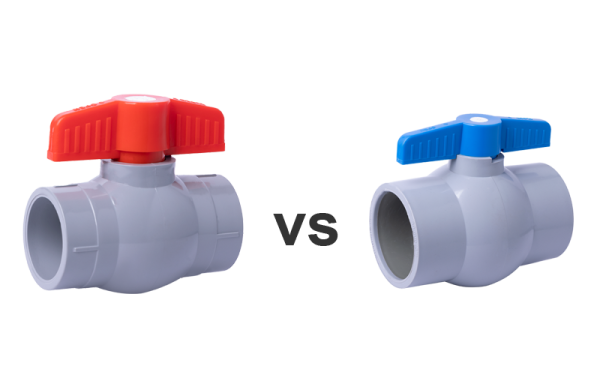
In plumbing, irrigation, and industrial piping systems, selecting the right type of valve is essential for performance, durability, and cost efficiency. Among the most commonly used options are PVC ball valves and RPVC ball valves. While both are made from similar base material, they differ in strength, rigidity, and application suitability. Many buyers get confused when choosing between them, which can lead to poor system performance or unnecessary expenses. In this detailed guide, we will explore the key differences between RPVC and PVC ball valves, their advantages, and help you decide which one is better for your needs.
Table of Contents
ToggleKey Differences Between RPVC and PVC Ball Valves
Material Composition & Strength
PVC (Polyvinyl Chloride) is a commonly used plastic material known for its flexibility and lightweight properties. It is suitable for general-purpose applications where extreme strength is not required.
RPVC (Rigid Polyvinyl Chloride), on the other hand, is a more refined and rigid version of PVC. It is manufactured to provide higher structural strength and durability, making it ideal for heavy-duty and industrial applications.
Rigidity & Structural Stability
PVC ball valves have a slightly flexible structure, which makes them easier to install and handle. However, this flexibility reduces their ability to withstand mechanical stress.
RPVC ball valves are highly rigid and maintain their shape even under pressure. This rigidity ensures better structural stability and long-term reliability.
Pressure Handling Capacity
PVC ball valves are designed for low to medium pressure systems such as residential plumbing and irrigation. They perform well in standard conditions but may not be suitable for high-pressure environments.
RPVC ball valves are built to handle medium to high pressure, making them suitable for industrial pipelines and demanding applications.
Durability & Lifespan
PVC valves offer moderate durability and are suitable for short to medium-term use in non-critical systems.
RPVC valves are highly durable and provide a longer lifespan due to their strong construction. They are less prone to wear and tear, even in challenging conditions.
Application Areas
PVC ball valves are widely used in household plumbing, agriculture, water tanks, and irrigation systems due to their affordability and ease of use.
RPVC ball valves are commonly used in industrial applications, chemical processing, water treatment plants, and commercial systems where performance is critical.
Cost & Budget Consideration
PVC ball valves are cost-effective and ideal for budget-conscious users. They provide good performance at a lower price point.
RPVC ball valves are slightly more expensive due to their enhanced quality and durability. However, they offer better long-term value by reducing maintenance and replacement costs.
Impact Resistance
PVC valves have limited resistance to physical impact and may crack under heavy stress or rough handling.
RPVC valves have higher impact resistance, allowing them to withstand mechanical stress and external forces more effectively.
Performance Under Stress
PVC ball valves perform efficiently under normal conditions but may lose efficiency when exposed to high pressure or stress.
RPVC ball valves are designed for high performance and can operate reliably under stress, making them suitable for demanding environments.
Temperature Resistance
PVC ball valves can handle standard temperature ranges but are not ideal for high-temperature applications.
RPVC ball valves offer better temperature resistance and can perform more efficiently in environments with temperature fluctuations.
Maintenance & Reliability
PVC valves may require periodic maintenance, especially when used in slightly demanding conditions.
RPVC valves require minimal maintenance due to their robust construction and consistent performance over time.
Advantages of RPVC Ball Valves
- Strong and rigid structure
- High pressure resistance
- Longer lifespan
- Suitable for industrial applications
- Better performance under stress
Advantages of PVC Ball Valves
- Affordable and budget-friendly
- Lightweight and easy to install
- Corrosion-resistant
- Suitable for residential use
- Low maintenance
Which is Better: RPVC or PVC Ball Valve?
The answer depends on your specific requirements.
Choose PVC Ball Valve if
- You need a cost-effective solution
- Your system has low to medium pressure
- It is for residential or irrigation use
Choose RPVC Ball Valve if
- You need high durability
- Your system operates under higher pressure
- It is for industrial or heavy-duty use
In simple terms, PVC is best for affordability, while RPVC is best for performance and durability.
FAQs
RPVC is more rigid and stronger than PVC.
RPVC ball valves are more durable.
No, it is better for low to medium pressure.
Yes, slightly more expensive than PVC valves.
PVC ball valves are suitable for home use.
Yes, it is ideal for industrial applications.
Yes, both are corrosion-resistant.
RPVC valves generally last longer.
Yes, both are easy to install.
Choose based on pressure, application, and budget.
Conclusion
Understanding the difference between RPVC and PVC ball valves is essential for selecting the right valve for your system. While PVC valves are cost-effective and suitable for basic applications, RPVC valves offer superior strength, durability, and performance for demanding environments.
By evaluating your requirements carefully, you can choose the right valve that ensures efficiency, reliability, and long-term value.
 Previous Post
 Next Post