
 Call Us Now!
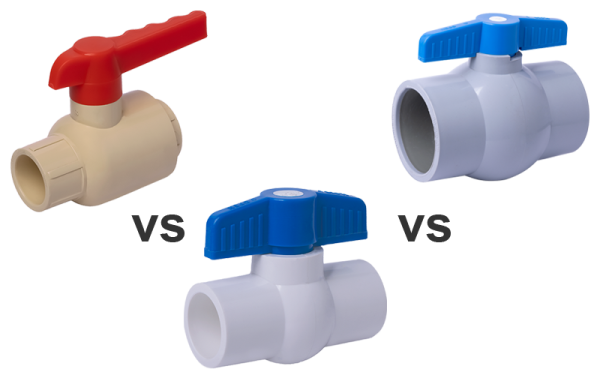
Choosing the wrong plastic ball valve can cost you thousands in repairs, system downtime, or premature failures. Whether you are a plumber, contractor, or plant engineer, one question keeps coming up: should I use UPVC, CPVC, or standard PVC? All three are made from PVC-based materials, all three look similar, and all three are used in fluid control systems — yet they perform very differently under pressure, heat, and chemical exposure. Picking the wrong one is a mistake that is easy to make and expensive to fix. In this complete comparison guide, you will learn exactly what makes UPVC, CPVC, and PVC ball valves different from each other, when to use each one, their key advantages and limitations, and which material is the best choice for your specific application.
Table of Contents
ToggleWhy Choosing the Right Plastic Ball Valve Matters
Every year, maintenance engineers and contractors make costly errors by substituting one plastic valve type for another — simply because they look the same. A standard PVC valve installed on a hot water line softens and fails. A CPVC valve used on an aggressive solvent line cracks and leaks. An UPVC valve selected for a food-grade system may not meet hygiene certifications.
The root cause of most plastic valve failures is material mismatch — using a valve that was not designed for the operating temperature, pressure, or chemical environment of the system.
The global plastic valve market is projected to exceed USD 8 billion by 2028, driven largely by demand for corrosion-resistant, lightweight alternatives to metal valves. But this growth also brings confusion — PVC, UPVC, and CPVC are often used interchangeably in product listings, even though they have meaningfully different properties.
Understanding these differences is not just a technical detail — it is a safety and cost issue. Let us break it down clearly.
Understanding the Three Materials: PVC, UPVC, and CPVC
What is PVC?
PVC stands for Polyvinyl Chloride — a widely used thermoplastic polymer. In its base form, PVC contains plasticizers and additives to make it flexible and workable. Standard PVC is soft, flexible, and commonly used for flooring, cables, and flexible tubing. In plumbing, the term “PVC” is often used loosely to mean rigid plastic pipe — but technically, it refers to the unmodified base polymer.
What is UPVC?
UPVC — Unplasticised Polyvinyl Chloride — is PVC that has been manufactured without plasticizers. Removing plasticizers makes the material rigid, hard, and highly durable. UPVC is the most common material used in pressure piping, door and window frames, and drainage systems. It has excellent rigidity, good chemical resistance, and performs well at ambient temperatures.
What is CPVC?
CPVC — Chlorinated Polyvinyl Chloride — is PVC that has undergone an additional chlorination process. This extra chlorination increases the chlorine content from about 57% in standard PVC to 67% in CPVC. This structural change significantly improves heat resistance and allows CPVC to handle temperatures up to 93°C (200°F) — nearly double the limit of standard UPVC.
Head-to-Head Comparison: UPVC vs CPVC vs PVC Ball Valves
The table below provides a clear side-by-side comparison of all three material types across the most critical performance parameters:
| Property | UPVC | CPVC | PVC |
|---|---|---|---|
|
Material Base |
Rigid PVC (no plasticizer) |
Chlorinated PVC |
Standard PVC polymer |
|
Max Temperature |
60°C / 140°F |
93°C / 200°F |
60°C / 140°F |
|
Pressure Rating |
Up to 150 PSI |
Up to 400 PSI |
Up to 150 PSI |
|
Chemical Resistance |
Excellent |
Superior |
Good |
|
UV Resistance |
Good |
Moderate |
Poor |
|
Cold Water Use |
Excellent |
Excellent |
Excellent |
|
Hot Water Use |
Not Suitable |
Excellent |
Not Suitable |
|
Relative Cost |
Low |
Medium–High |
Lowest |
|
Color (Standard) |
Grey / White |
Cream / Yellow |
Grey / White |
|
Food Grade Option |
Available |
Available |
Limited |
|
Solvent Weld |
Yes |
Yes (CPVC cement) |
Yes |
|
Common Uses |
Cold water, drainage |
Hot water, industrial |
General plumbing |
UPVC Ball Valves — Properties, Advantages & Best Applications
UPVC ball valves are the most widely used plastic valves in water supply, irrigation, drainage, and general plumbing systems. Their combination of strength, corrosion resistance, and affordability makes them the default choice for most ambient-temperature applications.
Key Properties of UPVC Ball Valves
• Maximum operating temperature: 60°C (140°F)
• Pressure rating: up to 150 PSI (10 bar) at 23°C
• Excellent resistance to acids, alkalis, salts, and chlorine
• Rigid, dimensionally stable, and impact-resistant
• Available in Schedule 40 and Schedule 80 wall thicknesses
• Lighter than metal — easy to handle and install
Advantages of UPVC Ball Valves
1. Cost-effective — significantly cheaper than CPVC or metal valves
2. Corrosion-proof — will not rust, scale, or pit over time
3. Long service life — 20 to 30 years under normal conditions
4. Low maintenance — no lubrication or painting required
5. Wide availability — readily stocked in most plumbing suppliers
Limitations of UPVC Ball Valves
• Not suitable for water above 60°C — softens and deforms
• Becomes brittle below -10°C — not ideal for freeze-prone environments
• Susceptible to UV degradation without UV stabilisers
• Not compatible with some chlorinated or aromatic solvents
Best Applications for UPVC Ball Valves
• Cold and ambient temperature water supply lines
• Irrigation systems and water treatment plants
• Swimming pool and spa circulation
• Chemical dosing lines (acid/alkali resistant grades)
• Drainage and wastewater management systems
CPVC Ball Valves — Properties, Advantages & Best Applications
CPVC ball valves are the premium choice for high-temperature applications. The additional chlorination process gives CPVC remarkable thermal stability, making it the only plastic ball valve suitable for hot water and industrial process lines.
Key Properties of CPVC Ball Valves
• Maximum operating temperature: 93°C (200°F)
• Pressure rating: up to 400 PSI in Schedule 80 configurations
• Superior resistance to a wider range of industrial chemicals
• Cream or light yellow colour distinguishes it from UPVC
• Requires CPVC-specific solvent cement for jointing — not interchangeable with PVC cement
• Meets NSF/ANSI 61 for potable water contact in most grades
Advantages of CPVC Ball Valves
1. Hot water capability — the only plastic valve rated for sustained 93°C use
2. Higher pressure ratings — suitable for more demanding industrial systems
3. Better fire resistance compared to standard PVC or UPVC
4. Excellent dimensional stability — resists creep and deformation under heat
5. Lower thermal conductivity than metals — less heat loss in hot water lines
Limitations of CPVC Ball Valves
• Higher cost — typically 2x to 3x the price of equivalent UPVC valves
• More brittle than UPVC — can crack under mechanical impact
• Requires CPVC-specific adhesive — incorrect cement causes joint failure
• Lower UV resistance than UPVC — needs protection in outdoor installations
Best Applications for CPVC Ball Valves
• Hot and cold water distribution in buildings and hotels
• Industrial hot water and steam condensate lines
• Chemical process pipelines with elevated temperatures
• Fire suppression systems (CPVC is listed for fire sprinkler use)
• Solar water heating system piping
Standard PVC Ball Valves — Properties, Advantages & Best Applications
When people refer to “PVC ball valves” in general plumbing contexts, they most often mean UPVC valves — since true flexible PVC is not used in pressure valve applications. However, in some regions and product catalogues, “PVC Schedule 40” and “Schedule 80” valves are sold under the broad label of PVC, and these are equivalent to UPVC in performance.
For the purposes of this guide, standard PVC ball valves refer to the most basic-grade, budget-oriented plastic valves used in low-pressure, ambient-temperature general plumbing.
Key Properties of Standard PVC Ball Valves
• Maximum operating temperature: 60°C (140°F) — same as UPVC
• Pressure rating: up to 150 PSI at room temperature
• Good resistance to dilute acids, alkalis, and salts
• Lowest cost among the three material types
• Grey or white colour — visually similar to UPVC
Advantages of Standard PVC Ball Valves
1. Lowest upfront cost — ideal for tight-budget residential projects
2. Easy availability — sold in every plumbing and hardware store
3. Compatible with standard PVC pipe and fittings — simple to install
4. Suitable for all ambient-temperature water applications
Limitations of Standard PVC Ball Valves
• Not suitable for hot water above 60°C
• Poorer UV and weather resistance than UPVC unless UV-stabilised
• Limited food-grade or industrial chemical certifications
• Lower chemical resistance range compared to CPVC
Best Applications for Standard PVC Ball Valves
• Residential cold water plumbing and drain lines
• Temporary installations or low-cost projects
• Garden and landscape irrigation
• Low-pressure general-purpose flow control
How to Choose the Right Ball Valve: UPVC, CPVC, or PVC?
Use this simple decision guide to select the correct valve for your application:
| If Your Application Is... | Choose This Valve |
|---|---|
|
Cold water supply, irrigation, drainage |
UPVC or PVC Ball Valve |
|
Hot water lines above 60°C |
CPVC Ball Valve |
|
Industrial chemicals at elevated temperatures |
CPVC Ball Valve (Schedule 80) |
|
Budget residential or temporary plumbing |
Standard PVC Ball Valve |
|
Outdoor UV-exposed installation |
UV-stabilised UPVC Ball Valve |
|
Fire suppression or sprinkler system |
Listed CPVC Ball Valve |
Our Complete Range of UPVC, CPVC & PVC Ball Valves
Finding the right plastic ball valve does not have to be complicated. Whether you need a standard UPVC valve for a cold water irrigation project or a high-pressure CPVC valve for an industrial hot water system, choosing a trusted manufacturer ensures you get the right specification, the right certifications, and the right performance every time.
Our ball valve range covers all three material types — UPVC, CPVC, and standard PVC — in sizes from 1/2 inch to 6 inches, with full port, true union, two-piece, and electrically actuated options available.
• UPVC Ball Valves — Rated to 150 PSI, ideal for cold water and chemicals
• CPVC Ball Valves — Rated to 400 PSI, certified for hot water up to 93°C
• PVC Ball Valves — Budget-friendly option for standard plumbing applications
• All valves available with EPDM, PTFE, or FKM seats to match your fluid
Over 2,000+ engineers and contractors rely on our plastic valve range for water treatment, chemical processing, and building services projects. Explore our full catalogue or request a free specification consultation today.
FAQs
No — UPVC ball valves should not be used for water temperatures above 60°C (140°F). At higher temperatures, UPVC begins to soften and deform, causing leaks and valve failure. For hot water applications, always use a CPVC ball valve, which is rated up to 93°C.
Yes. CPVC ball valves are typically 2 to 3 times more expensive than equivalent UPVC valves due to the additional chlorination process and more complex manufacturing. However, for hot water or high-pressure applications, CPVC is the only plastic option — the cost difference is justified by performance and safety.
No — this is a critical mistake many installers make. UPVC and CPVC require different solvent cements. Using standard PVC cement on CPVC joints will result in a weak bond that can fail under pressure or heat. Always use CPVC-rated solvent cement for CPVC installations.
In practical terms, most “PVC ball valves” sold for plumbing and industrial use are actually UPVC — the rigid, plasticiser-free form of PVC. Standard (flexible) PVC is not used for pressure valves. The confusion arises from loose terminology in the industry. When in doubt, check the material specification: look for UPVC or uPVC on the datasheet.
CPVC offers the best overall chemical resistance among the three types, particularly at elevated temperatures. UPVC also has excellent chemical resistance for ambient-temperature applications involving acids, alkalis, and salts. Standard PVC has good resistance to dilute chemicals but is not recommended for concentrated industrial fluids. Always consult a chemical compatibility chart for your specific fluid.
Conclusion
Choosing between UPVC, CPVC, and PVC ball valves comes down to three key factors: operating temperature, pressure requirements, and chemical compatibility.
- Use UPVC for cold water, ambient-temperature chemical lines, and outdoor drainage
- Use CPVC for hot water, high-pressure industrial lines, and elevated-temperature processes
- Use standard PVC for budget-conscious residential plumbing and low-pressure general applications
Understanding these differences ensures your piping system performs safely and reliably for years without costly replacements or emergency repairs. The right material is not the cheapest option — it is the one designed for your specific operating conditions.
Ready to choose the right valve for your project? Explore our full range of UPVC, CPVC, and PVC ball valves — or speak to our technical team for a free specification review. We will help you get it right the first time.
 Previous Post
 Next Post