
 Call Us Now!
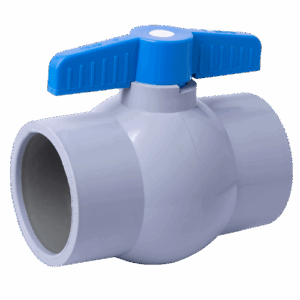
Have you ever wondered what controls the flow of water through a pipe with just a simple 90-degree turn? The answer is a ball valve — and if you are working with plastic piping systems, chances are you need a PVC ball valve. Whether you are a homeowner, plumber, or engineer, understanding how this small but powerful device works can save you time, money, and costly mistakes. In this complete beginner guide, you will learn exactly how a PVC ball valve works, what its main components are, the different types available, and where they are commonly used. By the end of this post, you will have a solid understanding of PVC ball valves and how to choose the right one for your needs.
Table of Contents
ToggleWhat is a PVC Ball Valve — And Why Does It Matter?
If you have ever installed a water supply line, irrigation system, or chemical pipeline, you already know how critical it is to control the flow of fluid accurately. A wrongly chosen valve can lead to leaks, pressure drops, or even complete system failure.
Many people choose the wrong valve for their piping system simply because they do not understand how it works. Metal valves are heavy, prone to corrosion, and expensive. Rubber diaphragm valves are slow to operate. Gate valves require multiple turns to open or close. This is exactly where a PVC ball valve becomes the ideal solution.
A PVC ball valve is a type of quarter-turn valve made from Polyvinyl Chloride (PVC) — a lightweight, corrosion-resistant thermoplastic. It uses a hollow, perforated ball to control fluid flow. When the ball’s hole aligns with the pipe, fluid flows freely. When turned 90 degrees, the ball blocks the flow completely.
According to industry data, PVC piping systems account for over 60% of all plastic pipe installations worldwide — making PVC ball valves one of the most frequently used components in modern plumbing, irrigation, and industrial piping.
Key Components of a PVC Ball Valve
Before understanding how a PVC ball valve works, it helps to know its individual parts. Each component plays a specific role in ensuring the valve operates smoothly and lasts for years.
Valve Body
The outer casing of the valve, typically made from Schedule 40 or Schedule 80 PVC. It houses all internal components and connects to the pipe system using threaded or socket ends.
Ball
The heart of the valve — a hollow sphere with a circular bore (hole) through its center. The ball is usually made from PVC or PTFE-coated material. When the bore aligns with the pipe, fluid flows through. When it rotates 90 degrees, the bore faces the valve body wall and stops the flow.
Handle
The lever you turn to operate the valve. Most standard PVC ball valves use a manual handle that snaps to a 90-degree stop — open (parallel to the pipe) or closed (perpendicular to the pipe). Advanced versions use pneumatic or electric actuators.
Stem
A shaft that connects the ball to the handle (actuator). When you turn the handle, the stem rotates the ball. The stem is sealed with O-rings to prevent leakage around the shaft.
Seats
Soft elastomer or PTFE rings that sit on both sides of the ball. They create a tight seal between the ball and the valve body, ensuring zero leakage when the valve is in the closed position.
End Connections
PVC ball valves come with different end types: threaded (FNPT/MNPT), socket/solvent weld, or union ends. The end connection determines how the valve connects to your pipe system.
How Does a PVC Ball Valve Work? Step-by-Step Mechanism
The operating principle of a PVC ball valve is simple, reliable, and fast. Here is how it works from open to closed in a clear step-by-step format:
Step 1 — Open Position (Flow Allowed)
When the handle is parallel to the pipe, the bore of the ball is in line with the direction of flow. Fluid enters from the inlet side, passes through the hollow ball, and exits at the outlet. This is the fully open position with zero flow restriction.
Step 2 — Rotate the Handle 90 Degrees
Turning the handle a quarter-turn (90 degrees) rotates the stem, which in turn rotates the ball inside the valve body. This is why ball valves are also called quarter-turn valves.
Step 3 — Closed Position (Flow Blocked)
When the handle is perpendicular (at right angles) to the pipe, the solid wall of the ball faces the flow path. Fluid cannot pass through because the bore is now pointing sideways — completely blocking the pipe. The PTFE seats press against the ball to create a leak-proof seal.
Step 4 — Visual Indicator
One of the key advantages of a PVC ball valve is instant visual confirmation. The handle position tells you at a glance whether the valve is open or closed — no guessing required.
Key operating principle summary:
• Handle parallel to pipe = OPEN (fluid flows)
• Handle perpendicular to pipe = CLOSED (fluid blocked)
• 90-degree turn = complete open or close action
• No partial positions — it is either fully open or fully closed
Types of PVC Ball Valves You Should Know
Not all PVC ball valves are the same. Depending on your application, you will need a specific type. Here are the most common types:
Full Port (Full Bore) Ball Valve
The internal bore is the same diameter as the pipe. This means there is no flow restriction — ideal for applications requiring maximum flow rates. Commonly used in water supply, irrigation, and industrial pipelines.
Reduced Port (Standard Port) Ball Valve
The bore is slightly smaller than the pipe diameter. This is the most common type and is more compact and cost-effective. Suitable for most standard plumbing applications where a slight pressure drop is acceptable.
True Union Ball Valve
Features union connections on both ends, allowing the valve to be removed from the pipeline without cutting the pipes. Perfect for systems that require regular maintenance or replacement.
Three-Way Ball Valve
Has three ports — one inlet and two outlets (or two inlets and one outlet). Used to divert or mix flow between two different lines. Common in chemical dosing systems and water treatment plants.
Electrically Actuated Ball Valve
Instead of a manual handle, an electric motor operates the valve. This type is used in automated systems, remote-controlled pipelines, and industrial process control systems.
Common Applications of PVC Ball Valves
PVC ball valves are incredibly versatile. Here is where you will find them most commonly used:
• Residential plumbing and water supply lines
• Swimming pool and spa circulation systems
• Garden irrigation and drip systems
• Chemical and acid dosing pipelines
• Water treatment and filtration plants
• Aquaculture and fish farming water systems
• Industrial process pipelines handling corrosive fluids
• Solar water heating systems
Choose the Right PVC Ball Valve for Your System
If you are looking for a reliable, long-lasting PVC ball valve for your plumbing or industrial project, selecting a high-quality valve from a trusted manufacturer makes all the difference.
The best PVC ball valves offer pressure ratings up to 150 PSI, EPDM or PTFE seats for superior sealing, Schedule 40 and Schedule 80 body options, true union design for easy maintenance, and sizes ranging from 1/2 inch to 4 inches or larger.
When choosing a PVC ball valve, always verify the pressure rating, temperature range, and chemical compatibility for your specific application. Whether you need a manual valve for home irrigation or an electrically actuated valve for an industrial process line, selecting the correct specification ensures safety and performance.
Over 1,000+ contractors, plumbers, and plant engineers trust quality PVC ball valves for their critical installations. Explore our range of PVC ball valves designed for every application and budget.
FAQs
Most standard PVC ball valves are rated for 150 PSI (10 bar) at room temperature (23°C / 73°F). However, the pressure rating decreases as the temperature increases. For high-temperature applications, always check the manufacturer’s pressure-temperature (P-T) derating chart before installation.
Standard PVC ball valves are not suitable for water temperatures above 60°C (140°F). For hot water applications, CPVC (Chlorinated PVC) ball valves are recommended, as they can handle temperatures up to 93°C (200°F). Always check the temperature rating before selecting your valve.
A PVC ball valve operates with a 90-degree quarter turn and gives either full open or fully closed flow — making it fast and easy to operate. A gate valve requires multiple full rotations to open or close and allows for partial flow control. Ball valves are preferred for on/off applications due to their speed and reliable sealing.
A high-quality PVC ball valve can last 10 to 25 years under normal operating conditions — provided it is used within its rated pressure and temperature range, is not exposed to UV light without UV protection, and is operated correctly without over-tightening.
Yes — PVC has excellent resistance to a wide range of acids, alkalis, salts, and other chemicals. However, PVC is not compatible with chlorinated solvents, ketones, or aromatic hydrocarbons. Always consult a chemical compatibility chart before using a PVC ball valve with industrial chemicals.
Conclusion
A PVC ball valve is one of the simplest, most reliable, and most cost-effective ways to control fluid flow in any piping system. By understanding its components, working mechanism, and the different types available, you are now equipped to make an informed decision for your next project.
To summarise: the hollow ball inside the valve rotates 90 degrees to either allow or block flow, the PTFE seats ensure a leak-proof seal, and the visual handle position tells you at a glance whether the valve is open or closed. Whether you are building a home irrigation system or a large industrial pipeline, the right PVC ball valve will give you years of reliable, maintenance-free performance.
 Previous Post
 Next Post