 Call Us Now!
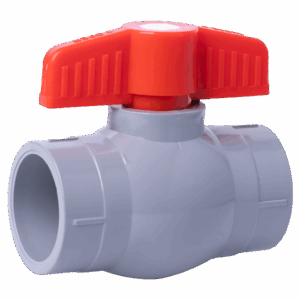
A single substandard ball valve can shut down an entire production line, contaminate a water supply, or cause a catastrophic chemical leak. Yet every year, procurement managers and project engineers make the same costly mistake — selecting an RPVC ball valve manufacturer based on price alone, without verifying quality, certifications, or manufacturing capability. The market for rigid PVC (RPVC) ball valves is crowded with hundreds of suppliers, from premium ISO-certified manufacturers to low-cost importers selling non-compliant products. Telling them apart from a product listing or catalogue is nearly impossible without knowing exactly what to look for. In this complete buyer’s guide, you will learn the 8 critical factors to evaluate when choosing an RPVC ball valve manufacturer — covering material standards, certifications, production capability, quality testing, lead times, and after-sales support. By the end, you will have a clear checklist to make a confident, informed sourcing decision.
Table of Contents
ToggleWhat is an RPVC Ball Valve — and Why Does the Manufacturer Matter?
RPVC — Rigid Polyvinyl Chloride — is the unplasticised, rigid form of PVC used in pressure piping systems, chemical dosing lines, water treatment plants, irrigation networks, and industrial fluid control applications. RPVC ball valves offer excellent corrosion resistance, low weight, chemical compatibility, and a long service life when manufactured to the correct specification.
The problem is that RPVC ball valves are deceptively simple-looking products. Two valves sitting side by side in a product catalogue can look identical, carry the same nominal pressure rating, and differ by 60% in price — yet one will last 20 years and the other will fail within 18 months.
The difference lies entirely in the manufacturer: the quality of raw materials they source, the tolerances they hold during moulding, the seats and O-rings they specify, and the tests they conduct before products leave their facility.
According to industry maintenance surveys, over 40% of premature valve failures in plastic piping systems are attributed to manufacturing defects or material non-compliance — not installation error or system overload. Choosing the right RPVC ball valve manufacturer is therefore not a purchasing decision — it is a risk management decision.
The Real Cost of Choosing the Wrong RPVC Valve Manufacturer
Before diving into the selection criteria, it is worth understanding what is actually at stake when you select an unqualified supplier:
- Premature valve failure leading to production downtime and emergency repair costs
- Fluid leakage causing health, safety, and environmental compliance issues
- Contaminated water supply due to non-food-grade or non-NSF-certified materials
- Failed pressure tests during commissioning, delaying project handover
- Warranty claims rejected because the valve was not manufactured to stated standards
- Replacement costs that far exceed the original saving on valve price
The total cost of a valve failure is typically 10 to 50 times the original purchase price when you factor in downtime, emergency labour, material replacement, and regulatory consequences. With that context, here are the eight factors every buyer must evaluate.
Factor 1 — Material Quality and Raw Material Standards
The single most important indicator of RPVC ball valve quality is the raw material the manufacturer uses. Not all PVC compounds are equal. Premium-grade RPVC uses virgin PVC resin compounded with precise amounts of stabilisers, impact modifiers, and UV inhibitors to achieve consistent mechanical and chemical properties.
What to Ask Your Manufacturer
- Do you use virgin PVC resin or recycled/regrind material?
- What PVC compound specification do you manufacture to? (e.g., ASTM D1784, Class 12454)
- Can you provide material test certificates (MTCs) for each production batch?
- Are your seat and O-ring materials (EPDM, PTFE, FKM) from traceable suppliers?
A reputable manufacturer will immediately provide material test certificates upon request. If a supplier is evasive about raw material sourcing, this is a serious warning sign.
Factor 2 — Product Certifications and Compliance
Certifications are the objective, third-party proof that an RPVC ball valve meets a defined performance standard. They remove subjective claims from the equation and give you a verifiable basis for procurement decisions.
Key Certifications to Look For
- ISO 9001 — Quality Management System certification for the manufacturing facility itself
- NSF/ANSI 61 — Certification for potable water contact (essential for water supply applications)
- ASTM D1784 — Standard specification for rigid PVC and CPVC compounds
- BS EN ISO 1452 — European standard for PVC-U pipes and fittings for water supply
- WRAS (UK) or equivalent — Water Regulations Advisory Scheme approval for drinking water contact
- RoHS Compliance — Restriction of Hazardous Substances for environmentally regulated projects
Important: Always ask for the actual certificate documents, not just a claim on a website. Verify the certificate number directly with the issuing body where possible. Certificates should show the manufacturer’s name, facility address, and current validity date.
Factor 3 — Manufacturing Facility and Production Capacity
The physical capability of a manufacturer’s facility directly determines whether they can consistently produce valves to the specification you require — at the volume you need — without quality shortcuts.
Key Questions About Manufacturing Capability
- Do they have in-house injection moulding with controlled tooling maintenance programmes?
- What is their annual production capacity in units?
- Do they manufacture all major components in-house, or rely heavily on sub-suppliers?
- What size range do they produce — and do they hold tooling for non-standard sizes?
- Can they handle custom colours, end connections, or special bore configurations?
Manufacturers with vertically integrated facilities — those who control moulding, assembly, and testing under one roof — offer significantly more consistent quality than assembly-only operations that source components from multiple sub-suppliers.
Factor 4 — Quality Control and Testing Procedures
A manufacturer’s quality control process is the last line of defence between a defective valve and your piping system. Rigorous QC requires both in-process controls during manufacturing and finished-product testing before dispatch.
Minimum QC Standards to Expect
- Hydrostatic pressure testing — each valve tested to 1.5x rated pressure minimum
- Seat leakage test — zero leakage from the ball-to-seat interface at rated pressure
- Torque testing — handle torque measured and verified within specification
- Dimensional inspection — bore diameter, wall thickness, and end connection tolerance checks
- Visual inspection — surface finish, moulding defects, and colour uniformity review
- Batch sampling with Statistical Process Control (SPC) records
Ask for a copy of the manufacturer’s QC inspection plan or ITP (Inspection and Test Plan). Any manufacturer serious about quality will have documented procedures and will be willing to share them with major customers.
Factor 4 — Quality Control and Testing Procedures
A manufacturer’s quality control process is the last line of defence between a defective valve and your piping system. Rigorous QC requires both in-process controls during manufacturing and finished-product testing before dispatch.
Minimum QC Standards to Expect
- Hydrostatic pressure testing — each valve tested to 1.5x rated pressure minimum
- Seat leakage test — zero leakage from the ball-to-seat interface at rated pressure
- Torque testing — handle torque measured and verified within specification
- Dimensional inspection — bore diameter, wall thickness, and end connection tolerance checks
- Visual inspection — surface finish, moulding defects, and colour uniformity review
- Batch sampling with Statistical Process Control (SPC) records
Ask for a copy of the manufacturer’s QC inspection plan or ITP (Inspection and Test Plan). Any manufacturer serious about quality will have documented procedures and will be willing to share them with major customers.
Factor 5 — Product Range and Customisation Capability
Your RPVC ball valve requirements will likely evolve over time. A manufacturer who can only supply one size or one end connection type will force you to use multiple suppliers — increasing procurement complexity and risk.
Product Range Checklist
- Size range: 1/2 inch through to 4 inch minimum — 6 inch and above is a premium capability
- End connections: socket/solvent weld, threaded (BSP/NPT), flanged, and union ends
- Body configurations: two-piece, three-piece, true union
- Bore options: full port and standard port
- Actuation: manual lever, pneumatic actuator, electric actuator (motorised)
- Seat materials: EPDM, PTFE, FKM/Viton for different chemical and temperature requirements
- Special grades: food-grade (FDA-compliant), UV-stabilised, anti-static
A manufacturer with a comprehensive product programme signals long-term investment in the RPVC valve category — and gives you a single-source supply relationship that simplifies procurement and technical support.
Factor 6 — Lead Times, Delivery Reliability and Stock Availability
Even the highest-quality valve is worthless if it arrives six weeks after your project deadline. Delivery performance is a critical but frequently overlooked dimension of manufacturer selection.
What to Evaluate on Delivery
- Standard stock lead times for common sizes — target 3 to 7 working days for stock items
- Non-stock or custom lead times — typical range is 4 to 8 weeks depending on volume
- On-time delivery (OTD) performance — ask for their OTD % from the last 12 months
- Safety stock policy — do they hold buffer stock for key customers?
- Order tracking and proactive communication for delays
- Logistics partners and export experience for international projects
Request references from existing customers specifically about delivery reliability — this is where the gap between marketing promises and operational reality is most often revealed.
Factor 7 — Pricing Transparency and Total Cost of Ownership
Valve price is one of the least reliable indicators of value. The cheapest RPVC ball valve on the market may save you 30% on purchase cost but deliver 5x the total cost over its service life through premature failure, leaks, and replacement.
A Smarter Way to Evaluate Cost
Instead of comparing unit prices, calculate the Total Cost of Ownership (TCO) using these inputs:
- Purchase price per unit
- Expected service life in years (should be 15 to 25 years for a quality RPVC valve)
- Probability of premature failure and replacement cost
- Labour cost of replacement during service life
- Risk cost of unplanned downtime if the valve fails in service
- Inventory cost of maintaining replacement spares
A valve that costs 20% more upfront but lasts twice as long with zero failures delivers dramatically lower TCO. Always push manufacturers for service life data and failure rate statistics from deployed installations.
Factor 8 — After-Sales Support, Warranty and Technical Assistance
Your relationship with a valve manufacturer does not end at the point of purchase. Commissioning issues, specification queries, warranty claims, and technical advice are all part of the long-term value a quality manufacturer provides.
After-Sales Support Indicators
- Minimum 12-month product warranty — 24 months is the industry benchmark for premium manufacturers
- Dedicated technical support team accessible by phone and email
- Availability of installation guides, pressure-temperature charts, and chemical resistance data
- Replacement parts availability — seats, O-rings, and stems should be stocked as spare parts
- Site visit or commissioning support for large-scale projects
- Rapid response on warranty claims — target 48-hour initial response, 10-day resolution
Manufacturer Evaluation Checklist — 8 Factors at a Glance
| Evaluation Factor | What to Check | Why It Matters |
|---|---|---|
|
Material Quality |
Virgin PVC resin, material test certificates |
Prevents premature failure and chemical leaching |
|
Certifications |
ISO 9001, NSF/ANSI 61, ASTM D1784, WRAS |
Third-party proof of compliance and safety |
|
Manufacturing Facility |
In-house moulding, capacity, tooling control |
Ensures consistent quality at required volumes |
|
Quality Control |
Pressure test, seat test, dimensional inspection |
Catches defects before they reach your system |
|
Product Range |
Sizes, end types, actuation, seat materials |
Single-source supply, future-proof procurement |
|
Delivery Reliability |
Lead times, OTD %, stock availability |
Ensures project timelines are not compromised |
|
Pricing / TCO |
Total cost of ownership, service life data |
True value versus headline price comparison |
|
After-Sales Support |
Warranty period, technical team, spare parts |
Protection post-installation and long-term value |
Red Flags to Avoid When Shortlisting RPVC Valve Manufacturers
| Red Flag | What It Signals | Recommended Action |
|---|---|---|
|
Cannot provide material test certificates |
Likely using recycled or off-spec raw material |
Disqualify or demand third-party material testing |
|
Certificates are expired or unverifiable |
Non-compliance with stated standards |
Verify certificate numbers with issuing bodies |
|
No published pressure-temperature ratings |
Product not independently tested or rated |
Request full P-T derating curves before ordering |
|
Significantly below-market pricing |
Cost cutting on materials, testing or QC |
Calculate TCO — cheap valves cost more long-term |
|
No after-sales contact or technical support |
Trading-only operation with no engineering resource |
Require dedicated technical contact as a condition |
|
Evasive about manufacturing location |
Assembly-only or re-labelling operation |
Request facility audit or third-party inspection |
|
No warranty documentation available |
No standing behind the product quality |
Require written warranty terms before procurement |
Why Leading Engineers and Contractors Choose Our RPVC Ball Valves
If you are evaluating RPVC ball valve manufacturers against the criteria in this guide, here is how we perform across every dimension:
- All valves manufactured from virgin-grade RPVC compound to ASTM D1784 Class 12454
- ISO 9001:2015 certified manufacturing facility with full traceability from raw material to dispatch
- NSF/ANSI 61 certified for potable water contact across our standard range
- 100% hydrostatic pressure testing and seat leakage testing on every valve before dispatch
- Full product range from 1/2 inch to 6 inch — manual, pneumatic, and electric actuated options
- Standard stock lead time of 3 to 5 working days on core sizes
- 24-month product warranty with dedicated technical support team
- Chemical resistance data, P-T derating charts, and installation guides freely available
Over 3,000 engineers, contractors, and OEMs across water treatment, chemical processing, and building services trust our RPVC ball valves for critical applications. Request a specification review or free sample today — we will match you to the right valve for your exact application.
Frequently Asked Questions (FAQs)
Yes — RPVC (Rigid PVC) and UPVC (Unplasticised PVC) refer to the same material: PVC that has been manufactured without plasticisers to produce a hard, rigid product suitable for pressure piping and valve applications. The terms are used interchangeably depending on the region and industry sector. RPVC is more commonly used in industrial and chemical applications, while UPVC is the standard term in building services and water supply sectors.
At minimum, look for ISO 9001 for quality management and the material compliance certificate relevant to your application — NSF/ANSI 61 for drinking water, or ASTM D1784 for industrial applications. Additional certifications like WRAS (UK), ACS (France), or KTW (Germany) may be required depending on your project location and regulatory environment. For food or pharmaceutical applications, FDA compliance for contact materials is also essential.
A high-quality RPVC ball valve manufactured from virgin-grade material, used within its rated pressure and temperature limits, and installed correctly should deliver a service life of 15 to 25 years. Valves manufactured from recycled or sub-standard material typically fail within 3 to 7 years. Regular visual inspection and operation (cycling open and closed) can help identify early signs of degradation.
Yes — and for significant procurement contracts, you absolutely should. Reputable manufacturers welcome facility audits from major customers as a demonstration of their quality confidence. Request a facility visit to observe the moulding and assembly process, inspect the QC laboratory and test equipment, and review documentation such as control plans, inspection records, and non-conformance logs. If a manufacturer declines a facility audit for no clear reason, treat this as a serious red flag.
A two-piece valve is permanently connected to the pipeline and can only be removed by cutting the pipes. A true union valve has union connections on both ends, allowing it to be removed and replaced without cutting. For maintenance-intensive applications, always specify true union valves. Ensure your manufacturer has tooling for the true union design in your required sizes — not all RPVC manufacturers produce the full range of body configurations.
Conclusion
Choosing the best RPVC ball valve manufacturer is not about finding the cheapest price — it is about finding a supplier who can consistently deliver safe, compliant, and durable products that protect your system, your project, and your reputation.
To summarise the eight key factors: start with material quality and certification, verify manufacturing capability and QC processes, confirm product range and delivery reliability, evaluate total cost of ownership rather than unit price, and ensure robust after-sales support and warranty coverage.
Use the Manufacturer Evaluation Checklist in this guide every time you shortlist a new supplier. The few hours invested in due diligence at the procurement stage will save you from costly valve failures, project delays, and regulatory headaches down the line.
 Previous Post
 Next Post