 Call Us Now!
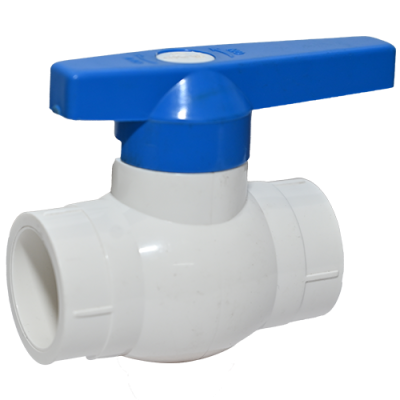
Water treatment plants are among the most chemically aggressive industrial environments on earth. Every day, these facilities handle chlorine, sodium hypochlorite, acids for pH correction, coagulants, polymer flocculants, and a steady flow of raw, partially treated, and reclaimed water — all through the same network of pipes, pumps, and valves. In this context, the selection of the right RPVC ball valve for water treatment is not merely a purchasing decision; it is an engineering commitment that directly affects plant reliability, treatment quality, and long-term operating costs. This guide maps every major application point in a water treatment plant where RPVC ball valves deliver proven value — and explains why plant engineers, municipal project managers, and EPC contractors continue to specify them over metal and other plastic alternatives.
Table of Contents
ToggleThe Water Treatment Challenge: Why Valve Material Matters
Every water treatment facility — municipal drinking water plants, industrial effluent treatment units, sewage treatment plants (STPs), reverse osmosis (RO) systems, and desalination pre-treatment skids — shares a common operational reality: the media flowing through the piping system is rarely benign.
Raw water contains dissolved minerals, organic matter, suspended solids, and microbial contaminants. Treatment chemicals including chlorine gas, sodium hypochlorite (NaOCl), alum, ferric sulphate, hydrochloric acid, and caustic soda are dosed at multiple points along the treatment train. Effluent streams carry residual chemicals, sludge, and biological material.
Metal valves — cast iron, mild steel, galvanised iron — corrode rapidly in contact with chlorinated water and treatment chemicals. Corroded valves introduce iron particles into treated water, contaminating the product stream. They seize, leak, and require frequent replacement, driving up maintenance costs and risking operational shutdowns.
The industry’s answer to this challenge has been a systematic shift toward corrosion-resistant plastic valves. Among these, RPVC ball valves occupy the ideal position — combining robust chemical resistance, structural rigidity, zero contamination risk, and a price point that makes large-scale deployment economically rational.
Understanding RPVC Ball Valves — A Brief Technical Recap
Rigid Polyvinyl Chloride (RPVC) is a high-strength thermoplastic engineered for structural integrity and broad chemical resistance. Unlike plasticised PVC — which is soft and flexible — RPVC is rigid, impact-resistant, and dimensionally stable under pressure and moderate thermal loads.
An RPVC ball valve controls fluid flow through a quarter-turn spherical ball with a central bore. A 90° rotation of the lever handle opens or closes the flow path completely, delivering fast, reliable on/off isolation. PTFE seats provide an additional chemical barrier at the sealing interface, ensuring leak-free performance in aggressive chemical service.
Key performance parameters relevant to water treatment applications:
- Operating pressure: typically up to 10 bar (145 PSI) depending on bore diameter
- Temperature range: 0°C to approximately 60°C — covers all ambient-temperature water treatment processes
- Chemical resistance: excellent against chlorinated compounds, dilute acids, alkalis, salt solutions
- Material inertness: does not leach compounds into treated water — critical for drinking water applications
- Weight: significantly lighter than metal valves — reduces installation load on pipework
8 Key Application Points in Water Treatment Plants
RPVC ball valves are not a single-use component in water treatment infrastructure. They serve multiple, distinct roles across the entire treatment process:
Chemical Dosing Lines
Chemical dosing is the most chemically demanding service in any water treatment plant. Sodium hypochlorite for disinfection, ferric sulphate or alum for coagulation, hydrochloric acid or caustic soda for pH correction — all are dosed through dedicated chemical feed lines. RPVC ball valves on dosing lines provide corrosion-free isolation and precise flow shutoff without contaminating the dosing chemical or the process stream.
Chlorination Systems
Chlorine-based disinfection — whether using liquid sodium hypochlorite, calcium hypochlorite solution, or chlorine dioxide — is aggressive on metal valves. RPVC demonstrates excellent resistance to sodium hypochlorite at concentrations used in water treatment (typically 0.5–12%). Valves on chlorination injection points, dilution headers, and recirculation loops are prime candidates for RPVC specification.
Filtration System Inlet and Outlet Isolation
Rapid sand filters, multi-media filters, activated carbon filters, and pressure filters all require isolation valves on inlet, outlet, and drain connections. These valves operate in water service with regular backwash cycles. RPVC ball valves provide reliable isolation across these positions with minimal maintenance. The quarter-turn operation allows rapid switching between service and backwash modes.
Backwash Headers and Drain Manifolds
Backwash operations subject valves to periodic flows of turbid, chemically-laden water. On backwash header manifolds — which may serve multiple filter vessels simultaneously — the combination of volume flow, pressure cycling, and chemical exposure rules out unprotected iron or carbon steel. RPVC ball valves handle backwash service reliably without surface degradation over extended operational cycles.
Sludge and Slurry Lines
Coagulation and sedimentation processes generate sludge that collects in clarifiers and sedimentation tanks. Sludge withdrawal and transfer lines carry a mixture of settled solids, residual coagulant chemicals, and process water. RPVC ball valves used on sludge lines resist the mildly aggressive chemical environment while providing straightforward on/off control for sludge draw-off operations.
RO Pre-Treatment and Inter-Stage Piping
Reverse osmosis systems require extensive pre-treatment — multimedia filtration, cartridge filtration, antiscalant dosing, and acid dosing for pH adjustment. The pre-treatment piping and inter-stage connections operate with chemically treated water at pressure. RPVC ball valves across pre-treatment skids offer compact, chemical-resistant isolation at each critical control point.
Effluent Treatment and Reclaimed Water Distribution
Industrial effluent treatment plants handle a wide range of effluent chemistries depending on the upstream process. RPVC ball valves are well-suited for effluent conveyance and distribution applications up to moderate chemical aggressiveness — textile effluent, pharmaceutical effluent, food processing wastewater — where metal valve corrosion would be rapid and costly.
Cooling Tower Make-Up and Blow-Down Lines
Cooling towers associated with water treatment and industrial facilities use treated or chemically-dosed water. Blow-down lines carry concentrated dissolved solids and biocide chemicals. RPVC ball valves on make-up water inlets and blow-down isolation points provide long-term reliability in these moderately aggressive service conditions.
Stage-by-Stage: RPVC Valves Across the Water Treatment Process
A conventional municipal or industrial water treatment plant processes raw water through several sequential stages. RPVC ball valves appear at every stage:
- Intake and Raw Water Screening — Isolation valves on raw water inlet channels and screening bypass lines
- Coagulation and Flocculation — Chemical dosing isolation valves; alum and ferric sulphate feed line control
- Sedimentation — Sludge draw-off valves on clarifier hoppers and sludge thickener outlets
- Filtration — Filter inlet/outlet isolation, drain valves, backwash inlet and waste outlet valves
- Disinfection — Chlorine/NaOCl dosing line isolation; contact tank inlet/outlet valves
- pH Correction — Acid and caustic soda dosing line valves; post-treatment neutralisation
- Storage and Distribution — Tank inlet isolation, distribution header sectionalisation valves
- Sludge Treatment — Thickener overflow, filtrate return, sludge disposal line valves
Across all eight stages, the consistent requirement is a valve material that resists chemical attack, does not contaminate the treated water, and delivers reliable on/off control across thousands of operational cycles. RPVC satisfies all three demands.
Performance Comparison: RPVC vs Other Valve Materials in Water Treatment
| Application Point | RPVC Ball Valve | Cast Iron Valve | Stainless Steel | Standard PVC |
|---|---|---|---|---|
|
Chlorination dosing |
Excellent |
Poor (corrodes) |
Good |
Good |
|
pH correction lines |
Excellent |
Poor |
Good |
Moderate |
|
Sludge drainage |
Very Good |
Moderate |
Good |
Moderate |
|
Backwash headers |
Very Good |
Good |
Excellent |
Good |
|
Effluent transfer piping |
Excellent |
Poor |
Good |
Good |
|
Aeration system control |
Good |
Moderate |
Good |
Good |
|
Cost efficiency |
High |
Medium |
Low |
High |
|
Corrosion risk |
None |
Very High |
Low |
None |
The comparison underlines a clear pattern: RPVC ball valves deliver the best combination of chemical resistance, zero contamination risk, and cost efficiency for water treatment service. Cast iron fails on corrosion resistance; stainless steel excels technically but at a significantly higher cost; standard PVC is limited by pressure rating and structural rigidity under demanding service conditions.
Ashok Polymers RPVC Ball Valves for Water Treatment Applications
For water treatment plant operators and EPC contractors sourcing reliable, cost-effective flow control components, Ashok Polymers manufactures a comprehensive range of RPVC ball valves designed to perform across all the application points described above.
Manufactured in Ahmedabad — a recognised centre of industrial polymer processing in India — Ashok Polymers RPVC ball valves are built to consistent dimensional standards and tested for reliable performance under the chemical and pressure conditions typical of water treatment service. Key features include:
- High-grade RPVC body — structural rigidity, broad chemical resistance, zero corrosion
- PTFE seats — chemically inert sealing interface, zero contamination of treated water
- Quarter-turn lever handle — fast, positive on/off switching for operational efficiency
- Available in multiple pipe sizes — from small chemical dosing lines to large-bore distribution headers
- Solvent cement socket or threaded end connections — compatible with standard PVC piping systems
- Manufactured under quality-controlled processes — consistent tolerances across production batches
Whether your project requires valves for a new municipal water treatment plant, an industrial effluent treatment system, or an RO pre-treatment skid, Ashok Polymers can supply RPVC ball valves at the specification and scale you need. Visit ashokpolymers.com/rpvc-ball-valve/ to explore the full range or contact the team directly for project-specific requirements.
Frequently Asked Questions (FAQs)
Yes. RPVC is a chemically inert material that does not leach compounds into treated water under normal operating conditions. It is widely used in drinking water treatment infrastructure globally. For projects requiring certified materials, confirm that the RPVC compound used by the manufacturer complies with applicable drinking water contact material standards for your jurisdiction.
RPVC ball valves are well-suited to sodium hypochlorite service at the concentrations typically used in water treatment disinfection (0.5% to 12% NaOCl). RPVC demonstrates good resistance to hypochlorite solutions, making it a standard specification on chlorination dosing lines, injection headers, and contact tank connections. Unlike metal valves, RPVC will not corrode or introduce iron contamination into the chlorinated water stream.
Standard RPVC ball valves are rated up to 10 bar (145 PSI) working pressure at ambient temperature, though the specific rating varies by diameter and schedule. For most water treatment applications — chemical dosing lines, filtration headers, sludge lines — this pressure range is more than adequate. Always include a safety margin above your maximum operating pressure when selecting valves, and account for pressure surges during backwash operations.
RPVC ball valves perform reliably in sludge and slurry service typical of coagulation and sedimentation processes in water treatment plants. The smooth internal bore of a full-bore RPVC ball valve minimises blockage risk. For very high-solids or abrasive slurry service, confirm the particle size and abrasiveness with the valve manufacturer to ensure seat material compatibility and appropriate bore selection.
RPVC has moderate UV resistance compared to some other plastics. For outdoor installations with sustained direct sunlight exposure, it is advisable to use UV-stabilised RPVC valves or to protect piping and valve assemblies with appropriate insulation or cladding. Consult the manufacturer’s recommendations for your specific outdoor installation conditions.
RPVC ball valves for water treatment applications are commonly available in solvent cement socket (spigot) end connections for permanent integration into PVC piping systems, and in BSP or NPT threaded connections for screwed piping systems. Some configurations are available with union ends for ease of removal and replacement during maintenance. Confirm your piping system’s connection standard with your supplier before ordering.
RPVC ball valves are significantly less expensive than stainless steel valves — typically 60% to 80% lower in material cost for equivalent diameter and pressure rating. For large municipal water treatment projects requiring hundreds of valve points, this cost differential translates to substantial savings in procurement budget. When factored against RPVC’s equivalent chemical resistance for most water treatment applications, the lifecycle cost advantage over stainless steel is compelling.
Conclusion
RPVC ball valves are not a single-application component in water treatment infrastructure — they are a versatile, reliable flow control solution that serves effectively across chemical dosing, chlorination, filtration, sludge management, RO pre-treatment, and effluent handling. Their combination of chemical resistance, zero corrosion, material inertness, and competitive cost makes them the rational specification choice across the vast majority of water treatment valve points.
For plant engineers specifying new installations, operators upgrading ageing metal valve infrastructure, or EPC contractors managing large-scale water treatment projects across India, RPVC ball valves from a quality-focused manufacturer offer the reliability and value that sustained water treatment operations demand.
Explore Ashok Polymers RPVC ball valves — purpose-built for demanding water treatment service — at ashokpolymers.com, or speak with the technical team to discuss your project specifications.
 Previous Post
 Next Post