
 Call Us Now!
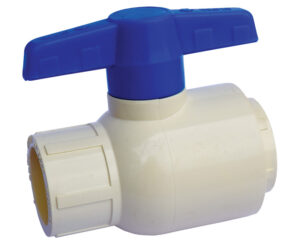
A single corroded valve on a chemical transfer line can shut down an entire production batch, contaminate a process stream, or — in the worst cases — cause a hazardous leak that triggers a plant-wide safety response. For plant engineers and procurement teams specifying valves for chemical, pharmaceutical, water treatment, and process industries, the material of the valve body is not a minor detail. It is a decision that directly affects uptime, safety, and lifetime maintenance cost. CPVC ball valves for industrial use have become the standard specification across a growing range of process industries — not because they are a cheaper alternative to metal, but because they genuinely outperform brass and stainless steel in the specific conditions that define industrial chemical and hot water service: aggressive chemical exposure, elevated temperatures, and the need for zero corrosion over decades of continuous operation. In this guide, you will learn exactly what CPVC is and why its material properties make it suited to demanding industrial environments, the specific industries and applications where CPVC ball valves are now the preferred choice, a full side-by-side comparison with metal valve alternatives, and practical guidance on installation and maintenance to get the maximum service life from every valve you specify.
Table of Contents
ToggleThe Hidden Cost of Wrong Valve Selection in Industrial Plants
Valves are small components relative to the size of an industrial plant, but they are disproportionately responsible for unplanned downtime. Industry maintenance data consistently shows that valve failures — leaks, seized mechanisms, and corrosion-related seat damage — account for a significant share of process line failures in chemical and process plants.
The reason is straightforward: valves are the moving parts of an otherwise static pipe network, and they are installed at the points of greatest mechanical and chemical stress — junctions, isolation points, and dosing lines where concentrated chemicals are introduced. When a brass or stainless steel valve is specified for a line carrying acids, caustic solutions, or hot process water, the valve body becomes the weakest point in the system.
Brass valves, for instance, are vulnerable to dezincification — a corrosion process where zinc leaches out of the brass alloy, leaving a porous, weakened copper structure that eventually fails under pressure. This process accelerates dramatically in the presence of chlorides, acidic process water, and certain industrial chemicals — exactly the conditions found in water treatment, electroplating, and chemical processing lines. Stainless steel offers better resistance but at significantly higher cost, and even stainless steel grades are attacked by hydrochloric acid, sulphuric acid at certain concentrations, and chloride-rich environments through pitting and stress corrosion cracking.
The cost of a valve failure extends far beyond the price of the replacement part. A failed valve on a chemical line can mean a production batch lost to contamination, an environmental incident requiring regulatory reporting, a safety shutdown affecting an entire production line, and emergency maintenance labour at premium rates. CPVC ball valves were developed specifically to remove this failure mode from the equation for the temperature and chemical range where they are rated — which is precisely why they have become the standard specification across so many industrial sectors.
What is a CPVC Ball Valve? Material Science Explained
CPVC stands for Chlorinated Polyvinyl Chloride. It is produced by post-chlorinating PVC resin, which increases the chlorine content from approximately 57 percent (in standard PVC) to between 63 and 69 percent. This additional chlorination is the key structural change that gives CPVC its enhanced thermal and chemical performance compared to standard PVC.
In practical terms, this means CPVC ball valves retain all the corrosion-immunity and chemical-resistance advantages of PVC — but extend the safe operating temperature range from roughly 60°C (for standard PVC) up to 93°C for continuous service, with brief excursions to higher temperatures tolerable depending on pressure. This single property difference is what opens up an entirely new category of industrial applications that standard PVC simply cannot serve: hot water systems, many chemical process lines that run warm, and any application where ambient ground or plant temperatures regularly exceed 40 to 50°C.
Manufacturing Standards for Industrial CPVC Valves
Industrial-grade CPVC ball valves are manufactured to specific material and dimensional standards that procurement teams should verify before purchase:
- ASTM F439 — Socket-type CPVC Schedule 80 fittings, the primary US standard for industrial CPVC valve and fitting dimensions
- ASTM D1784 — Specifies the CPVC compound classification (commonly Class 23447 for industrial-grade CPVC)
- ASTM F1970 — Special engineered transitions for high-pressure CPVC piping in fire protection systems
- IS 15778 — Indian standard for CPVC pipes for hot and cold water supply
- NSF 14 / NSF 61 — Certifies the material for potable water contact where the application requires it
When sourcing CPVC ball valves for an industrial application, request the material certification (mill certificate or compound classification) from your supplier. This confirms the valve is manufactured from genuine industrial-grade CPVC compound, not a lower-grade or relabelled PVC product — a distinction that significantly affects temperature and chemical performance in service.
Key Properties That Make CPVC Ideal for Industrial Use
The following properties, taken together, explain why CPVC ball valves have become the default specification across a wide range of industrial process applications. Each property addresses a specific failure mode that affects metal valves in the same service conditions.
| Property | Why It Matters for Industrial Service |
|---|---|
|
High Temperature Resistance |
Rated up to 93 degrees C continuous service — handles hot process fluids that standard PVC cannot. |
|
Excellent Chemical Resistance |
Resists acids, alkalis, salts, oxidising agents, and most solvents used in chemical processing lines. |
|
High Pressure Rating |
Schedule 80 CPVC ball valves handle up to 16 bar at ambient temperature, derating gradually as temperature rises. |
|
Flame Retardant Properties |
CPVC has a high limiting oxygen index (LOI) and self-extinguishes — valuable for fire protection and chemical plant safety codes. |
|
Low Thermal Conductivity |
Reduces heat loss in hot fluid lines and minimises condensation issues compared to metal valve bodies. |
|
Zero Corrosion / No Scaling |
Will not rust, pit, or scale internally — maintains consistent flow coefficient (Cv) over its service life. |
|
Lightweight Construction |
40-50% lighter than equivalent brass or steel valves — reduces pipe support load and installation labour. |
Chemical Resistance in Practice
CPVC’s chemical resistance is not a marginal improvement over metal — it is categorical. CPVC is resistant to a wide range of acids (including hydrochloric, sulphuric at most concentrations, and phosphoric acid), strong alkalis (sodium hydroxide, potassium hydroxide), salt solutions, oxidising agents like sodium hypochlorite (used in water treatment), and many organic solvents at moderate concentrations and temperatures. This breadth of resistance is why CPVC ball valves are specified across such a diverse range of process industries — from chemical manufacturing to food processing to water treatment — each with very different chemical exposure profiles.
It is important to note that CPVC is not universally resistant to all chemicals. Strong oxidising acids at high concentration (such as concentrated nitric acid), and certain aromatic and chlorinated solvents at elevated temperatures, can attack CPVC. Always consult a chemical compatibility chart for the specific process fluid, concentration, and operating temperature before finalising a CPVC valve specification for an unfamiliar chemical service.
The Fire Safety Advantage
CPVC has a Limiting Oxygen Index (LOI) of approximately 60, meaning it requires an atmosphere with 60 percent oxygen to sustain combustion — far above the 21 percent oxygen content of normal air. This self-extinguishing property is why CPVC is widely approved for use in fire sprinkler systems (under standards such as UL listings for CPVC fire sprinkler pipe) and why it carries a favourable fire rating in many industrial building codes compared to standard PVC or other plastics.
Common Industrial Applications of CPVC Ball Valves
CPVC ball valves are specified across a wide range of industrial sectors, each leveraging a different combination of the material’s chemical resistance, temperature rating, and corrosion immunity. The table below summarises the most common industrial applications:
| Industry / Application | Typical CPVC Valve Use |
|---|---|
|
Chemical Processing Plants |
Isolation and control valves on acid, alkali, and solvent transfer lines where metal valves would corrode within months. |
|
Pharmaceutical Manufacturing |
Process water and chemical reagent lines where purity, corrosion resistance, and contamination-free flow are critical. |
|
Water Treatment Plants |
Chlorine dosing lines, chemical dosing systems, and filtration backwash valves exposed to aggressive disinfectant chemicals. |
|
Hot Water & HVAC Systems |
Hot water circulation, boiler feed isolation, and chiller plant piping operating up to 93°C continuously. |
|
Electroplating & Metal Finishing |
Acid pickling baths, plating tank transfer lines, and rinse water control where plating chemicals destroy metal valves. |
|
Food & Beverage Processing |
CIP (clean-in-place) systems, hot wash lines, and sanitiser dosing where lead-free, corrosion-free valves are mandatory. |
|
Textile Dyeing Units |
Dye liquor transfer, hot water supply to dye baths, and chemical dosing lines exposed to dyes and bleaching agents. |
Chemical Processing and Manufacturing
Chemical plants represent the largest application segment for industrial CPVC ball valves. Acid and alkali transfer lines, chemical storage tank isolation valves, dosing system valves, and scrubber system piping all benefit from CPVC’s broad chemical resistance. In many chemical plants, CPVC has effectively replaced lined steel and exotic alloy valves for low-to-medium pressure applications, delivering equivalent chemical resistance at a fraction of the cost and weight.
Hot Water and Process Heating Systems
Industrial hot water systems — for cleaning, process heating, and utility distribution — operate in the temperature range where CPVC excels and standard PVC fails. Boiler feed water lines (on the cold side, before the boiler), hot water return lines, and process heating loops up to 93°C are common CPVC ball valve applications. The low thermal conductivity of CPVC also means less heat loss along the pipe run compared to metal piping, contributing to energy efficiency in hot water distribution systems.
Water and Wastewater Treatment
Water treatment plants use significant quantities of sodium hypochlorite, chlorine dioxide, and other oxidising disinfectants — chemicals that rapidly corrode brass and many stainless steel grades. CPVC ball valves on chemical dosing lines, chlorine contact tank isolation valves, and filter backwash systems provide reliable long-term service in direct contact with these disinfectant chemicals.
CPVC vs Metal Ball Valves: Industrial Comparison
For procurement and engineering teams evaluating CPVC against traditional brass or stainless steel valves for an industrial application, the following comparison summarises the key decision factors:
| Factor | CPVC Ball Valve | Metal Ball Valve (Brass/SS) |
|---|---|---|
|
Chemical Resistance |
Excellent across pH range |
Limited — corrodes with acids/alkalis |
|
Max Continuous Temp |
93°C |
Higher (150°C+ for steel) |
|
Corrosion in Service |
None |
Common in chemical/saline service |
|
Weight |
40-50% lighter |
Heavy — needs more support |
|
Installation Cost |
Lower — solvent weld, lighter handling |
Higher — welding/threading labour |
|
Flow Coefficient Decay |
None over time |
Decreases as scale builds up |
|
Pressure Rating (SCH80) |
Up to 16 bar |
Up to 25 bar+ (steel) |
|
Initial Cost |
Lower |
Higher |
|
Fire Rating |
Self-extinguishing (high LOI) |
Non-combustible (better in open flame) |
|
Best Use Case |
Chemical, acid, hot water lines |
Steam, very high pressure, open flame zones |
The comparison makes clear that CPVC is not a universal replacement for metal valves — for very high pressure service, continuous temperatures above 93°C, or open-flame fire exposure, metal valves remain the correct choice. But for the very large category of industrial applications involving chemical exposure, hot water up to 93°C, and pressures within Schedule 80 CPVC ratings (up to 16 bar at ambient temperature, derating with increasing temperature), CPVC ball valves deliver equal or superior performance at significantly lower installed and lifetime cost.
Installation & Maintenance Best Practices
CPVC ball valves deliver their rated performance only when installed and operated correctly. The following practices are specific to CPVC and differ in important ways from metal valve installation practice.
Use CPVC-Specific Solvent Cement
CPVC requires a solvent cement formulated specifically for CPVC — standard PVC solvent cement will not properly bond CPVC joints due to the different chemical composition. Using the wrong cement is one of the most common causes of joint failure in CPVC systems. Always confirm the cement label specifies CPVC compatibility, and apply CPVC primer to both surfaces before cementing.
Account for Thermal Expansion in Hot Lines
CPVC has a higher thermal expansion coefficient than metal — approximately 0.06 mm per metre per degree Celsius. In a hot water line operating at 80°C with a 100-metre run, this represents several hundred millimetres of total expansion from ambient installation temperature to operating temperature. Expansion loops, offsets, or guided expansion joints must be incorporated into the pipe design at intervals determined by the temperature differential and pipe diameter — consult CPVC pipe manufacturer expansion tables for the specific application.
Avoid Mechanical Stress on Valve Bodies
As with all thermoplastic valves, CPVC ball valves should never bear the structural load of unsupported pipe. Pipe supports should be placed close to valve connections, and valves should never be used as a lever point or step during installation or maintenance work in the plant.
Operate Through Full Cycles Periodically
- For valves that remain in a fixed position (open or closed) for extended periods in continuous process service, schedule periodic full-cycle operation (quarterly is typical) to redistribute seat lubrication and confirm operability before an emergency isolation is needed.
- After any chemical dosing or batch process involving concentrated chemicals, flush the valve and adjacent pipe section with process water or an appropriate neutralising solution to prevent residue build-up on seats.
- Inspect valve handles, stems, and body surfaces during routine plant walkdowns for any signs of stress whitening, crazing, or surface chemical attack — these are early indicators that the chemical exposure may be exceeding CPVC’s compatibility range and warrant a material review.
Our Recommended CPVC Ball Valve Range
If your plant or process line requires reliable, corrosion-free valves for chemical, hot water, or process service, Ashok Polymers offers a complete range of industrial-grade CPVC ball valves designed for exactly these conditions.
Our CPVC ball valve range includes Schedule 40 and Schedule 80 valves from 1/2 inch through 4 inch, manufactured to ASTM F439 dimensional standards with PTFE seats for broad chemical compatibility. Two-piece and three-piece union-end configurations are both available — the union-end design is particularly valued by plant maintenance teams who need to remove valves for inspection without disturbing the pipe system.
Ashok Polymers supplies chemical processing plants, water treatment facilities, pharmaceutical manufacturers, and industrial contractors across India, with technical support available to review chemical compatibility for your specific process fluids and recommend the correct valve specification, schedule rating, and seat material for your application.
Browse our industrial CPVC ball valve range on our product page to download chemical resistance charts, dimensional datasheets, and request a project quotation for bulk or plant-wide procurement.
Frequently Asked Questions (FAQs)
Industrial-grade CPVC ball valves are rated for continuous service up to 93 degrees Celsius (200 degrees Fahrenheit). The pressure rating decreases as temperature increases — a valve rated at 16 bar at 23°C will have a significantly lower pressure rating at 80-90°C. Always consult the manufacturer’s temperature-pressure derating chart for your specific application.
Yes, CPVC ball valves are widely used for acid transfer including hydrochloric acid and sulphuric acid at most working concentrations and temperatures. However, chemical compatibility depends on the specific acid, concentration, and temperature combination — always check a CPVC chemical resistance chart for your exact process fluid before specifying, as some strong oxidising acids at high concentration are not compatible.
CPVC and PVC share the same base chemistry but CPVC has a higher chlorine content, giving it a continuous service temperature rating of 93°C compared to approximately 60°C for standard PVC. CPVC also offers improved chemical resistance at elevated temperatures. For any industrial application involving hot fluids above 60°C, CPVC is required — standard PVC will soften and lose pressure rating at these temperatures.
Yes, CPVC pipe and fittings — including listed CPVC ball valves — are approved for use in light-hazard fire sprinkler systems under various UL and FM listings, due to CPVC’s high limiting oxygen index and self-extinguishing properties. Always confirm that the specific valve product carries the relevant fire system listing for your application and jurisdiction before specifying for fire protection use.
CPVC ball valves require minimal maintenance: periodic full-cycle operation (quarterly for valves in fixed-position service) to maintain seat lubrication, visual inspection during plant walkdowns for surface chemical attack or stress whitening, and flushing after chemical dosing operations to prevent residue build-up. Unlike metal valves, CPVC requires no anti-corrosion treatment, greasing, or replating — its corrosion resistance is inherent to the material and does not degrade with normal use.
Conclusion
CPVC ball valves for industrial use are not a compromise material — they are the correct engineering choice for a well-defined and very large category of industrial applications: chemical transfer and dosing lines, hot water and process heating systems up to 93°C, and any service environment where metal valve corrosion has historically been a recurring maintenance and reliability problem.
The combination of broad chemical resistance, elevated temperature tolerance, fire-retardant properties, zero corrosion, and significantly lower installed cost compared to stainless steel makes CPVC the valve material that solves the specific failure modes most responsible for unplanned downtime in chemical, water treatment, pharmaceutical, and process heating applications. For pressures within Schedule 80 CPVC ratings and temperatures within the 93°C limit, CPVC ball valves consistently outperform metal alternatives on total lifetime value.
If your plant is specifying or replacing valves on chemical or hot water lines, evaluate CPVC against your current metal specification — for the majority of industrial chemical and hot water applications, the case for CPVC is decisive.
 Previous Post
 Next Post