
 Call Us Now!
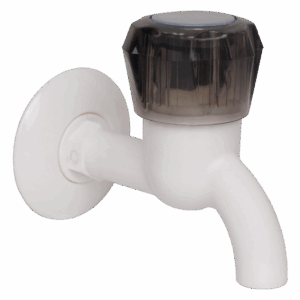
If you have shopped for plumbing taps recently, you have almost certainly encountered two types sitting side by side on the shelf — a familiar, weighty brass tap in chrome finish, and a lighter, often cheaper-looking tap labelled PTMT or polymer tap. The brass tap has heritage on its side: it has been the default for residential and commercial plumbing for over a century, and its polished chrome finish continues to signal quality to most buyers. The PTMT tap is newer, less immediately familiar, and — despite increasingly strong technical credentials — often assumed to be the inferior option simply because it costs less. This assumption is costing Indian homeowners, hospitals, schools, and commercial projects money, performance, and — in some cases — health, because the PTMT tap vs brass tap decision is not straightforward. PTMT brings material properties that are demonstrably superior to brass in several important dimensions, most significantly the absence of lead — a safety concern that many buyers of brass taps are simply unaware of. Brass, on the other hand, retains genuine advantages in appearance longevity and the premium aesthetic expectations of certain high-end applications. This guide provides a comprehensive, evidence-based comparison between PTMT taps and brass taps: what each material is, how they compare across every relevant factor, the lead safety issue that every buyer of brass taps should understand, and application-specific guidance for where each material genuinely wins. By the end, you will be able to make — or specify — this decision with confidence.
Table of Contents
ToggleWhy the Tap Material Decision Matters More Than You Think
A tap is the most frequently interacted-with plumbing component in any building. A kitchen tap may be operated 20 to 30 times per day by multiple household members. A commercial washroom tap may see 100 to 200 operations daily. Over a 10-year service period, the material the tap is made from is not simply a quality question — it determines whether the tap holds its appearance, whether it corrodes, whether it requires maintenance, and — critically — whether it is safe for use on a drinking water line.
In India, the tap market presents a challenging decision environment. The term ‘brass tap’ covers an enormous range of actual products — from high-quality ISI-certified brass alloy manufactured to BIS IS 781 standards, to low-grade zinc alloy (die-cast) products with a thin chrome or brass-coloured coating that can fail within one to two years. Similarly, the PTMT tap market ranges from genuinely high-performance engineering polymer products to basic PVC or polypropylene taps marketed under the PTMT name.
This variability within each material category is one reason the decision is confusing: a poorly specified PTMT tap will indeed perform worse than a quality brass tap, just as a low-grade zinc alloy ‘brass’ tap will perform significantly worse than a quality PTMT product. This guide compares genuinely equivalent products — ISI-certified PTMT taps against ISI-certified brass taps — and examines what the material properties themselves imply for performance, rather than the wide variation caused by product quality differences within each material category.
One additional dimension that elevates this decision beyond simple performance comparison is the lead content issue in brass taps — which we cover in detail in Section 5. For any tap on a line used for drinking water, cooking water, or water for vulnerable groups (children, hospital patients, food service), the lead content of brass is not a marginal concern: it is a material safety factor that the choice of tap material directly determines. Understanding this context helps explain why PTMT has grown so rapidly as a specification choice across hospitals, schools, and commercial kitchens in India over the past decade.
What is a PTMT Tap? Material Science and Construction
PTMT stands for Poly Tetra Methylene Terephthalate — a thermoplastic polyester resin belonging to the engineering polymer family. It is manufactured by injection moulding at high pressures to produce tap bodies, handles, spindles, and internal components with tight dimensional tolerances and consistent mechanical properties.
PTMT is not a generic plastic — it is a specific engineering polymer with a combination of properties that makes it genuinely suitable for demanding tap applications, and which distinguishes it from standard PVC, PP, or ABS plastics that are sometimes incorrectly marketed under the PTMT name.
Key Material Properties of PTMT
- Tensile strength: 50-60 MPa — sufficient mechanical strength for the pressures and mechanical stresses involved in tap operation and installation
- Temperature rating: up to 80-95°C depending on specific formulation, making it suitable for hot water connections and geyser outlets
- Chemical resistance: highly resistant to chlorine, cleaning agents, detergents, and most household chemicals at use concentrations
- Corrosion immunity: PTMT does not rust, corrode, or electrochemically degrade under any plumbing conditions encountered in Indian homes or commercial premises
- Lead content: zero — PTMT is a pure polymer with no metallic components, making it inherently lead-free
- UV resistance: depending on formulation, PTMT can be UV-stabilised for outdoor and garden tap applications
- Weight: significantly lighter than brass — approximately 40 to 60 percent lighter for equivalent tap sizes
Construction of a PTMT Tap
A quality PTMT tap is typically manufactured as a multi-component assembly with a PTMT body, handle, and spindle, combined with a ceramic disc or rubber washer seating mechanism, and a chrome or colour-plated finish applied over the PTMT body for aesthetics. The chrome or colour finish on a quality PTMT tap is comparable in appearance to that on a brass tap, which is why the two materials are often indistinguishable from the outside until examined closely.
The thread connections on PTMT taps — where the tap connects to the pipe or wall outlet — are either moulded PTMT threads (for plastic pipe connections) or brass inserts moulded into the PTMT body for connection to metal fittings. These brass inserts are a practical accommodation for thread strength, not a compromise of the tap’s lead-free properties, as they are not in the water flow path.
Standards and Certification
In India, PTMT taps for plumbing use are certified under BIS IS 781 — the same standard that governs brass taps. This is an important point: the quality benchmark for a certified PTMT tap is identical to that of a certified brass tap. When comparing ISI-certified products from each category, the comparison is between materials rather than quality tiers — both products have met the same regulatory standard.
What is a Brass Tap? Material Science and Construction
Brass is a copper-zinc alloy — typically composed of approximately 60 to 65 percent copper and 35 to 40 percent zinc, with varying small amounts of other elements including, in many formulations, lead. The addition of lead to brass alloys is a deliberate manufacturing choice made to improve machinability — lead acts as a lubricant for the cutting tools used to machine brass taps and fittings, significantly reducing manufacturing cost and tool wear.
Brass has been used for plumbing fittings for well over a century, and its combination of relatively good corrosion resistance, machinability, and availability has made it the traditional default for taps, valves, and fittings across residential and commercial plumbing globally.
Key Material Properties of Brass
- Tensile strength: 300-500 MPa — significantly higher than PTMT, reflecting brass’s metallic nature
- Temperature rating: handles all household water temperatures including continuous hot water and brief exposure to higher temperatures
- Corrosion resistance: good in most conditions, but susceptible to dezincification (zinc leaching from the alloy) in soft or acidic water, and to chloride-induced stress corrosion cracking
- Lead content: 2-8% in standard brass alloys used for tap bodies — concentrated at internal surfaces where it can leach into water that stands in contact with the brass
- Chemical resistance: moderate — susceptible to attack from strong acids, some alkaline cleaners, and repeated contact with concentrated chlorine solutions
- Weight: approximately 8-9 grams per cubic centimetre — significantly heavier than PTMT
The Chrome Plating Distinction
Most brass taps visible in the market are not bare brass-coloured — they are chrome-plated: a thin layer of chromium deposited over the brass body to provide a bright, corrosion-resistant surface finish. This chrome plating is the visible surface that most people associate with a ‘brass tap,’ and its long-term durability significantly affects the tap’s service life in terms of appearance — a point we return to in the aesthetics section.
The 'Brass Tap' Quality Range in India
This is perhaps the most important caveat when evaluating brass taps in the Indian market: a large proportion of taps sold as ‘brass’ are actually zinc alloy (die-cast) — a significantly inferior material that looks similar to brass when new but corrodes far more rapidly, particularly in the varied water chemistry conditions found across Indian cities and rural areas. Zinc alloy taps — regardless of their chrome finish — typically fail within 2 to 5 years in hard water or moderately acidic borewell water conditions, performing significantly worse than quality PTMT. Only ISI-certified, properly specified brass (confirming copper content of 60% minimum) represents a fair comparison with quality PTMT.
PTMT Tap vs Brass Tap: Full Side-by-Side Comparison
With both materials introduced in depth, here is a comprehensive side-by-side comparison across every factor relevant to a tap material decision in modern plumbing:
| Factor | PTMT Tap | Brass Tap |
|---|---|---|
|
Full Material Name |
Poly Tetra Methylene Terephthalate |
Copper-Zinc Alloy (60-65% Cu, 35-40% Zn) |
|
Lead Content |
Zero — completely lead-free |
Up to 2-8% lead (alloy-dependent) |
|
Corrosion Resistance |
Excellent — no rust in any water chemistry |
Moderate — dezincification risk in soft water |
|
Weight |
Very light (40-60% lighter than brass) |
Heavy — adds load on fittings |
|
Appearance (new) |
Consistent finish; variety of colours |
Premium metallic look — highly valued aesthetically |
|
Appearance (after 3 yrs) |
Unchanged — no tarnishing |
Chrome plating fades; brass tarnishes |
|
Temperature Rating |
Up to 80-95°C (polymer dependent) |
Handles all household water temperatures |
|
Chemical Resistance |
High — cleaning agents have no effect |
Low — acids and chlorinated cleaners can attack brass |
|
Cost (relative) |
Lower — baseline 100 |
Higher — approx. 150-300% of PTMT cost |
|
Lifespan (quality grade) |
8-12 years |
8-15 years (ISI brass); less for low-grade |
|
Maintenance Required |
None — no surface treatment needed |
Regular cleaning; replating if chrome wears |
|
ISI Certification |
Available (BIS IS 781) |
Available (BIS IS 781) |
|
Best Application |
Commercial, utility, budget residential |
Premium visible bathroom/kitchen fixtures |
The comparison reveals a clear pattern: PTMT’s advantages are concentrated in safety (zero lead), corrosion immunity, chemical resistance, and cost, while brass’s advantages are primarily aesthetic (premium appearance, particularly in high-specification environments) and traditional (familiarity, established market trust). The following sections examine the most consequential factors in depth.
The Lead Problem in Brass Taps — What Every Buyer Should Know
This is the factor most likely to be unknown to the majority of tap buyers in India — and arguably the most important single factor in the PTMT vs brass decision for any tap used on a drinking water line.
Lead in Brass Alloys
Standard brass used in tap manufacturing typically contains 2 to 8 percent lead by weight. This lead is added to make the brass machinable — without it, machining brass taps and fittings would require dramatically more expensive tooling and manufacturing time, making brass a non-viable mass-market tap material. The lead is distributed throughout the alloy matrix and is present at the internal surfaces of the tap body — the surfaces that come into contact with drinking water every time the tap is used.
How Lead Enters Drinking Water from Brass Taps
Lead leaches from brass into water through a process called leaching — chemical dissolution of lead from the alloy surface into the water standing in contact with it. Leaching is most significant when water stands in contact with the brass for extended periods — typically overnight, during working hours in an unoccupied building, or during holidays. This ‘first flush’ water — the water that has been standing in the tap and adjacent pipe — typically contains the highest lead concentration. Water that has been running for 30 to 60 seconds, which clears the first-flush water, contains much lower lead levels.
Health Implications
Lead is a cumulative neurotoxin with no established safe level of exposure, particularly for children under six, in whom even very low lead exposure is associated with reduced IQ, developmental delays, and behavioural issues. The World Health Organization (WHO) guideline value for lead in drinking water is 10 micrograms per litre (10 ppb), and many countries have set tighter limits of 5 ppb or less. Exposure through drinking water is a significant pathway particularly in homes where water stands in brass fittings for extended periods.
In Indian plumbing, the risk is compounded by two factors: intermittent water supply in many cities and towns, meaning water often stands in pipes and taps for many hours before use; and the widespread use of overhead storage tanks, which can create extended stagnation in the distribution pipes between the tank and the tap.
PTMT's Lead-Free Advantage
PTMT taps contain zero lead — not ‘low lead,’ not ‘lead-reduced,’ but genuinely zero. There is no metal to leach. For kitchen taps, drinking water connections, taps in schools and hospitals, and any application where water is consumed or used by vulnerable groups, this is a categorical safety advantage that no amount of first-flush flushing can replicate with a brass tap.
| Lead Risk Reference | Detail |
|---|---|
|
Regulatory limit (US EPA) |
15 ppb (micrograms/litre) for lead in drinking water — the action level trigger for remediation |
|
Lead in typical brass tap alloy |
2% to 8% by weight — concentrated at the tap body and internal surfaces |
|
‘Lead-free’ definition (US NSF 61-G) |
Maximum 0.25% weighted average lead content — significantly stricter than old standards |
|
PTMT tap lead content |
Zero — PTMT is a pure thermoplastic polymer with no metal content |
|
Risk period for brass taps |
Highest leaching when water stands in the tap for extended periods (overnight, during holidays) |
|
Flush-before-use recommendation |
Run tap for 30-60 seconds before using for drinking if concerned about lead in plumbing |
Durability, Lifespan and Long-Term Performance
The durability comparison between PTMT and brass taps depends on what ‘durability’ means in the specific application — structural durability (the tap body staying intact), functional durability (the tap continuing to control flow reliably), and appearance durability (the tap maintaining its finish) are three distinct dimensions, and the two materials perform differently across them.
Structural Durability
Quality ISI-certified PTMT taps have a structural service life of 8 to 12 years under typical residential and commercial use — the body and components maintain integrity throughout this period without cracking, splitting, or failing under normal operating pressures. ISI-certified brass taps from reputable manufacturers can reach 10 to 15 years structural lifespan in favourable conditions. For budget-grade zinc alloy taps sold as ‘brass,’ structural failure within 2 to 5 years — manifesting as cracking, internal leaks, or thread failures — is common, particularly in hard water conditions.
Functional Durability — Corrosion and Scale
PTMT’s complete immunity to corrosion means the internal components of a PTMT tap maintain their dimensional properties and seating surfaces throughout the tap’s life. In hard water areas — which describes a significant proportion of India, particularly regions served by borewell or hard municipal water — scale builds up on the internal surfaces of taps over time. On brass taps, scale interacts with the brass surface, accelerating corrosion and progressively reducing flow rate. On PTMT, scale has no chemical interaction with the body material and is more easily cleared by periodic descaling.
Appearance Durability
This is where brass’s reputation genuinely earns its standing — but only for high-quality chrome or PVD-finished brass products. Quality chrome plating on brass is highly resistant to scratching and corrosion and maintains a consistent appearance for many years. Quality PTMT taps with chrome or colour finish also maintain their appearance well. The difference emerges for mid-grade and budget brass products where chrome plating is thin: these products show pitting, flaking, and discolouration within 2 to 4 years in the humidity and water chemistry conditions typical in Indian bathrooms. PTMT’s base material does not contribute to finish failure, meaning the finish performance of a PTMT tap is primarily a function of the quality of the surface treatment applied, not the base material.
Cost Comparison: Upfront Price vs Total Cost of Ownership
Upfront Material Cost
ISI-certified PTMT taps are typically priced at approximately 60 to 70 percent of the cost of equivalent ISI-certified brass taps of the same size, style, and quality tier. This price differential reflects the lower raw material cost of engineering polymers compared to copper-zinc alloys, and the lower manufacturing cost of injection moulding compared to machining brass. For individual taps in a home renovation, this difference may be modest in absolute terms. For a developer specifying taps across 100 residential units, or a hospital fitting out 200 wash stations, the compounding of this difference across many units represents a substantial budget impact.
Installation Cost
PTMT’s lighter weight and the availability of push-fit and standard threaded connections compatible with both plastic and metal pipe systems make installation generally straightforward. Brass taps similarly install with standard threaded connections. The installation cost difference between the two materials is typically modest for individual residential installations, but for commercial projects with dedicated plumbing teams, PTMT’s lighter weight contributes marginally to faster installation times across large volumes.
Maintenance and Replacement Cost
The more significant cost differential over a 10-year horizon is in maintenance and replacement frequency. PTMT taps require no anti-corrosion maintenance, no replating, and no surface treatment throughout their service life. Brass taps, particularly in hard water and coastal conditions, may develop pitting and finish failure that requires replacement before the structural life of the tap body is reached. The all-in 10-year cost of a quality PTMT tap — purchase price plus zero maintenance — is typically lower than the all-in cost of a quality brass tap when maintenance and potential early replacement from cosmetic failure are included.
Appearance, Finish and Aesthetic Longevity
This is the dimension where brass maintains the most legitimate advantage, and it is important to be precise about what that advantage is and where it applies.
The Premium Brass Aesthetic
High-quality brass taps — particularly those with PVD (Physical Vapour Deposition) coating rather than traditional chrome plating, or exposed brushed brass or matte black finishes — carry an undeniable premium aesthetic that is genuinely difficult to replicate in injection-moulded polymer at equivalent price points. In luxury residential bathrooms, five-star hotel guest rooms, premium commercial washrooms, and heritage building restoration projects, the visual weight, feel, and finish quality of high-specification brass taps justify their cost premium from a design perspective.
PTMT's Aesthetic Position
Quality PTMT taps are available with chrome, brushed, and colour-finish options that are visually indistinguishable from equivalent brass-bodied taps at normal viewing distances — particularly in kitchen and utility applications where the tap is observed primarily during use rather than as a design focal point. In these settings, PTMT provides adequate and sometimes equal aesthetic quality to brass at lower cost and with better corrosion immunity for the finish.
Where Aesthetics Tip the Decision
The honest assessment: for applications where the tap is a visible design element — a statement bathroom fixture, a premium kitchen deck-mounted tap, or a visible commercial fitting where appearance communicates quality to customers or guests — the aesthetic quality ceiling of high-specification brass (particularly PVD-finished) is higher than that currently achievable in PTMT at equivalent price points. For utility applications, kitchen sinks in standard residential apartments, commercial washrooms, and institutional settings, PTMT’s aesthetic is fully adequate and the material’s functional advantages become the deciding factors.
Installation Differences and Ease of Fitting
Both PTMT and brass taps are installed using standard threaded BSP (British Standard Pipe) connections compatible with the same inlet configurations, making the installation method broadly similar for most tap types. The practical differences lie in handling and thread care.
Weight and Handling
PTMT taps are noticeably lighter than equivalent brass taps — approximately 40 to 60 percent lighter. For individual residential installation this is a minor convenience. For commercial projects where plumbers are installing dozens of taps in a day, the reduced weight reduces fatigue and speeds up individual fitting times marginally.
Thread Care
PTMT tap threads require careful handling during installation — particularly for taps with PTMT-moulded threads connecting directly to metal inlet connectors. Overtightening PTMT threads can cause them to crack or strip, as the polymer does not have the same thread strength as machined brass in the first few turns. Installation guidance for PTMT taps typically specifies ‘hand tight plus one to two turns’ rather than the firmer tightening that brass-to-brass connections can accommodate. Brass tap threads are more forgiving of overtightening.
PTFE Tape Usage
Both PTMT and brass taps should be installed with PTFE thread tape on the male thread to create a watertight seal. The technique is identical for both materials — typically two to three wraps of PTFE tape applied clockwise when viewed from the thread end.
Application-by-Application: PTMT vs Brass — Where Each Wins
Drawing together all the factors above, here is a practical application-by-application guide for the most common scenarios where the PTMT vs brass decision arises:
| Application | Recommended | Why |
|---|---|---|
|
Drinking water kitchen sink tap |
PTMT |
Zero lead; corrosion-free; no leaching risk regardless of standing time |
|
Premium designer bathroom (visible tap) |
Brass |
High-quality chrome/PVD brass offers the premium aesthetic expected in luxury bathrooms |
|
Hospital patient room or ward |
PTMT |
Healthcare settings mandate lead-free; PTMT meets compliance requirements without exception |
|
School drinking water taps |
PTMT |
Children are most vulnerable to lead exposure; zero-lead PTMT is the only defensible choice |
|
Hotel guest bathroom |
Brass |
Guest experience expectations; high-quality brass handles heavy use with appropriate aesthetic |
|
Office pantry / canteen tap |
PTMT |
High-usage commercial setting; PTMT’s durability, low maintenance and lead-free safety win |
|
Outdoor garden / utility tap |
PTMT |
UV-resistant PTMT outperforms chrome-plated brass exposed to outdoor conditions |
|
Budget residential project (100+ units) |
PTMT |
Cost saving compounded across large volumes; no compromise in safety or durability |
|
Food processing facility |
PTMT |
FSSAI food safety compliance requires lead-free fittings; PTMT meets this requirement |
|
Geyser / hot water connection |
Both |
Both handle hot water; brass traditionally used but PTMT handles 80-95°C — confirm specific grade |
|
Mid-range apartment bathroom |
PTMT |
ISI-certified PTMT delivers durability and safety at a price that fits apartment budgets |
|
Heritage building restoration (visible fittings) |
Brass |
Conservation/aesthetic requirements may mandate brass to match original period fixtures |
The pattern is consistent: PTMT wins in any application where lead-free safety is a priority, where corrosion resistance in challenging water conditions matters, where maintenance cost across many taps is significant, or where budget is a constraint. Brass wins where premium aesthetics are essential and where the buyer is making a deliberate design investment in visible, high-specification fixtures.
PTMT Tap vs Brass Tap in Indian Plumbing Conditions
The PTMT vs brass comparison has specific dimensions in the Indian context that differ from the same comparison in European or North American plumbing markets — driven by India’s diverse and often challenging water chemistry, intermittent water supply patterns, and the specific failure modes that each material exhibits under these conditions.
| Indian Water Condition | Impact on PTMT vs Brass Performance |
|---|---|
|
Hard water (high mineral content) |
Brass taps develop internal mineral deposits and external scale, accelerating dezincification. PTMT’s smooth bore resists scale adhesion. |
|
Saline / coastal borewell water |
Chloride ions accelerate brass corrosion and chrome pitting. PTMT is immune to chloride attack. |
|
Aggressive monsoon humidity |
Outdoor and semi-exposed brass taps show rapid surface tarnishing in humid climates. PTMT retains appearance without treatment. |
|
Chlorinated municipal water |
Residual chlorine in treated municipal supply attacks brass plating. PTMT is unaffected by chlorine at treatment concentrations. |
|
Acidic groundwater (low pH) |
Acidic water from certain borewells accelerates brass leaching — increasing lead exposure risk. PTMT has no metal to leach. |
|
Power outages / water storage |
Water stored in overhead tanks and pipes for extended periods (common in areas with intermittent supply) has more time to absorb lead from brass. PTMT eliminates this risk. |
Taken together, India’s water conditions — hard water in many regions, saline borewell water in coastal areas, acidic groundwater in parts of peninsular India, and intermittent supply patterns that create long stagnation periods in pipes and taps — consistently amplify the performance gap between PTMT and brass in PTMT’s favour. A product designed for European soft water municipal supply conditions may perform adequately in brass; the same specification in Indian borewell hard water conditions will often show accelerated corrosion and finish failure that would not occur with PTMT.
Common Mistakes When Choosing Between PTMT and Brass Taps
| Common Mistake | Why It Causes Problems |
|---|---|
|
Assuming ‘brass = better quality’ |
Many low-cost taps sold as ‘brass’ are zinc alloy (die-cast) with a thin brass or chrome coating — not solid brass at all. These fail faster than quality PTMT. Always verify ‘ISI-certified brass’ or the alloy composition before equating ‘brass’ with quality. |
|
Ignoring lead risk in drinking water applications |
Standard brass alloys used in taps may contain 2-8% lead. For kitchen taps, drinking fountains, or any tap used for water consumption, the lead content of brass is a genuine safety consideration that PTMT eliminates entirely. |
|
Choosing PTMT for premium visible bathroom fixtures based on cost alone |
If the visible tap finish is an important design element — in a luxury bathroom, designer washroom, or hospitality setting — a low-cost PTMT tap with a basic matte finish may not meet aesthetic expectations. Use PTMT where it wins on performance, and brass where appearance is the priority. |
|
Buying uncertified ‘PTMT’ taps to save cost |
The PTMT market in India includes products of highly variable quality. An uncertified PTMT tap may use a lower-grade polymer than genuine PTMT, with significantly shorter lifespan and lower chemical resistance. Always purchase ISI-certified PTMT from a reputable supplier. |
|
Not considering water chemistry in the choice |
In areas with hard water, saline borewell water, or acidic groundwater, PTMT’s advantage over brass is significantly greater than in areas with soft, neutral municipal water. Water chemistry in your specific location should influence this decision, not just national averages. |
Decision Framework: How to Choose in 5 Questions
Work through these five questions in order. For most applications, the decision becomes clear by question 2 or 3.
- Will this tap be used for drinking water, cooking water, or water accessed by children or vulnerable people? If yes, PTMT is the recommended choice — its zero lead content eliminates a genuine safety risk that brass carries regardless of other quality considerations.
- Is a premium visible aesthetic a specific requirement of this application — a high-specification bathroom, luxury hospitality fitting, or heritage conservation requirement? If yes, and the application does not involve drinking water, a high-quality ISI-certified brass tap with PVD or quality chrome finish may be the better choice for its aesthetic ceiling.
- What are the local water conditions — hard, saline, acidic, or highly chlorinated? If any of these apply, PTMT’s advantage over brass in corrosion and finish longevity is amplified, tipping borderline decisions toward PTMT.
- How many taps are being specified across this project? For projects specifying 10 or more taps, the cost difference compounds significantly and the maintenance burden multiplies — PTMT’s lower cost and zero-maintenance profile become increasingly decisive at scale.
- Is the project in a regulated sector — healthcare, food service, education, pharmaceutical? These sectors have specific lead-free requirements for plumbing in water contact applications. In regulated sectors, PTMT is typically the compliant choice regardless of other factors.
Our Recommended PTMT Tap Range at Ashok Polymers
Ashok Polymers manufactures and supplies a comprehensive range of ISI-certified PTMT taps designed for the full spectrum of residential, commercial, and institutional applications where PTMT’s advantages are decisive.
Our PTMT tap range includes pillar taps, bib cocks, stop cocks, ball valves, and angle valves in 1/2 inch and 3/4 inch sizes, available with chrome, brushed, and colour finishes. All taps in our range are manufactured to BIS IS 781 standards, pressure-tested before dispatch, and feature ceramic disc mechanisms for long-term drip-free performance — a significant upgrade from the rubber washer mechanisms common in budget brass taps that require periodic washer replacement.
Our range is specifically formulated and tested for the water chemistry conditions prevalent across Indian cities and states — including hard water, chlorinated municipal supply, and moderately saline borewell water — giving you confidence in long-term performance in conditions that expose the weaknesses of inferior materials.
Ashok Polymers supplies residential developers, hospital and institutional facility managers, hotel chains, commercial construction contractors, and individual homeowners across India, with bulk pricing for projects specifying 10 or more units and technical support for specification decisions. Browse our complete PTMT tap range on our product page to find the right specification for your project.
Frequently Asked Questions (FAQs)
For most residential and commercial applications, PTMT offers better value: zero lead content (a genuine safety advantage for drinking water taps), superior corrosion resistance in India’s varied water conditions, lower cost, and zero maintenance. Brass retains an advantage in premium visible aesthetics for high-specification bathrooms and hospitality fittings where appearance quality is a design priority.
Standard brass alloys used in tap manufacturing typically contain 2 to 8 percent lead, added to improve machinability. This lead can leach into water that stands in the tap for extended periods, particularly overnight or during periods of non-use. PTMT taps contain zero lead. For kitchen taps and drinking water connections, this is a meaningful safety distinction.
An ISI-certified quality PTMT tap from a reputable manufacturer typically lasts 8 to 12 years under normal residential or commercial use. Lifespan depends on water quality, usage frequency, and installation quality. In hard water or saline borewell water conditions, PTMT typically outlasts equivalent-quality brass taps in terms of finish retention and freedom from corrosion-related failure.
Yes, quality PTMT taps are rated for hot water service — typically up to 80 to 95 degrees Celsius depending on the specific polymer formulation. This covers all standard domestic and commercial hot water applications including geyser connections and hot water basin and sink taps. Always confirm the specific temperature rating with the manufacturer for your application.
Yes, PTMT taps are completely safe for drinking water — they contain no lead or other heavy metals and do not leach any substances into water at normal service temperatures. They are among the safest tap materials available for drinking water lines, and are widely specified in hospitals, schools, food processing facilities, and other settings where water safety is paramount.
PTMT taps cost less than equivalent brass taps primarily because the raw material cost of engineering polymers is lower than copper-zinc alloys, and injection moulding (used for PTMT) is less labour-intensive than machining (used for brass). The cost difference does not reflect a quality or performance disadvantage — ISI-certified PTMT meets the same regulatory standard as ISI-certified brass, and PTMT’s performance in many dimensions equals or exceeds brass in typical Indian plumbing conditions.
PTMT (Poly Tetra Methylene Terephthalate) is a specific engineering-grade thermoplastic polyester with defined mechanical, chemical, and thermal properties that make it suitable for demanding plumbing applications. Generic ‘plastic taps’ may be made from significantly less capable polymers (standard PVC, polypropylene, or ABS) that do not match PTMT’s strength, temperature rating, or chemical resistance. When specifying PTMT taps, always verify ISI certification and that the product is genuinely manufactured from PTMT resin, not a substitute polymer.
Yes, and in many cases PTMT is specifically preferred in these settings. Hospitals, healthcare facilities, schools, and food service establishments have specific requirements for lead-free plumbing in areas where water is consumed or used by vulnerable groups. PTMT’s zero lead content, broad chemical resistance to disinfectants and cleaning agents used in these facilities, and low maintenance profile make it an excellent specification choice for institutional plumbing across India.
Conclusion
The PTMT tap vs brass tap decision, evaluated honestly across safety, performance, cost, aesthetics, and India-specific plumbing conditions, produces a nuanced but clear answer: PTMT is the better choice for the majority of residential, commercial, and institutional applications, driven by its zero lead content (a genuine safety advantage for any drinking water application), corrosion immunity across India’s diverse water conditions, lower cost, and zero maintenance profile over its service life.
Brass retains a legitimate role in applications where premium visible aesthetics are a design priority and where the buyer is making a deliberate investment in the visual quality of plumbing fixtures — luxury residential bathrooms, hospitality settings, and heritage applications where the aesthetic ceiling of high-specification brass is genuinely higher than what PTMT currently achieves at equivalent price points. For the vast majority of tap applications in India — kitchen sinks, standard bathrooms, hospitals, schools, commercial washrooms, utility points, and large residential projects — the performance, safety, and cost arguments for PTMT are compelling and the aesthetic differences are immaterial.
Use the decision framework in this guide to confirm which material is right for each specific application in your project, and specify accordingly — choosing PTMT where it wins on merit, and brass where the aesthetic investment is justified.
 Previous Post