
 Call Us Now!
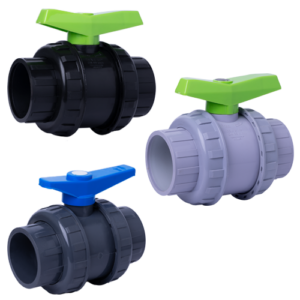
Ask a plant engineer or procurement manager to specify a ball valve for a new piping system, and one of the first questions they face is straightforward but consequential: union ball valve or standard ball valve? The two share the same fundamental operating principle — a quarter-turn spherical ball controls fluid flow — but diverge in body construction, installation methodology, maintenance accessibility, and total cost of ownership in ways that make each the right choice for different applications. This article breaks down the structural differences, operational advantages, and ideal application profiles of both valve types — giving engineers, project managers, and procurement teams the clarity they need to specify correctly the first time.
Table of Contents
ToggleWhat Is a Standard Ball Valve?
A standard ball valve is a quarter-turn flow control device with a two-piece or single-piece body that is permanently installed in the pipeline. The body halves are assembled at the factory around the ball and seats, then sealed — creating a compact, integrated unit that is solvent-cemented, threaded, or flanged directly into the piping system.
Once installed, the standard ball valve becomes a fixed component of the pipeline. Removing it requires cutting the adjacent pipe or disconnecting a threaded fitting — a time-consuming process that makes in-line servicing impractical. For this reason, standard ball valves are typically replaced rather than repaired when they fail or require seat replacement.
Standard ball valves are the most widely used valve type in irrigation systems, domestic plumbing, agricultural water supply lines, and general industrial utilities — wherever the primary requirement is reliable on/off flow control at low-to-moderate cost, and where the valve is expected to operate for its service life without requiring disassembly.
Key Characteristics of Standard Ball Valves
- 2-piece or 1-piece body — factory-assembled, non-disassemblable
- Solvent cement socket, BSP/NPT threaded, or flanged end connections
- Compact and lightweight — minimal installation footprint
- Lower upfront cost — preferred for high-volume, budget-sensitive applications
- Replacement rather than repair is the standard maintenance approach
What Is a Union Ball Valve? How Is It Different?
A union ball valve incorporates the same quarter-turn ball-and-seat mechanism as a standard ball valve but adds a critical design feature: union end connections on both sides of the valve body. These union joints — typically a threaded union nut and a sealing face — allow the valve body to be completely disconnected from the pipeline without cutting or disturbing the installed pipework.
The result is a three-assembly construction: the valve body in the centre, and a union end piece on each side. When maintenance is required, the two union nuts are loosened, the valve body slides out of the pipeline, and the replacement or serviced valve is reinstalled — all without a pipe cutter or compression fitting.
Union ball valves are the preferred specification for any application where valve accessibility and periodic servicing are operational requirements rather than incidental considerations. Chemical dosing systems, pump connections, water treatment process lines, filtration units, and pharmaceutical piping are classic application environments.
Key Characteristics of Union Ball Valves
- 3-part construction: valve body + two union end pieces
- Union nut connections allow complete valve removal without cutting pipe
- PTFE seats plus union face O-ring seals — two sealing interfaces
- Slightly larger installation envelope than standard ball valves
- Higher upfront cost offset by significantly lower maintenance labour costs
- Available in RPVC, UPVC, CPVC materials for chemical and water service
Structural Differences: Body Design and End Connections
Understanding the physical construction of each valve type clarifies every downstream difference in installation, maintenance, and application suitability.
Standard Ball Valve Body Construction
A standard 2-piece RPVC or UPVC ball valve consists of a main body and a front body piece threaded together at the factory. The ball, PTFE seats, and stem seal are assembled inside. The two body pieces are tightened against each other to create the internal seal. End connections — socket spigots for solvent cementing or BSP threads — are integral to the body itself.
Once installed in the pipeline with solvent cement, the valve becomes inseparable from the pipe run without cutting. The body cannot be disassembled in the field in any practical sense.
Union Ball Valve Body Construction
A union ball valve has the same central valve body containing the ball, seats, and stem, but the end connections are independent union pieces. Each union piece has a spigot for solvent cementing to the adjacent pipe. The union nut threads onto the valve body’s union collar, pressing the union face seal against the valve body’s mating surface.
This architecture means the solvent-cemented connections to the pipeline are made on the removable union pieces — not on the valve body itself. Loosening the union nuts releases the valve body completely, while the union pieces remain permanently cemented to the pipe ends. Reinstallation is the reverse: slide the valve body back in, tighten the union nuts.
Installation: How Each Valve Fits Into a Piping System
Installing a Standard Ball Valve
- Cut pipe to required length, accounting for valve face-to-face dimension
- Deburr and clean pipe ends and valve sockets
- Apply solvent cement to pipe end and valve socket
- Push valve onto pipe end and hold for manufacturer’s specified cure time
- Repeat for the second connection
- Allow full cure before pressurising the system
Standard ball valve installation is simple, fast, and requires no special tools beyond a pipe cutter and solvent cement applicator. This is a primary reason for its prevalence in high-volume plumbing and irrigation applications.
Installing a Union Ball Valve
- Solvent cement the union end pieces onto the adjacent pipe ends
- Allow full cure of the union piece connections
- Confirm valve body orientation and flow direction
- Thread union nuts onto valve body collars — hand-tight first to align
- Tighten union nuts to manufacturer’s specified torque — avoid overtightening
- Pressurise and check union face seals for leaks
Union ball valve installation takes marginally more steps but is still a straightforward process. The critical advantage is established at installation: from this point, the valve body can be removed and reinstalled repeatedly without touching the solvent-cemented pipe connections.
Maintenance and Serviceability — The Critical Difference
This is where the fundamental operational difference between union and standard ball valves becomes most significant, and where the total cost of ownership calculation often reverses the apparent cost advantage of standard valves.
Maintenance of a Standard Ball Valve
Standard ball valves are generally not serviced in the field. When a standard ball valve develops a seat leak, a stem seal failure, or a jammed ball, the practical response is pipe cutting and replacement of the entire valve. In a typical industrial or water treatment setting, this means:
- Draining and isolating the affected pipe section
- Cutting the pipe on both sides of the valve
- Fitting new pipe nipples or couplings to bridge the gap created by cutting
- Installing and cementing the replacement valve
- Extended system downtime for cement cure
Each replacement cycle introduces new solvent-cemented joints and shortens the available pipe run. Over time, repeated replacements can compromise the integrity of the surrounding piping system.
Maintenance of a Union Ball Valve
Union ball valve maintenance is an entirely different proposition:
- Close the adjacent isolation valves and drain the section
- Loosen and remove the two union nuts — typically achievable with hand tools
- Slide the valve body out of the pipeline
- Replace seats, O-rings, or the entire valve body as required
- Reinstall and re-tighten the union nuts
- Return the system to service — no cement cure wait required
For applications where valves require annual inspection, scheduled seat replacement, or chemical seal upgrades, union ball valves can be serviced in a fraction of the time a standard valve replacement requires. In high-labour-cost environments or in critical process lines where downtime carries significant operational cost, this difference is financially material.
Side-by-Side Comparison: 10-Factor Analysis
| Comparison Factor | Union Ball Valve | Standard Ball Valve |
|---|---|---|
|
Design Construction |
3-piece body with union ends |
2-piece or 1-piece body, fixed ends |
|
Removal from Pipeline |
Without cutting or disturbing pipework |
Requires pipe cutting or disconnection |
|
Maintenance Access |
Full disassembly in minutes |
Difficult; often replaced entirely |
|
Best For |
Frequent maintenance, critical lines |
Permanent installations, low access |
|
Installation Complexity |
Slightly higher (union joints) |
Simple socket or threaded fit |
|
Cost |
Higher initial cost |
Lower initial cost |
|
Long-Term Value |
Lower total cost of ownership |
Higher replacement costs over time |
|
Seal Configuration |
PTFE seat + union O-ring seals |
PTFE seat seals only |
|
Available in RPVC/UPVC |
Yes — Ashok Polymers range |
Yes — Ashok Polymers range |
|
Application Fit |
Pumps, filters, dosing skids, WTP |
Irrigation, plumbing, utilities |
When to Choose a Union Ball Valve vs a Standard Ball Valve
| Choose Union Ball Valve When… | Choose Standard Ball Valve When… |
|---|---|
|
Valves require periodic inspection or servicing |
Application is permanent with minimal maintenance access needs |
|
Installed at pump inlets/outlets for easy pump removal |
Large-scale irrigation or plumbing with simple on/off control |
|
Chemical dosing lines where seals need periodic replacement |
Budget-driven projects where upfront cost is the primary constraint |
|
Water treatment plants with regular operational cycles |
Residential or light-commercial plumbing utility lines |
|
Critical process lines where downtime must be minimised |
Agricultural applications with seasonal use patterns |
General rule: if a valve is in a location where a maintenance technician cannot easily reach it, or if the fluid it controls is critical to plant operation, specify a union ball valve. If the valve is in a simple utility or distribution line with straightforward replacement access and low consequence of downtime, a standard ball valve is the economically rational choice.
Ashok Polymers Union and Standard Ball Valves
Ashok Polymers manufactures both union ball valves and a comprehensive range of standard ball valves in RPVC, UPVC, and CPVC materials — giving engineers and procurement teams access to the right valve type for every application from a single, quality-assured source.
Union Ball Valve from Ashok Polymers
The Ashok Polymers Union Ball Valve is designed for applications demanding easy in-line serviceability. Features include:
- RPVC/UPVC body — broad chemical resistance, zero corrosion
- PTFE seats and union face O-ring seals — reliable leak-free performance
- Union nut construction — valve body removable without pipe cutting
- Quarter-turn lever handle — positive on/off switching
- Available in multiple pipe sizes for industrial and water treatment applications
Standard Ball Valve Range from Ashok Polymers
For irrigation, plumbing, agriculture, and general utility applications, Ashok Polymers offers a full range of standard PVC, RPVC, and UPVC ball valves including short-handle, long-handle, concealed, and PP variants — all manufactured to consistent dimensional accuracy and quality standards.
Frequently Asked Questions (FAQs)
A standard ball valve has a fixed, two-piece body permanently cemented or threaded into the pipeline — it cannot be removed without cutting the pipe. A union ball valve adds threaded union end pieces on both sides of the valve body, allowing the valve body to be loosened and removed from the pipeline without disturbing the pipe connections, simply by unscrewing the union nuts.
Yes, union ball valves have a higher initial purchase price than equivalent standard ball valves, due to the additional union end pieces and sealing components. However, for applications requiring periodic servicing, the reduced maintenance labour cost and elimination of pipe-cutting replacement work typically result in a lower total cost of ownership over a 5–10 year operational period.
Yes, though it requires a one-time pipe modification. The existing standard ball valve must be cut out of the line. Union end pieces are then solvent-cemented to the pipe ends, and the union ball valve body is fitted between them. After this one-time conversion, all subsequent valve replacements can be done without further pipe cutting.
Yes. Union ball valves are available in RPVC, UPVC, and CPVC materials, making them suitable for chemical dosing lines, water treatment plant service, chlorination systems, and other applications where corrosion resistance is required. Ashok Polymers manufactures union ball valves in these materials for industrial and water treatment applications.
Union ball valves incorporate two types of seals: PTFE seats inside the valve body that seal against the ball surface, and O-ring face seals at each union joint interface. The O-ring face seals are critical to the union connection’s leak-free performance. These seals can be inspected and replaced during valve servicing without replacing the entire valve body, making union valves particularly suitable for aggressive chemical service where seal condition monitoring is important.
Union ball valves are strongly recommended for water treatment plant applications involving chemical dosing lines, pump connections, filter inlet/outlet isolation, and other positions subject to regular inspection and servicing. The ability to remove and reinstall valves without pipe cutting significantly reduces maintenance time and operational downtime. Standard ball valves may be appropriate for simple utility and distribution line positions with low maintenance frequency requirements.
Yes. Both union ball valves and standard ball valves in RPVC or UPVC are typically rated to equivalent working pressures — up to 10 bar (145 PSI) at ambient temperature, depending on diameter. The union end connections do not reduce the valve’s pressure rating when properly installed and torqued to the manufacturer’s specification. Always verify the pressure rating with the manufacturer for your specific diameter and operating conditions.
Conclusion
The choice between a union ball valve and a standard ball valve is ultimately a decision about how a specific valve point will be managed across its operational life. Standard ball valves deliver excellent value in fixed, low-maintenance applications — irrigation, plumbing, agricultural water supply — where simplicity and upfront cost are the governing criteria. Union ball valves earn their higher initial price in any application where maintenance access, periodic servicing, or minimising system downtime is an operational requirement.
Understanding this distinction enables engineers and procurement teams to specify precisely the right product for each valve position — avoiding the false economy of underspecifying in critical service locations, and the unnecessary cost of overspecifying in straightforward utility applications.
 Previous Post
 Next Post