
 Call Us Now!
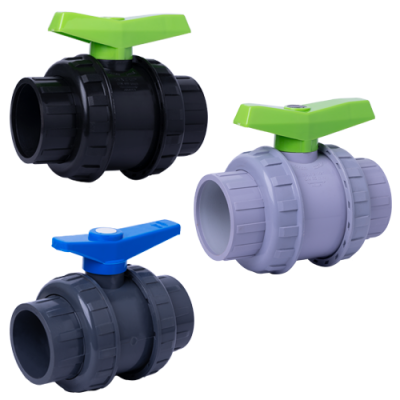
Picture the scenario every maintenance engineer dreads: a ball valve deep inside a plant room, enclosed in an equipment cabinet, or buried within a tightly bracketed pipe run has developed a seat leak. In a conventional fixed-end ball valve installation, fixing it means one of two things — either cutting the pipe on both sides of the valve, which triggers a cascade of additional repairs and re-testing, or attempting an in-line seat service that requires draining, isolating, and working in extremely confined space. Either way, the job takes hours, the system is down, and the maintenance cost far exceeds what the valve itself is worth. Union ball valves — specifically true union ball valves — were designed to eliminate exactly this problem. By incorporating threaded union nuts at each end of the valve body, union ball valves allow the entire valve to be detached from the pipeline in under two minutes without cutting, disturbing, or re-sealing any pipework. For any system where valves require periodic seat replacement, inspection, or full swap-out, the union end connection is not just a convenience — it is a sound engineering decision that pays for itself in the first maintenance event. This guide from Ashok Polymers covers everything engineers, contractors, and facility managers need to know about union ball valves: how the true union design works, how it compares to socket and threaded alternatives, which applications benefit most, what to look for when selecting one, and how the union design directly reduces maintenance time and total system lifecycle cost.
Table of Contents
ToggleWhat Is a True Union Ball Valve? Design and Anatomy
The term ‘union ball valve’ is used loosely in the market to describe any ball valve with a union-type end fitting. The precise and most important variant is the true union ball valve — a design that enables complete in-line removal of the valve body from both ends of the pipeline simultaneously, without requiring the pipe to be cut, displaced, or re-cemented.
Anatomy of a True Union Ball Valve
A true union ball valve consists of three primary assemblies joined by two union nuts:
| Component | Function | Maintenance Relevance |
|---|---|---|
|
Valve Body (Centre Section) |
Houses the ball, seats, stem, and handle mechanism |
This entire section is removed and replaced or serviced during maintenance — without touching the pipe |
|
Union Nut (×2) |
Threaded collar that connects the valve body to the pipe adapter — one at each end |
Unscrewing both union nuts releases the valve body in seconds |
|
Pipe Adapters / End Connectors (×2) |
Remain permanently bonded or threaded to the pipeline — socket, BSP thread, or flanged |
These stay in the pipe — only the valve body is removed |
|
Ball |
Perforated sphere that rotates to open or close the flow path |
Inspectable and replaceable when the body is removed |
|
Seats (×2) |
EPDM or PTFE rings that seal against the ball face |
Primary wear item — easily replaced with body removed |
|
Stem & Handle |
Connects the handle to the ball for quarter-turn operation |
Stem O-rings replaceable; handle condition visible during removal |
|
Body O-rings |
Seal the union connection between body and pipe adapters |
Replaced at each reassembly — included in standard seal kits |
True Union vs One-Union: Understanding the Difference
Some valves marketed as ‘union ball valves’ feature a union connection on only one end, with a fixed socket or threaded connection on the other. These one-union designs allow the valve to swing away from one side but still require pipe disturbance on the fixed end for full removal. A true union ball valve — sometimes labelled ‘double union’ — has union nuts on both ends, enabling complete extraction from the pipeline with no pipe movement at all. Always verify that both ends are union-type when specifying for maintenance-critical applications.
Key Definition
True Union Ball Valve: Both ends of the valve feature threaded union nuts that connect to permanently installed pipe adapters. The valve body — including ball, seats, stem, and seals — can be removed from the pipeline as a single unit by unscrewing both union nuts. No pipe cutting. No re-cementing. No system re-testing of the pipework joint.
True Union vs Socket End vs Threaded End: A Direct Comparison
Ball valves are available with three primary end connection types: socket (solvent cement), threaded (BSP or NPT), and union. Each serves different installation and maintenance scenarios. Understanding the practical trade-offs guides the correct specification decision.
| Comparison Factor | Socket End (Solvent Cement) | Threaded End (BSP) | True Union End |
|---|---|---|---|
|
Installation method |
Solvent cement into pipe socket |
Screwed onto male/female BSP thread |
Union nut over pipe adapter — hand tighten + quarter turn |
|
Installation speed |
Moderate — cement cure required |
Fast for small sizes |
Fast — no curing time needed on the union end |
|
In-line removal without pipe cutting |
Not possible |
Possible (small sizes only) |
Yes — complete removal in under 2 minutes |
|
Seat / seal replacement |
Requires pipe cutting |
Can be unscrewed (if access allows) |
In-line — unscrew both union nuts, service body, reinstall |
|
Pipeline disturbance on maintenance |
High |
Moderate |
None — pipe adapters remain fixed |
|
Re-sealing required after maintenance |
Yes — new cement joint |
Yes — PTFE tape re-application |
No — union O-rings replaced, nuts re-tightened |
|
Suitable for frequent maintenance |
No |
Limited |
Yes — designed for this purpose |
|
Pressure rating impact |
Equivalent |
Equivalent |
Equivalent — union connection rated same as body |
|
Cost premium vs socket |
Baseline |
+5–15% |
+20–40% — justified by maintenance savings |
|
Best for |
Permanent, low-maintenance service |
Metal/PVC transitions, equipment connections |
Plant rooms, chemical systems, pool plant, anywhere regular service is expected |
Specification Principle
The decision between socket end and true union is not about which valve performs better hydraulically — both deliver equivalent flow performance. It is entirely about what happens when the valve needs to be serviced. If the answer to ‘how often will this valve need maintenance or replacement?’ is anything other than ‘very rarely’, true union is the correct specification.
How Union Ball Valves Make Maintenance Faster and Cheaper
The maintenance cost advantage of true union ball valves operates across three dimensions: direct labour time, system downtime, and accumulated repair costs over the valve’s service life. Quantifying these advantages makes a compelling case for the incremental purchase cost of the union design.
Direct Labour Time Comparison
Consider a DN32 PVC ball valve requiring seat replacement in a chemical dosing system:
| Maintenance Factor | Socket End Valve (No Union) | True Union Ball Valve |
|---|---|---|
|
Isolate system / drain line |
30–60 minutes |
30–60 minutes (same) |
|
Access and prepare for valve removal |
15 minutes |
5 minutes |
|
Cut pipe on both sides of valve |
20–30 minutes |
Not required — 0 minutes |
|
Remove valve from line |
30 minutes (pipe fitting) |
2 minutes (unscrew union nuts) |
|
Seat replacement / valve service |
20 minutes |
20 minutes (same) |
|
Reinstall valve / join pipe |
30–45 minutes + cure time |
5 minutes (re-tighten union nuts) |
|
Pressure test and recommission |
45–60 minutes |
15 minutes |
|
Total maintenance time |
3–4 hours |
1.5–2 hours |
|
Estimated labour cost saving |
Baseline |
1.5–2 hours saved per event |
|
Additional materials required |
Pipe offcuts, cement, primer, fittings |
Union O-ring seal kit only |
Accumulated Savings Over System Lifecycle
For a system with 20 union ball valves, each requiring maintenance every three years over a 15-year system life — a conservative assumption for chemical, pool, or HVAC applications:
- Total maintenance events: 20 valves × 5 service cycles = 100 maintenance events
- Labour time saved per event: approximately 2 hours at ₹500–800/hour industrial maintenance rate
- Total labour saving: 100 events × 2 hours × ₹600 = ₹1,20,000 in maintenance labour alone
- Additional savings: eliminated cost of pipe fittings, cement, primer, and testing equipment for each socket-end repair
- System availability improvement: fewer and shorter maintenance shutdowns improve production throughput
The incremental purchase cost of true union ball valves over socket-end equivalents — typically ₹200–600 per valve in the DN15–DN50 range — is recovered in full within the first or second maintenance event. Over a 15-year system life, true union ball valves consistently deliver lower total cost of ownership than any other PVC ball valve end connection type in maintenance-intensive applications.
Step-by-Step: Removing and Reinstalling a Union Ball Valve
One of the key advantages of union ball valves for maintenance is the simplicity of the removal and reinstallation procedure. Any trained maintenance technician can execute this sequence safely and reliably:
Removal Procedure
| End Connection Type | |
|---|---|
|
01 |
Isolate and Depressurise the System Confirm upstream and downstream isolation is in place. Vent the line to zero pressure. Drain residual fluid from the pipeline section. Never attempt union nut removal under pressure — the union O-ring seal will release suddenly under any residual pressure. |
|
02 |
Close the Union Ball Valve Turn the handle to the fully closed position before removing. This reduces residual fluid release during body extraction and helps contain any fluid remaining in the valve body cavity. |
|
03 |
Unscrew Both Union Nuts by Hand Union nuts on a correctly assembled true union ball valve should be finger-tight plus quarter-turn torque — designed for tool-free removal in normal service. If union nuts are seized from chemical deposits or over-tightening, use a strap wrench rather than metal pipe pliers to avoid damaging the nut profile. Never use heat to free a PVC or CPVC union nut. |
|
04 |
Extract the Valve Body Once both union nuts are free, the valve body slides out of the pipeline. Capture any residual fluid. Inspect the union O-rings on the pipe adapters — replace if deformed, cracked, or chemically swollen. These O-rings are the sole sealing element between the valve body and the permanent pipe adapters. |
|
05 |
Service or Replace the Valve Body With the valve body out, you have three options: (a) Conduct in-hand seat and seal replacement using a standard service kit; (b) Install a pre-assembled replacement valve body if service time is critical — body-swap is completed in minutes; (c) Send the valve body for workshop service while the system runs on a temporary bypass. In all cases, the pipeline remains intact. |
|
06 |
Reinstall and Recommission Fit new union O-rings onto the pipe adapters. Slide the serviced or replacement valve body into position, aligning the union nuts with the adapter threads. Hand-tighten both union nuts, then snug by a further quarter-turn with a strap wrench. Do not over-torque — union nuts on PVC valves require only light additional torque beyond hand-tight. Pressurise slowly, inspect for leaks at the union joints, and return the valve to service. |
Total Procedure Time
A trained technician performing union ball valve removal and body swap on a DN25–DN50 PVC valve in accessible pipework typically completes the full sequence — isolation to return to service — in 45 to 90 minutes. The equivalent procedure on a socket-end valve in the same location takes 3 to 4 hours minimum, plus cement cure time.
Top Applications Where Union Ball Valves Are the Right Choice
True union ball valves are not universally necessary — for permanently installed isolation valves on low-maintenance water mains, socket-end valves are cost-effective and appropriate. The union design delivers its maximum value in applications where the valve will require periodic access for service, inspection, or replacement. The following application profiles represent where union ball valves provide the strongest engineering and economic case:
A. Swimming Pool and Spa Plant Rooms
Pool plant rooms are among the highest-frequency maintenance environments for PVC ball valves. Filter backwash cycles, chemical dosing adjustments, pump replacements, and seasonal commissioning and decommissioning all require repeated valve access. True union ball valves on pump suction and discharge lines, filter inlet/outlet connections, chemical dosing injection points, and bypass connections allow each piece of equipment to be isolated and disconnected from the pipe system independently — without disrupting adjacent pipework.
- Standard practice: All pump connections, filter connections, and dosing points in pool plant rooms should be union-end as a minimum specification
- Typical sizes: DN25 to DN63 for residential and commercial pool plant rooms
- Material: RPVC for ambient-temperature circuits; CPVC where solar heating raises water temperature above 55°C
B. Chemical Dosing and Metering Systems
Chemical dosing systems — acid, alkali, disinfectant, or coagulant dosing in water treatment, industrial process, or agricultural fertigation — require frequent valve inspection and seat replacement due to the aggressive nature of the dosed chemicals. A union ball valve on a chemical dosing point allows the pump, flow meter, or injection assembly to be isolated and the valve serviced without exposing the broader system to chemical contamination from an open pipe cut.
- Seat material specification: PTFE seats recommended for chemical dosing applications — EPDM may be incompatible with certain acids and oxidising agents
- Typical sizes: DN15 to DN32 for chemical dosing injection points
- Tip: Install union ball valves on both the suction and discharge sides of chemical metering pumps — this allows pump removal and service without disturbing chemical pipe connections
C. Water Treatment and Filtration Plants
Municipal and industrial water treatment plants operate continuously and cannot afford extended maintenance shutdowns. Union ball valves on filter inlet and outlet lines, chemical addition points, sample valves, and analyser connections allow each element of the treatment train to be isolated and serviced while the remainder of the plant continues operating. The ability to conduct valve seat replacement without a plant shutdown is a significant operational advantage in continuous-process water treatment.
D. Aquaculture and Fish Farm Water Systems
Aquaculture recirculating systems require frequent water quality management — aeration, filtration, UV sterilisation, and oxygen supplementation — all of which involve valves on equipment that requires periodic maintenance. Fish farm water systems cannot be taken down for extended periods without livestock losses, making the rapid valve service capability of true union ball valves particularly valuable. Union ball valves allow UV sterilisers, heat exchangers, and filter modules to be isolated and removed without disrupting the main water circuit.
E. HVAC and Building Services Plant Rooms
Building services plant rooms — housing chillers, boilers, AHUs, and pumps — require periodic maintenance on all connected equipment. Union ball valves on pump connections, heat exchanger ports, chemical dosing points, and pressure test connections allow each piece of mechanical equipment to be individually isolated and removed for service or replacement without draining the entire system. In commercial buildings where 24/7 environmental comfort is expected, minimising maintenance downtime is a direct commercial and contractual requirement.
F. Pharmaceutical and Food Processing Pipework
In pharmaceutical and food-grade fluid systems, valve maintenance includes not just mechanical service but also sanitation and validation. The ability to remove a union ball valve body completely from the pipeline, sanitise all internal surfaces in a controlled environment, verify seat and seal integrity, and return it to service — without disturbing the validated pipeline — is a significant process advantage. True union ball valves in these applications are typically specified with PTFE seats and smooth-bore full-body designs to facilitate cleaning.
G. Solar Hot Water and Heat Pump Systems
Solar primary circuits and heat pump secondary circuits experience the most demanding combination of thermal cycling and maintenance access challenges. Collectors mounted on rooftops, heat exchangers in confined plant areas, and pumped circuits across large roof areas all represent locations where valve access is difficult. Union ball valves at collector array inlet and outlet, heat exchanger ports, and pump connections allow annual service access — for inhibitor replacement, pump inspection, and seat condition checks — without cutting into the system pipework.
What to Look for When Selecting a Union Ball Valve
Not all union ball valves deliver equivalent maintenance performance. The following selection criteria ensure you specify a union ball valve that fulfils its maintenance promise over the full system life:
Criterion 1: Confirm It Is a True Union (Both Ends)
As noted earlier, one-union designs leave one end of the valve fixed to the pipe. Always confirm both ends feature independent union nuts before ordering. Review the product drawing or cross-section diagram — a true union ball valve will show two union nuts, two pipe adapters (which remain in the pipe), and a centre body that is entirely removable.
Criterion 2: Verify Pipe Adapter Compatibility with Your Pipeline
The pipe adapters — the components that remain permanently in the pipeline when the valve body is removed — must match your pipe system exactly: same nominal size, same pipe standard (IS 4985 for RPVC, IS 15778 for CPVC), and same end connection type (socket for solvent-weld systems, male BSP thread for threaded systems). A mismatch here means the union system cannot function as intended.
Criterion 3: Check Union Nut Torque Requirements
The best true union ball valves are designed for tool-free or near tool-free removal — union nuts that can be loosened and tightened by hand or with light strap wrench assistance. Valves requiring significant torque for union nut removal defeat part of the maintenance convenience advantage. Ask your supplier for the recommended union nut tightening torque — it should be expressed in Newton-metres, not in ‘tight as possible’.
Criterion 4: Seat and Seal Kit Availability
The maintenance promise of a true union ball valve depends entirely on replacement seat and seal kits being readily available for the specific valve body. Before specifying, confirm that the manufacturer or distributor stocks:
- Seat replacement kits (specify EPDM or PTFE as appropriate for your fluid)
- Body O-ring kits for the union joint
- Stem O-ring kits for stem seal replacement
- Complete service kits (all of the above in a single package for efficient maintenance)
Criterion 5: Material Specification Alignment
| Application Temperature | Fluid Type | Recommended Union Ball Valve Material |
|---|---|---|
|
Ambient (<55°C) |
Water, mild chemicals |
RPVC body with EPDM seats |
|
Ambient (<55°C) |
Aggressive chemicals (acid/alkali) |
RPVC body with PTFE seats |
|
Hot (55–93°C) |
Hot water, solar primary |
CPVC body with EPDM or PTFE seats |
|
Hot (55–93°C) |
Hot chemical process water |
CPVC body with PTFE seats |
|
Pharmaceutical / food-grade |
Purified water, CIP |
CPVC or PVDF body with PTFE seats |
Criterion 6: Full-Bore vs Reduced-Bore Body
Specify full-bore union ball valves on pump suction and discharge lines, main distribution connections, and any line where minimising pressure drop is important. Reduced-bore union ball valves are acceptable only on low-flow sampling, dosing, or instrumentation connection points where cost is a primary consideration and flow restriction is tolerable.
Common Mistakes When Installing Union Ball Valves
Mistake 1: Over-Tightening Union Nuts
Union nuts on PVC and CPVC ball valves should be tightened to hand-tight plus a quarter-turn snug with a strap wrench. Over-tightening compresses the union O-ring beyond its designed seating depth — causing extrusion of the seal, cracking of the nut thread, and paradoxically increasing the risk of leakage. When a union connection leaks after installation, the instinct to tighten further is wrong — disassemble, inspect the O-ring, and reassemble correctly.
Mistake 2: Solvent Cementing the Union End
Union pipe adapters are designed to be bonded to the pipe using solvent cement — but the union nut and valve body must never be cemented. It sounds obvious, but on busy installation sites, cement is sometimes applied across the entire connection including the union interface. Once the union face is cemented, the entire maintenance advantage is lost and the valve cannot be removed without pipe cutting. Keep cement away from the union nut, O-ring groove, and union face of the pipe adapter.
Mistake 3: Reusing Union O-rings Without Inspection
Union O-rings compress and take a set during service — particularly in hot water or chemical applications where swelling and deformation occur progressively. At each reassembly after maintenance, the union O-rings should be inspected and replaced if they show any flattening, cracking, chemical attack, or permanent deformation. Always keep a stock of correct O-rings at the maintenance facility — they are inexpensive and their failure after reassembly creates exactly the kind of system leak that the union design was meant to make easy to fix.
Mistake 4: Installing the Valve Body Backwards
Ball valves are bidirectional for flow — but the handle orientation and stem position in a true union ball valve are designed for a specific installed orientation. Installing the valve body with the stem down in a horizontal run creates a collection point for debris and sediment at the stem seal — accelerating stem O-ring wear. Always install with the stem pointing up or to the side, following the manufacturer’s recommended orientation marking.
Mistake 5: Specifying One-Union Where True Union Is Required
A one-union valve on a pump discharge line in a sealed cabinet — where the fixed socket end faces the back wall — provides no practical maintenance advantage. The engineer specified ‘a union valve’ without confirming both ends were union type. The result is a valve that cannot be removed without cutting the fixed-end pipe connection. Always verify true union (both ends) on the product specification sheet, not just the product name.
Ashok Polymers True Union Ball Valves: Built for Maintainability
At Ashok Polymers, our true union ball valve range is designed with maintainability as a first-order engineering requirement — not an afterthought. Every valve in the range delivers the full in-line removal capability that the union design promises, with standardised seal kits, correctly torqued union nuts, and full-bore bodies as standard.
Ashok Polymers True Union Ball Valve Range Highlights
- True union on both ends — confirmed on every product in the range; no one-union configurations in our union programme
- Size range: DN15 to DN80 in both RPVC and CPVC body materials — covering the full range of pool plant, chemical dosing, HVAC, aquaculture, solar, and pharmaceutical applications
- Seat options: EPDM standard for water service; PTFE for chemical process and pharmaceutical duties — both available across the full size range
- Union nut design: engineered for hand-tight removal — finger-loosen plus light strap wrench to break the O-ring seal; no tool torque required in normal service
- Full-bore body standard across the range — no hidden flow restriction
- Standardised seal kits: EPDM seat and O-ring kits and PTFE seat and O-ring kits stocked and available separately — no need to purchase a complete valve for a seat replacement
- Handle options: standard lever handle; lockable handle for systems requiring valve position security; extended handle for insulated pipework installations
- Pressure ratings: PN10 to PN16 across the size range, with CPVC models carrying full P-T derating documentation for hot water applications
Ashok Polymers supplies true union ball valves to swimming pool contractors, water treatment engineers, chemical process companies, HVAC mechanical contractors, aquaculture system designers, and pharmaceutical facility managers across India. Our technical team can advise on seat material selection, union nut torque specifications, and service kit requirements for any application.
Internal Link Suggestion: Explore the Ashok Polymers True Union Ball Valve range at ashokpolymers.com — available in RPVC and CPVC with EPDM and PTFE seat options.
Frequently Asked Questions (FAQs)
The fundamental difference is end connection design. A standard ball valve has fixed end connections — either socket (solvent cement) or threaded — that permanently bond or lock the valve into the pipeline. Removing it requires cutting the pipe. A union ball valve has threaded union nuts at each end that connect to pipe adapters which remain bonded to the pipeline. The valve body — containing the ball, seats, and seals — can be unscrewed and extracted from both union nuts simultaneously, removing it from the pipeline in minutes without any pipe disturbance. The internal flow components (ball, bore, seat materials) are identical between union and non-union designs of the same valve size and pressure class.
Yes — with one additional step. You cannot directly swap a socket-end valve for a union valve in an existing cemented system without pipe cutting. However, the retrofitting process is straightforward: cut out the existing socket-end valve, install transition fittings on each cut pipe end, and cement the union pipe adapters of the new true union valve onto those transitions. Once the pipe adapters are cured and in place, the true union valve body slides in and both union nuts are hand-tightened. All subsequent maintenance events then benefit from the full union removal advantage. The one-time retrofit pipe cut is a worthwhile investment when the system will require regular ongoing maintenance.
In standard cold water service, union O-rings can last several years without replacement if the valve is not frequently disassembled. As a best practice, always replace union O-rings at every maintenance event where the valve body is removed — the O-rings are inexpensive (typically ₹10–30 per set), and the labour cost of a future leaking union joint caused by a reused deformed O-ring far exceeds the cost of replacement at every reassembly. In hot water applications (above 60°C) and chemical service, O-rings should always be replaced at each disassembly due to accelerated compression set and chemical swelling.
True union ball valves are rated to the same pressure classes as equivalent socket-end or threaded ball valves — PN10 to PN16 for PVC and CPVC designs in standard sizes. The union connection, when correctly assembled with the specified O-ring and union nut torque, is fully rated to the valve body pressure class. The union joint does not represent a pressure limitation relative to the rest of the valve. For applications above PN16, or for very large bore sizes (above DN100), consult the manufacturer for union-specific pressure certification — most suppliers limit their union range to DN80 or DN100 as the upper practical size.
Yes — true union ball valves can be installed in horizontal, vertical upflow, and vertical downflow orientations. However, as with all ball valves, the preferred orientation for lowest maintenance frequency is horizontal with the stem pointing upward. In vertical installations, particularly downflow, check that the union nut lower connection is accessible for removal — in some confined configurations, the lower union nut can be difficult to reach. Design the pipe support system to allow the valve body to slide downward (in vertical upflow) or upward (in downflow) during removal without obstruction from pipework or support brackets.
In a well-maintained installation with correctly torqued union nuts, the only tool required is a strap wrench — one application each side to break the initial O-ring seal, then the nuts can be rotated by hand to full removal. A properly designed true union valve should never require metal pipe wrenches, impact tools, or heat for removal in normal service. If union nuts resist removal, the cause is almost always over-tightening at installation or chemical deposition in the thread — apply a light silicone lubricant to the thread and use a strap wrench with gentle, increasing torque. Mark union nuts with a torque indicator pen at installation to detect any subsequent unwanted movement.
A leaking union joint after reassembly is almost always caused by one of three things: a worn or incorrectly seated O-ring, debris on the O-ring seating face, or incorrect union nut torque. Follow this diagnosis sequence: (1) Depressurise the system. (2) Unscrew the leaking union nut and remove the valve body. (3) Inspect the O-ring — replace if flattened, cracked, swollen, or showing any deformation. (4) Clean the O-ring seating groove and the union face of the pipe adapter with a clean lint-free cloth. (5) Apply a very light smear of silicone lubricant to the new O-ring before seating. (6) Reassemble and tighten the union nut to hand-tight plus a firm quarter-turn with a strap wrench. Do not over-tighten.
Conclusion: Specify Union Ball Valves Once — Save on Every Maintenance Event
The true union ball valve is one of the most practical design decisions available to engineers and contractors specifying PVC or CPVC piping systems for maintenance-intensive applications. The incremental purchase cost — typically 20–40% above an equivalent socket-end valve — is recovered in full within the first or second maintenance event, and the operational benefits accumulate across every service cycle over the system’s lifetime.
No pipe cutting. No cement. No extended system shutdowns. No emergency call-outs for what should be a routine seat replacement. Just two union nuts, two minutes, and a valve body that comes out in your hands — ready to service or swap while the rest of your system keeps running.
At Ashok Polymers, our true union ball valve range in RPVC and CPVC is built to deliver this promise on every maintenance event — with standardised seal kits, hand-removable union nuts, and full technical support. Visit ashokpolymers.com to explore the range or contact our team to discuss the right union valve specification for your system.
Make Your Next Valve Replacement Take 2 Minutes, Not 4 Hours
Ashok Polymers True Union Ball Valves — RPVC & CPVC | DN15 to DN80 | EPDM & PTFE Seats | Seal Kits Always In Stock
 Previous Post