
 Call Us Now!
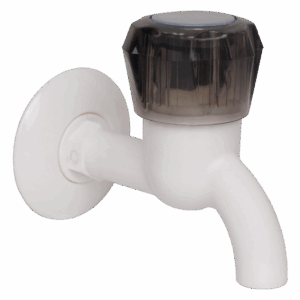
In commercial plumbing — hotels, hospitals, schools, factories, offices, and food processing facilities — a tap is not just a fitting. It is a component that will be operated dozens to hundreds of times per day, cleaned with commercial-grade chemicals, exposed to hard water or saline borewell supply, and expected to function without maintenance for years at a time. The material it is made from determines whether it delivers on these demands — or becomes a recurring maintenance problem that disrupts operations, triggers compliance issues, and costs far more over its lifecycle than the original price saving seemed to justify. PTMT taps for commercial use have become the specification of choice across an expanding range of Indian industries and institutions — from five-star hotel chains to government hospitals, from food processing plants to airport facilities — not because they are the cheapest option, but because their combination of lead-free safety, corrosion immunity, chemical resistance, and zero-maintenance performance addresses the specific failure modes that make conventional brass taps an ongoing liability in high-use commercial environments. This complete guide covers everything commercial buyers, architects, facility managers, and plumbing contractors need to know: the material science behind PTMT’s commercial advantages, a detailed breakdown of features and their commercial relevance, sector-by-sector application guidance, a specification reference table, installation best practices, maintenance requirements, and the compliance certifications that regulated commercial sectors must verify. By the end, you will have a complete technical basis for specifying PTMT taps across any commercial project with confidence.
Table of Contents
ToggleThe Hidden Cost of Wrong Tap Specification in Commercial Buildings
Tap specification decisions in commercial buildings are rarely made by the people who will live with the consequences. An architect or contractor specifying taps for a 200-room hotel, a 500-bed hospital, or a large office complex is often working under cost pressure, tight timelines, and limited visibility of the long-term maintenance implications of each choice. The result, across much of Indian commercial construction, has been a default to the familiar: chrome-plated brass taps that look acceptable at handover, cost-effectively priced at the point of procurement, and carry a brand name that satisfies specification checklists.
What frequently follows, typically 18 to 36 months post-handover, is the beginning of a maintenance cycle that was entirely predictable from the tap material specification. Chrome plating begins to pit and peel in the humid, frequently-cleaned environment of a commercial washroom. Taps on hard borewell water lines develop scale accumulation that requires descaling. In hospital wards, older brass taps are flagged for potential lead contamination during accreditation inspections. In hotel bathrooms, the finish mismatch between taps installed at opening and replacements installed 24 months later becomes visible to guests. In food processing facilities, compliance audits raise questions about the lead content of brass fittings in proximity to food preparation wash points.
Each of these scenarios represents a cost — in maintenance labour, replacement procurement, compliance remediation, or reputational impact — that was not apparent in the original tap price comparison. The correct basis for commercial tap specification is not unit price at procurement; it is total cost of ownership over the building’s service period, combined with compliance risk and operational reliability. When evaluated on this basis, PTMT taps for commercial use consistently outperform conventional brass alternatives across the majority of commercial sectors — and this guide demonstrates exactly why.
What Makes PTMT the Ideal Material for Commercial Plumbing?
PTMT — Poly Tetra Methylene Terephthalate — is an engineering-grade thermoplastic polyester, not a generic plastic. The distinction matters because many buyers first encounter PTMT taps in comparison to brass and assume that any non-metal tap is a compromise. PTMT’s specific molecular structure gives it a combination of properties that, in commercial plumbing service, is genuinely superior to brass in several critical dimensions.
The Polymer Science Behind PTMT's Commercial Performance
PTMT belongs to the thermoplastic polyester family — a class of engineering polymers characterised by high crystallinity, which translates to dimensional stability under varying temperatures and pressures. Unlike standard PVC or polypropylene, which lose significant strength and stiffness as temperature increases, PTMT retains much of its mechanical properties across the temperature range experienced in commercial hot water systems. This is why quality PTMT taps can be specified for hot water connections up to 80-95°C, making them suitable for the full range of commercial water supply applications.
The key properties that translate PTMT’s polymer chemistry into commercial plumbing advantages are:
- Tensile strength of 50-60 MPa — adequate for the pressures and mechanical stresses encountered in commercial tap operation, including operation by multiple users of varying physical strength
- Glass transition temperature above 85°C — maintaining structural integrity in hot water service that would distort softer thermoplastics
- Chemical inertness toward the acids, alkalis, chlorine compounds, and surfactants used in commercial cleaning and disinfection protocols
- Hydrophobic surface chemistry — water does not bond easily to PTMT surfaces, which reduces mineral scale adhesion compared to metal surfaces and simplifies cleaning
- Complete absence of metal components in the water flow path — PTMT contains no lead, copper, zinc, or other metals that can leach into water
How PTMT Compares to Standard Commercial Tap Materials
Commercial buildings in India have historically been served by three tap materials: brass (the most common), stainless steel (premium positioning), and zinc alloy (the lowest-cost option often sold as brass). PTMT represents a fourth category that overlaps with all three in different respects: it costs comparably to mid-tier brass, performs better than standard brass in corrosion and lead-free terms, and approaches stainless steel’s corrosion immunity and safety at a lower price point. For the vast majority of commercial applications that do not require stainless steel’s premium aesthetic (high-specification visible bathroom fixtures in luxury settings), PTMT is the rational choice.
Core Features of PTMT Taps for Commercial Use
The following features define PTMT taps for commercial applications and explain why each feature matters specifically in high-use, regulated commercial environments:
| Feature | Why It Matters for Commercial Use |
|---|---|
|
Zero Lead Content |
Completely lead-free polymer — meets healthcare, food service, and education compliance requirements without exception. |
|
High Impact Strength |
Resists mechanical stress in high-traffic commercial environments without cracking or shattering under normal operating conditions. |
|
Chemical Resistance |
Unaffected by cleaning agents, disinfectants, hard water minerals, and chlorine levels typical in commercial water supply systems. |
|
Corrosion Immunity |
Will not rust, pit, tarnish, or degrade from any water chemistry condition encountered in Indian commercial plumbing. |
|
Consistent Finish Retention |
Surface appearance does not fade, chalk, or discolour with repeated cleaning using commercial-grade agents. |
|
Smooth Internal Bore |
Smooth internal surface resists limescale adhesion — maintaining consistent flow and reducing blockage frequency. |
|
Lightweight Construction |
40-60% lighter than brass — reduces structural load on wall outlets and speeds up installation across large commercial projects. |
|
High Temperature Rating |
Rated up to 80-95°C (grade dependent) — suitable for hot water taps in commercial kitchens, hospital facilities, and laundry. |
|
Long Service Life |
8-12 years in commercial environments — low replacement frequency reduces lifecycle cost and maintenance downtime. |
|
Wide Type Range |
Available as pillar taps, bib cocks, stop cocks, angle valves, and wall-mounted configurations to suit every commercial application. |
The Ceramic Disc Mechanism Advantage
Most quality PTMT taps for commercial use incorporate a ceramic disc control mechanism rather than the rubber washer mechanism found in traditional taps. This distinction is important in commercial settings for two reasons. First, ceramic discs do not degrade, distort, or swell under exposure to hot water or cleaning chemicals the way rubber washers do — a rubber washer tap in a high-use commercial washroom may need washer replacement every 12 to 18 months, while a ceramic disc PTMT tap can operate for its full 8 to 12 year service life without any internal component replacement. Second, ceramic discs provide smooth, consistent flow control with quarter-turn operation, making them more intuitive and less prone to over-operation by users in high-traffic facilities.
Finish Options for Commercial Settings
PTMT taps for commercial use are available in several finish options, each suited to different commercial environments:
- Chrome finish: the standard commercial specification, providing a bright, hygienic-appearing surface that is easy to inspect for cleanliness and matches most commercial sanitary ware
- Brushed chrome / satin finish: preferred in commercial kitchens and food processing facilities where fingerprints and water marks are more visible on bright chrome
- Matte or powder-coat colour finish: available for brand-consistent or design-led commercial projects where colour coding or design identity is specified
- Anti-microbial finish: available in certain PTMT tap ranges with silver-ion or similar anti-microbial surface treatment, providing an additional hygiene layer for healthcare and food service settings
Key Advantages of PTMT Taps Over Brass in Commercial Settings
For procurement teams and facility managers evaluating PTMT against brass for a commercial project, the following comparison crystallises the key advantages of PTMT across every decision factor relevant to commercial plumbing:
| Advantage Factor | PTMT Tap (Commercial) | Brass Tap (Commercial) |
|---|---|---|
|
Lead safety |
Zero lead — compliant in all regulated settings |
2-8% lead — risk in healthcare, food & education |
|
Corrosion in high use |
None — immune to all water chemistry |
Dezincification risk in hard/saline water areas |
|
Finish durability (3 yrs) |
Unchanged — no tarnishing or pitting |
Chrome wears in high-traffic use; brass tarnishes |
|
Chemical cleaning agents |
Resistant to commercial-grade disinfectants |
Bleach and strong acids attack brass surfaces |
|
Maintenance requirement |
Zero — wipe clean, no surface treatment |
Periodic cleaning; possible replating after wear |
|
Weight and installation |
Light — fast installation across large projects |
Heavy — adds time and labour across many units |
|
Cost at scale (100+ taps) |
Lower material + lower installation labour |
Higher material + higher labour across large volumes |
|
Regulatory compliance |
Meets healthcare, food service & FSSAI requirements |
Requires specific low-lead alloy for compliance |
The advantages of PTMT over brass in commercial settings are not marginal — they are decisive across the factors that matter most to facility managers: safety compliance, maintenance burden, finish durability, and total lifecycle cost. The one factor where brass retains an advantage — aesthetic premium for visible high-specification fixtures — is real but applies to a minority of tap installation points in most commercial buildings. Back-of-house taps, utility connections, washroom taps in staff areas, and all non-visible installation points are served at least equally well by PTMT in every performance dimension.
Sector-by-Sector: PTMT Tap Applications Across Commercial Industries
PTMT taps for commercial use are now specified across the full range of commercial building types in India. The following table covers the ten most important commercial sectors, identifying the specific application points within each and the sector-specific reasons PTMT is preferred:
| Commercial Sector | Key Application Points | Why PTMT is Specified |
|---|---|---|
|
Hotels & Hospitality |
Guest bathroom taps, corridor wash stations, laundry room taps, kitchen utility taps |
High daily use cycles; chemical cleaning; guest water safety expectations |
|
Hospitals & Healthcare |
Patient ward taps, OT scrub stations, ICU wash points, nursing station sinks |
Lead-free mandatory; chemical disinfectant resistance critical; zero-maintenance preferred |
|
Schools & Colleges |
Student washroom taps, laboratory wash points, canteen taps, sports facility wash areas |
Children vulnerable to lead; heavy daily use; budget-conscious projects |
|
Food Processing |
Processing area wash taps, cooling water taps, CIP-adjacent wash stations |
FSSAI compliance requires lead-free; chemical resistant to food-grade cleaning agents |
|
Offices & Commercial Complexes |
Washroom taps, pantry taps, cafeteria taps, facility management valve points |
Low maintenance priority; uniform specification across many floors; ISI-certified preferred |
|
Restaurants & Canteens |
Kitchen utility taps, dishwashing area, hand wash stations, food prep area |
Food safety compliance; chemical cleaning with degreaser; heavy daily use |
|
Manufacturing Facilities |
Worker welfare washroom taps, chemical-adjacent wash points, utility water taps |
Chemical resistance; no corrosion from industrial-use cleaning agents |
|
Airports & Transit Hubs |
High-traffic washroom taps, accessible wash stations, staff facility taps |
Extreme use cycles; robust to heavy handling; consistent appearance across facilities |
|
Retail & Mall Facilities |
Public washroom taps, food court hand wash, staff utility areas |
High volume of daily users; maintenance reduction priority; vandal-resistant handle preferred |
|
Government Buildings |
Secretariat washrooms, court facilities, public sector offices, government hospitals |
Regulatory compliance; lead-free public water safety; cost-effective at large scale |
Hotels and Hospitality — Deep Dive
The hospitality sector was one of the early large-scale adopters of PTMT taps in commercial use in India, and the reasons are instructive. A 200-room hotel installs approximately 600 to 1,000 taps across guest bathrooms, staff facilities, kitchens, laundry, and back-of-house utilities. At this scale, the difference in tap lifecycle cost between PTMT and brass is substantial — not only in initial procurement (where PTMT may save 30 to 50 percent per unit) but in maintenance: a housekeeping team cleaning 200 bathrooms daily applies strong chemical cleaners to tap surfaces multiple times per week. Chrome-plated brass taps show visible finish degradation within 18 to 24 months of this treatment in most hotel environments. Quality PTMT taps with appropriate surface treatment show no such degradation across their full service life.
Healthcare — Deep Dive
Healthcare is where PTMT’s lead-free property is not merely an advantage but a mandatory requirement. Hospitals pursuing NABH accreditation must demonstrate that patient-area water fittings do not introduce contaminants into the water supply. Lead, which can leach from standard brass tap alloys into water that stands in the tap between uses, is directly relevant to this requirement — particularly in wards where water may stand in taps during overnight periods between patient use. PTMT eliminates this risk entirely. Additionally, healthcare facilities use concentrated disinfectants — sodium hypochlorite, quaternary ammonium compounds, and chlorhexidine solutions — in regular cleaning protocols. These chemicals are aggressive toward brass, attacking the chrome plating and eventually the alloy itself over repeated exposure cycles. PTMT is resistant to these disinfectants at working concentrations, maintaining both appearance and integrity across years of clinical cleaning regimes.
Food Processing — Deep Dive
FSSAI (Food Safety and Standards Authority of India) regulations for food processing facilities place specific requirements on materials that come into contact with food, or that are in proximity to food preparation areas. The requirement for lead-free materials in food contact zones directly affects tap specification in processing areas, wash stations, and cooling water connections. Standard brass taps, depending on alloy composition, may not meet this requirement without specific low-lead alloy documentation. PTMT’s zero lead content provides straightforward compliance, and its resistance to the alkaline cleaning agents and food-grade sanitisers used in CIP (clean-in-place) cleaning cycles makes it the practical and compliant choice for food facility tap specification.
PTMT Tap Types Available for Commercial Plumbing
PTMT is available across all the standard tap configurations used in commercial plumbing, ensuring that a complete commercial project can be specified in a single consistent material from a single supplier:
Pillar Taps
Pillar taps are deck-mounted (installed through the washbasin or sink deck) with separate hot and cold versions or combined mixer configurations. In commercial settings, pillar taps are the standard specification for washbasin counters in hotel guest bathrooms, hospital hand wash stations, school washrooms, and office toilet facilities. PTMT pillar taps in 1/2 inch size cover the majority of commercial washbasin applications.
Bib Cocks (Bib Taps)
Bib cocks are wall-mounted taps that project horizontally from a wall plate connection. In commercial settings, bib cocks are specified for kitchen utility areas (below-counter washing), janitor rooms, outdoor cleaning points, mop-fill connections, and back-of-house utility areas. PTMT bib cocks in 1/2 inch and 3/4 inch sizes cover standard commercial utility applications.
Stop Cocks and Angle Valves
Stop cocks and angle valves are installed inline or at 90-degree angles to isolate individual fixtures — under washbasins (angle valves connecting the basin tap to the supply riser) or on supply lines (stop cocks controlling flow to a section of fixtures). In commercial buildings, these are among the highest-volume specification items — a 10-floor office building with 6 washbasins per floor requires 120 angle valves. At this scale, PTMT’s cost advantage per unit and consistent availability are significant.
Wall-Mounted Taps
Wall-mounted taps are fixed directly to the wall with concealed pipework, providing a clean aesthetic preferred in commercial washrooms where below-fixture appearance is important. PTMT wall-mounted taps are specified in hotel guest bathrooms, premium office washrooms, and healthcare facilities.
Float Valves
Float valves (ballcock valves) control the water level in overhead tanks and toilet cisterns. In commercial buildings with overhead tank storage — the standard configuration in most Indian commercial properties — PTMT float valves provide reliable tank level control without the corrosion that affects metal float valves in hard water storage conditions.
Specification Guide: Choosing the Right PTMT Tap for Your Sector
The following table provides a sector-by-sector specification starting point for commercial projects, covering the recommended tap type, size, and key specification notes for each major commercial application:
| Sector / Application | Recommended Tap | Key Specification Notes |
|---|---|---|
|
Healthcare (ward tap) |
1/2″ PTMT pillar tap or angle valve |
ISI-certified; ceramic disc mechanism; chrome finish; confirm lead-free certificate |
|
Food processing (wash point) |
1/2″ or 3/4″ PTMT bib cock |
Confirm FSSAI food-safe certification; stainless finish or matte preferred for hygiene |
|
Hotel guest bathroom |
1/2″ PTMT pillar tap (deck or wall mounted) |
Chrome or brushed finish; ceramic disc for drip-free performance; match basin style |
|
School washroom (multiple) |
1/2″ PTMT pillar tap or bib cock (bulk) |
ISI mark mandatory; robust handle design; budget-tier PTMT acceptable with certification |
|
Commercial kitchen utility |
3/4″ PTMT bib cock or wall tap |
Hot water rated (confirm 80°C+); chemical resistant; wall-mounted for ease of cleaning below |
|
Office washroom (multi-floor) |
1/2″ PTMT angle valve + wall tap |
Uniform specification across all floors; chrome finish for consistent appearance; ISI certified |
|
Industrial wash station |
3/4″ PTMT wall tap or stop cock |
Chemical resistance check against industrial cleaning agents; heavy-duty handle rating |
|
Airport / mall high traffic |
1/2″ PTMT sensor-compatible or vandal-resistant |
Robust PTMT body; corrosion-free in high-humidity washroom; consider auto-close for water saving |
Two universal principles apply across all commercial specifications: always verify ISI (BIS IS 781) certification on the specific product being procured, not merely on the brand or range; and always confirm the ceramic disc mechanism in any tap specification for high-use commercial environments where drip-free performance and replacement-free operation are required. Both conditions should be confirmed before committing to bulk procurement for a commercial project.
Installation Best Practices for Commercial PTMT Tap Installations
Correct installation is the foundation of the long service life that makes PTMT taps commercially cost-effective. In commercial projects with hundreds of tap installations across a compressed construction timeline, installation quality can vary significantly between plumbing teams. The following standardised installation procedure, when followed consistently across a project, ensures that the full performance life of each tap is achieved:
| Step | Action | Detail |
|---|---|---|
|
1 |
Inspect on delivery |
Verify each tap against the delivery note — confirm model, size, and ISI mark. Reject any tap without certification. |
|
2 |
Check inlet compatibility |
Confirm tap inlet size (1/2″ or 3/4″) matches the wall outlet/supply stub installed in the building. |
|
3 |
Apply PTFE thread tape |
Wrap two to three turns of PTFE thread tape clockwise on the inlet thread before fitting. Do not overtighten PTMT threads. |
|
4 |
Hand-tighten plus 1-2 turns |
PTMT thread connections should be installed hand-tight plus one to two turns only — overtightening cracks PTMT thread sections. |
|
5 |
Flush before commissioning |
Open and flush each tap briefly before the building is occupied to clear any debris introduced during installation. |
|
6 |
Test for leaks at 30 minutes |
Check all connections 30 minutes after first use — tighten 1/4 turn if any small seep is present at the threaded joint. |
|
7 |
Label valve locations |
On large commercial projects, record tap locations on the floor plan for maintenance reference, particularly stop cocks and isolation points. |
|
8 |
Record batch numbers |
Log the ISI certification batch numbers for all taps installed. This facilitates fast replacement with identical-specification units if needed. |
Large-Scale Commercial Installation Considerations
For projects involving 50 or more tap installations, several additional measures improve overall quality and reduce post-handover call-backs:
- Designate a specific plumber on each team responsible for PTMT tap installation, ensuring consistent technique across the project.
- Pre-sort taps by floor and area before installation begins — confusion between different tap types specified for different areas is a common source of installation errors on large commercial projects.
- Conduct a staged pressure test by zone (e.g., floor by floor) rather than a single whole-building test at the end — staged testing allows identification and correction of individual joint failures before finishing and commissioning.
- Prepare a tap register (Excel or handwritten log) recording tap type, size, location reference, and ISI certification batch number for each installation point — this document is essential for future maintenance management.
Maintenance Requirements for Commercial PTMT Taps
One of PTMT’s most significant commercial advantages is its minimal maintenance requirement — particularly relevant in facilities where maintenance resources are limited or where minimising disruption to building operations is a priority.
Routine Cleaning
PTMT taps require only standard washroom cleaning — wiping with a damp cloth and standard commercial cleaning solution is sufficient to maintain appearance. Unlike chrome-plated brass, PTMT tap bodies are not vulnerable to being scratched by abrasive cleaners or attacked by bleach-based products at normal use concentrations. Commercial housekeeping teams can use their standard cleaning materials without special precautions for PTMT taps.
Scale Management in Hard Water Areas
In commercial buildings served by hard borewell water — common in many Indian cities and towns — limescale accumulation on external tap surfaces is a routine maintenance consideration. PTMT’s smooth surface resists scale adhesion better than metal surfaces, but scale can still accumulate over time in high-hardness water areas. Periodic descaling using a mild citric acid or diluted vinegar solution is effective and does not damage PTMT surfaces — unlike the potential for brass surface attack from acid descalants.
Washer and Seat Service
Quality PTMT taps with ceramic disc mechanisms do not require washer replacement across their service life — the ceramic discs do not degrade under normal commercial use. If a tap begins to drip in ceramic disc service, the cause is almost always debris in the disc chamber (cleanable) or end-of-life disc wear (requiring tap replacement). In either case, the maintenance action required is simple and the cost is minimal relative to the tap’s total service life.
Planned Replacement Programming
For large commercial facilities managing many taps, a planned replacement programme — replacing a cohort of taps at 8 to 10 year intervals rather than responding to individual failures — reduces maintenance disruption and ensures consistent specification throughout the facility. This approach is particularly relevant for hospitals and hotels, where ad-hoc tap replacement creates visible mismatches and requires reactive maintenance scheduling during occupied periods.
Compliance and Certification: What Commercial Buyers Must Verify
Commercial tap procurement in regulated sectors is not simply a material and price decision — it carries compliance obligations that must be verified before purchase and documented for building certification, accreditation, and regulatory audit purposes. The following table covers the key standards and requirements relevant to PTMT tap specification in Indian commercial buildings:
| Standard / Requirement | Relevance for Commercial PTMT Tap Specification |
|---|---|
|
BIS IS 781 |
The Indian Standard for cock and valve fittings for domestic use. The primary certification to verify for any PTMT tap specified for Indian commercial projects. Confirming IS 781 on the tap body ensures dimensional compliance, pressure rating, and material quality standards. |
|
NSF/ANSI 61 |
International certification for products in contact with drinking water. Confirms absence of harmful leachables including lead. Relevant for healthcare, food service, and any application where drinking water contact must be documented to international standards. |
|
FSSAI Compliance |
For food processing, commercial kitchen, restaurant, and canteen tap installations in India, FSSAI (Food Safety and Standards Authority of India) regulations require food-contact materials to be lead-free and non-toxic. PTMT satisfies this requirement; standard brass may not. |
|
NABH Requirements |
For NABH (National Accreditation Board for Hospitals) accreditation, hospitals must demonstrate safe plumbing practices including the use of appropriate, non-contaminating materials for patient-area water fittings. Lead-free PTMT meets this requirement. |
|
GRIHA / IGBC Rating |
For green building certification under GRIHA or IGBC, water efficiency and material safety credits may be enhanced by specifying lead-free fittings and flow-efficient tap types across the commercial installation. |
Two practical actions are required to meet compliance obligations in regulated commercial sectors. First, obtain the ISI certification document (BIS IS 781 license number and test report) from the supplier before bulk procurement — not after. Second, retain copies of these documents in the building’s as-built documentation file, alongside the tap register covering installation locations. These documents are typically requested during NABH hospital accreditation inspections, FSSAI facility audits, and increasingly during GRIHA/IGBC green building certification assessments.
Our PTMT Tap Range for Commercial Projects at Ashok Polymers
Ashok Polymers manufactures and supplies a comprehensive range of ISI-certified PTMT taps specifically designed for the performance and compliance demands of Indian commercial plumbing projects. Our commercial PTMT tap range has been developed with input from facility managers, plumbing consultants, and architects across the hospitality, healthcare, education, and commercial sectors.
Our range covers every standard commercial tap type: pillar taps, bib cocks, stop cocks, angle valves, and float valves in 1/2 inch and 3/4 inch sizes, with chrome, brushed, and matte finish options. All taps incorporate ceramic disc mechanisms for drip-free commercial service life. BIS IS 781 certification documentation is available for every product in the range — provided with every commercial order for use in building certification and accreditation files.
We supply commercial projects at scale: our standard lead times accommodate the bulk procurement requirements of large hotel, hospital, and institutional construction projects, and our pricing structure includes project-specific bulk pricing for orders above 50 units. Our technical team reviews project specifications, confirms the correct tap type and size for each application point, and provides a complete bill of materials for commercial project procurement teams.
Over 10,000 commercial installations across hotels, hospitals, schools, office complexes, and manufacturing facilities in India use Ashok Polymers’ PTMT taps as their standard specification. For project teams specifying PTMT taps for commercial use, we are positioned to be your complete supply partner — from specification consultation through bulk delivery and post-project warranty support.
Browse our commercial PTMT tap range on our product page to download full certification documents, view the complete range, and request a bulk project quotation.
Frequently Asked Questions (FAQs)
PTMT taps offer zero lead content (critical for healthcare, food service, and education compliance), complete corrosion immunity across India’s varied water conditions, resistance to commercial cleaning chemicals, and zero maintenance across an 8-12 year service life. At scale — hundreds of taps in a hotel or hospital — these advantages translate into significant cost savings and compliance simplification compared to brass.
Yes. Quality ISI-certified PTMT taps are engineered for commercial service loads — including the high daily use cycles, frequent cleaning with commercial-grade chemicals, and mechanical stress from multiple users. The ceramic disc mechanism used in commercial PTMT taps is designed for consistent operation without dripping or requiring washer replacement across the full 8-12 year service life.
Yes. PTMT’s zero lead content satisfies healthcare plumbing safety requirements relevant to NABH accreditation and hospital procurement standards. The material is also resistant to the clinical disinfectants used in hospital cleaning protocols, maintaining both appearance and integrity across repeated exposure to sodium hypochlorite, quaternary ammonium compounds, and other healthcare disinfectants.
PTMT is resistant to the acids, alkalis, surfactants, and chlorine-based disinfectants used in standard commercial cleaning protocols. Standard washroom cleaning products including bleach-based cleaners can be used on PTMT surfaces without risk of damage to the finish or the body material. This contrasts with chrome-plated brass, where repeated exposure to strong bleach solutions gradually degrades the chrome finish.
An ISI-certified PTMT tap from a reputable manufacturer has a commercial service life of 8 to 12 years under typical hotel or hospital use conditions. This assumes correct installation, routine cleaning maintenance, and water quality within normal parameters. The ceramic disc mechanism does not require any internal servicing during this period.
Yes. PTMT’s zero lead content and food-grade polymer composition satisfy FSSAI requirements for materials used in food processing facility wash points and utility water connections. PTMT is inert and does not leach substances into water at operating temperatures. Always verify that the specific product carries ISI certification and, where required, NSF 61 certification for documented food and potable water contact compliance.
Yes, quality PTMT taps are rated for hot water service up to 80-95 degrees Celsius (depending on the specific formulation). This covers standard commercial hot water supply temperatures in kitchens, laundry facilities, and hospital hot water systems. Always confirm the specific temperature rating with the manufacturer for your application if temperatures approach the upper end of this range.
Key specification points for commercial procurement: (1) confirm ISI BIS IS 781 certification with documentation from the supplier; (2) specify ceramic disc mechanism for all high-use positions; (3) confirm tap type (pillar, bib cock, angle valve, stop cock) and size (1/2 inch or 3/4 inch) for each application point; (4) confirm hot water temperature rating for any tap on a hot water supply line; (5) request bulk pricing for projects above 50 units; (6) obtain and retain ISI certification batch numbers for the supplied consignment.
Conclusion
PTMT taps for commercial use represent the convergence of technical performance and commercial practicality that facility managers, architects, and procurement teams have been looking for in a brass alternative. The material’s zero lead content eliminates the single most significant compliance risk associated with conventional brass in regulated commercial sectors. Its corrosion immunity eliminates the ongoing maintenance burden of finish degradation that characterises brass in India’s variable water supply conditions. Its chemical resistance to commercial cleaning agents ensures that the routine cleaning protocols of hotels, hospitals, and food service facilities enhance hygiene without degrading the tap. And its cost — both at procurement and across a zero-maintenance service life of 8 to 12 years — consistently outperforms brass on a total cost of ownership basis at the scale of commercial installation.
Across ten commercial sectors examined in this guide — from five-star hotels to government schools, from food processing plants to airport facilities — PTMT taps deliver the combination of safety compliance, durability, and operational reliability that commercial plumbing demands. The specification framework, installation best practices, compliance documentation guidance, and sector-specific application details in this guide provide a complete basis for confident commercial procurement decisions.
Whether you are specifying taps for a single commercial building or a portfolio of facilities, PTMT taps for commercial use — correctly specified with ISI certification and appropriate finish for each sector — represent the modern, compliant, and cost-effective standard for Indian commercial plumbing.
 Previous Post