
 Call Us Now!
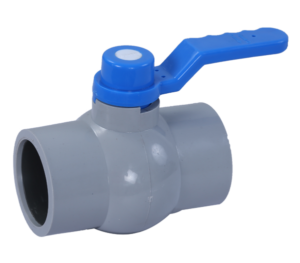
Choosing the wrong PVC ball valve size is one of the most common — and costly — mistakes made in plumbing, irrigation, and industrial piping systems. A valve that is even one size too small can choke flow, spike system pressure, and force pumps to work harder than they were designed to. One that is too large creates slack in flow control, wastes energy, and adds unnecessary cost. Yet most buyers still select PVC ball valves based on guesswork, matching sizes visually or simply ordering the same size as the previous installation — without accounting for changes in flow rate, pipe material, or operating pressure. This guide is designed to change that. Whether you are specifying valves for an agricultural drip irrigation layout, a chemical processing line, a residential water supply system, or an industrial fluid network, you will find everything you need here — from DN sizing standards and bore-to-pipe matching to pressure ratings, material grades, and application-specific recommendations. By the end of this guide, you will know exactly how to calculate, compare, and confirm the right PVC ball valve size for your system — and avoid the performance failures that come from getting it wrong.
Table of Contents
ToggleWhy Getting PVC Ball Valve Size Right Actually Matters
The Real Cost of a Mismatched Valve
Most people treat PVC ball valve sizing as a simple matching task — if the pipe is 25mm, the valve should be 25mm. That logic is not entirely wrong, but it is dangerously incomplete. Valve sizing in a real fluid system involves far more than matching a number on the pipe end.
When a PVC ball valve is undersized relative to the actual flow demand of the system, the fluid accelerates through a narrower passage. This creates what engineers call a pressure drop — a reduction in downstream pressure that undermines system performance. In a drip irrigation network, this means uneven water distribution across zones. In a chemical dosing line, it means inconsistent concentration delivery. In a municipal water supply branch, it can mean inadequate pressure at endpoint fixtures.
Oversizing creates a different class of problem. A valve that is significantly larger than needed for the flow rate loses precision in control. The ball cannot be adjusted to fine throttle positions reliably, flow becomes turbulent even at moderate openings, and the valve is more likely to be operated in a partially-open position for extended periods — which accelerates wear on PTFE seats and shortens operational life.
Pressure-Related Failures Caused by Wrong Sizing
PVC as a material has well-defined pressure-temperature relationships. At 25°C, a standard PVC ball valve rated at 10 bar (1.0 MPa) will perform exactly as rated — but only when the flow velocity through it is within design parameters. A severely undersized valve in a high-flow system can create localised turbulence and velocity-induced pressure spikes that exceed the valve’s pressure rating at point of operation, even when system-level pressure is nominally within spec.
This is particularly relevant in agricultural pumping systems where pressure surges during start-up are common, and in industrial lines where flow rates vary significantly across operating cycles.
Industry Data Supporting Correct Valve Sizing
According to the Hydraulic Institute and widely accepted fluid handling standards, improper valve sizing accounts for a significant proportion of premature valve failures in plastic piping systems. Valves operating at less than 20% or more than 80% of their rated flow capacity consistently show accelerated seat wear, increased leakage rates over time, and higher rates of seal degradation.
Getting the size right from the start does not just affect performance — it directly impacts maintenance frequency, system reliability, and total cost of ownership over the valve’s operational life.
Understanding PVC Ball Valve Sizing — The Complete Technical Breakdown
The Difference Between Pipe Size and Valve Size
This is one of the most misunderstood aspects of valve selection. A “25mm PVC ball valve” does not necessarily mean the valve has a 25mm internal bore. What it typically means is that the valve is designed to connect to a 25mm nominal pipe — but the internal port diameter may differ depending on the valve design:
- Full Port (Full Bore) Design: The internal ball opening matches or closely approximates the pipe’s internal diameter. Flow resistance is minimal and pressure drop is low. Recommended for systems where full, unrestricted flow is critical.
- Reduced Port (Standard Bore) Design: The ball opening is one size smaller than the connecting pipe. This creates some restriction but is acceptable in systems where precise flow throttling is the priority or where flow rates are consistently below pipe capacity.
For most agricultural and water supply applications, full port PVC ball valves are the preferred choice because they maintain flow consistency and resist debris accumulation.
DN (Nominal Diameter) and BSP/NPT Thread Standards
PVC ball valves are globally sized using two primary measurement systems:
| DN Size | Approx. Pipe OD | Typical Application |
|---|---|---|
|
DN 15 |
15mm (1/2″ equiv.) |
Residential water lines, household plumbing |
|
DN 20 |
20mm (3/4″ equiv.) |
Small irrigation branches, garden taps |
|
DN 25 |
25mm (1″ equiv.) |
Agricultural submain lines, light industrial |
|
DN 32 |
32mm (1.25″ equiv.) |
Medium flow agricultural, commercial plumbing |
|
DN 40 |
40mm (1.5″ equiv.) |
Industrial flow lines, irrigation mains |
|
DN 50 |
50mm (2″ equiv.) |
High-volume irrigation headers, industrial piping |
|
DN 63 |
63mm (2.5″ equiv.) |
Municipal supply branches |
|
DN 75 |
75mm (3″ equiv.) |
Main supply headers, industrial process lines |
|
DN 90 |
90mm (3.5″ equiv.) |
Large-scale agricultural mains |
|
DN 110 |
110mm (4″ equiv.) |
Primary distribution mains, heavy industrial |
BSP (British Standard Pipe) Thread — Common in Indian Market: BSP thread sizes (1/2″, 3/4″, 1″, 1.25″, 1.5″, 2″) remain the most common specification in India for both agricultural and plumbing installations. When ordering, confirm whether the connection is BSP, NPT (American standard), or metric plain end (socket / butt fusion type).
Pressure Rating and Its Relationship to Size
Pressure rating (PN rating) is expressed in bar or kg/cm² and indicates the maximum working pressure the valve can sustain at 20°C with water. As pipe diameter increases, maintaining the same pressure rating typically requires thicker walls and reinforced construction:
| Size Range | Common PN Rating | Max Working Pressure |
|---|---|---|
|
DN 15 – DN 32 |
PN 10 – PN 16 |
10–16 bar at 20°C |
|
DN 40 – DN 63 |
PN 10 |
10 bar at 20°C |
|
DN 75 – DN 110 |
PN 6 – PN 10 |
6–10 bar at 20°C |
Important Note: PVC pressure ratings decrease with increasing temperature. At 40°C, the working pressure capacity is approximately 75% of the 20°C rating. At 60°C, it drops to around 50%. Always derate for elevated-temperature applications.
Flow Rate (Cv/Kv Value) and Why It Matters for Sizing
The Cv value (flow coefficient) of a valve expresses how much flow (in US gallons per minute) passes through the fully-open valve at a pressure drop of 1 psi. The Kv value is the metric equivalent (m³/hour at 1 bar pressure drop).
For correct sizing, the required Cv must be calculated based on actual system flow demand. A valve with a Cv lower than system demand creates unacceptable pressure drop. A valve with a significantly higher Cv than needed reduces control precision.
Quick Formula: Cv = Q × √(SG / ΔP) | Q = flow rate (GPM), SG = specific gravity, ΔP = pressure drop (PSI)
For most water and irrigation applications, selecting a PVC ball valve one standard size up from the theoretical minimum Cv provides an appropriate design margin without sacrificing control quality.
How to Choose the Right PVC Ball Valve Size — Step by Step
Correct valve sizing follows a structured process. Skipping any step introduces risk of either undersizing or oversizing. Follow these steps in sequence for every new valve specification.
Step 1: Identify Your Pipe Nominal Diameter and Schedule
Start at the pipe. Note the nominal diameter (in DN metric or BSP inch size) and the pipe schedule or class (e.g., Class 4, Class 6, Schedule 40, Schedule 80 for PVC pipes). Different pipe schedules have different internal bore diameters even at the same nominal size — your valve must match the actual flow bore, not just the nominal pipe label.
Step 2: Calculate or Confirm Your Required Flow Rate
Determine the maximum flow rate the system will demand through this valve position. For irrigation systems, this is typically calculated based on emitter output multiplied by the number of emitters per zone. For industrial systems, refer to process flow diagrams (PFDs). Express this in litres per minute (LPM) or cubic metres per hour (m³/h).
Step 3: Determine Operating Pressure and Pressure Drop Budget
Identify the upstream supply pressure (pump delivery pressure or header pressure) and the minimum acceptable downstream pressure. The difference is your available pressure drop budget for all fittings, pipe friction, and valves combined. Typically, a ball valve in the fully open position should consume no more than 5–10% of your total pressure budget.
Step 4: Select Full Port or Reduced Port
- Use full port when: flow efficiency is critical, the fluid carries suspended solids, or the line is used for pigging/cleaning operations.
- Use reduced port when: fine flow throttling is needed, system pressure is high and a controlled restriction is desirable, or installation space is tight.
Step 5: Verify End Connection Type
Confirm whether you need:
- Threaded BSP/NPT — for connecting to threaded fittings or pipe nipples
- Socket (slip) end — for solvent-welded PVC pipe systems
- Flanged end — for large diameter industrial lines, DN 50 and above
- Union end — for applications requiring easy in-line removal without disturbing the pipe, particularly valuable in filter stations and chemical injection points
Step 6: Check Temperature and Chemical Compatibility
Standard PVC ball valves handle water, mild acids, and alkalis well — but for aggressive chemicals, confirm chemical compatibility of both the PVC body and the PTFE seat material. For hot water above 60°C, switch to CPVC. For concentrated oxidising acids or solvents, consult manufacturer specifications.
Step 7: Apply a Safety Factor
After calculating the theoretically correct size, apply a standard safety factor:
- Add one nominal size up if the system experiences pressure surges or water hammer.
- Add one nominal size up if the fluid contains any particulate content above 50 microns without upstream filtration.
- Select a higher PN rating if actual pressure is within 85% or more of the valve’s maximum rated pressure.
Common Sizing Mistakes to Avoid
- Matching valve size to pump outlet size — pump outlet diameter is often smaller than the optimal pipe and valve size; always size to flow demand, not to the pump port.
- Ignoring temperature derating — a valve rated for 10 bar at 20°C is only rated for ~7.5 bar at 40°C; especially relevant in outdoor agricultural and industrial installations in hot climates.
- Using reduced port valves on mainline headers — creates excessive turbulence and noise, and accelerates seat wear.
- Over-relying on visual size matching — always confirm internal bore, not just external connection diameter.
Ashok Polymers PVC Ball Valves — Precision-Engineered Across Every Size
When you need a PVC ball valve that delivers the right size, the right pressure rating, and the right connection type for your system, Ashok Polymers offers a comprehensive product range designed for exactly that purpose.
Manufactured in Ahmedabad, Gujarat — one of India’s leading industrial polymer production centres — Ashok Polymers’ PVC and UPVC ball valves are built to serve the full spectrum of applications: agricultural irrigation, residential plumbing, municipal water distribution, and light-to-medium industrial flow control.
The range includes:
- Agriculture PVC Ball Valves — Available in standard BSP sizes for direct connection to agricultural piping networks, with reinforced handles designed for frequent manual operation in field conditions.
- UPVC Ball Valves — Available in short handle and long handle MS plate configurations, covering sizes from DN 15 to DN 110, suitable for higher-pressure water supply and distribution systems.
- CPVC Ball Valves — For hot water and mildly elevated-temperature applications where standard PVC reaches its derating threshold.
- Union Ball Valves — For systems where in-line serviceability is a priority, with union ends that allow valve removal without cutting the pipe.
- PP (Polypropylene) UPVC Ball Valves — For chemical handling environments where standard PVC’s chemical resistance profile is insufficient.
Every Ashok Polymers ball valve is manufactured with full-bore port design as standard on agricultural and water supply grades, ensuring minimum flow restriction across the system. PTFE seats provide low-torque operation and long-term sealing integrity even with repeated open-close cycling.
If you are currently specifying PVC ball valves for a new installation or replacing existing valves in an operating system, explore the complete Ashok Polymers product range at ashokpolymers.com/products and connect with the technical team to confirm the right size, material grade, and connection configuration for your specific system requirements.
Frequently Asked Questions (FAQs)
PVC ball valves manufactured and sold in India commonly range from DN 15 (1/2 inch BSP) to DN 110 (4 inch). The most frequently used sizes in agricultural irrigation are DN 20 to DN 50, while residential plumbing typically uses DN 15 to DN 32. Larger DN 63 to DN 110 sizes are used in industrial and municipal distribution systems. BSP thread connection remains the most common standard across Indian manufacturers, though socket-end variants are also widely available.
A full port valve has a ball opening that closely matches the pipe’s internal bore, providing maximum flow with minimal pressure loss. Choose full port for mainline headers, irrigation submains, and any system where flow efficiency is critical. A reduced port valve has a smaller internal opening, which creates some flow restriction but improves control precision. Choose reduced port for secondary branch lines, throttling applications, or where installation cost savings justify a slight pressure drop. For most agricultural and general plumbing applications in India, full port is the standard recommendation.
Not necessarily. While the nominal size may be the same, the material grade matters significantly. Standard PVC (uPVC) is suitable for water, dilute acids, and mild alkalis. For more aggressive chemicals such as concentrated acids, chlorine solutions, or organic solvents, the chemical resistance of the PVC body and the PTFE seats must be verified against a chemical compatibility chart. For hot or warm chemical fluids, CPVC offers higher temperature resistance. Always check both the body material and the seat/seal material against your specific fluid.
Standard PVC ball valves in the DN 15 to DN 32 range are commonly rated at PN 10 to PN 16 (10 to 16 bar at 20°C). Larger sizes (DN 50 and above) are typically rated at PN 6 to PN 10. These ratings apply at 20°C and must be derated for higher temperatures — at 40°C, the working pressure rating is approximately 75% of the 20°C value. Always select a valve with a pressure rating at least 20–25% above the actual maximum operating pressure of your system to maintain a safety margin.
The thread standard affects the connection compatibility but not the nominal valve size directly. BSP (British Standard Pipe) threads are the dominant standard in India and most of Asia, while NPT (National Pipe Thread) is common in North American projects. Both standards use similar nominal size designations (1/2″, 1″, 2″ etc.) but the thread pitch and taper angle differ, making them incompatible without adapters. When ordering, always confirm the thread standard required by your piping system to avoid installation complications.
Pipe class (Class 3, Class 4, Class 6 in Indian standards, or Schedule 40/80 internationally) determines the wall thickness and therefore the internal bore of the pipe at any given nominal size. A DN 32 Class 4 pipe has a different internal diameter than a DN 32 Class 6 pipe. Because ball valve port size is typically designed to match a standard internal bore, using a valve with a mismatched port on a heavy-wall pipe results in a step change that creates turbulence and flow restriction. Confirm the pipe class and select the valve port size to match the actual pipe bore.
For a typical agricultural drip irrigation system in India, submain lines carrying flow to individual drip zones are commonly sized at DN 25 to DN 40 (1 inch to 1.5 inch BSP). The ball valves controlling these zones should match the submain pipe diameter and be full port design. Header supply lines feeding multiple zones typically use DN 50 to DN 75 (2 to 3 inch) valves. Field lateral cock valves on drip laterals are usually DN 12 to DN 16. The precise size depends on the number of emitters per zone — always calculate required flow and confirm against the valve’s Kv rating before ordering.
Conclusion
Selecting the right PVC ball valve size is not about finding a number that matches your pipe label — it is about understanding your system’s actual flow demand, operating pressure, fluid type, connection standard, and temperature conditions, and then applying that data to a structured valve selection process.
An undersized valve throttles your system and creates pressure problems. An oversized valve wastes material and reduces control quality. The correct size, properly specified, delivers consistent flow control, long operational life, and a piping system that performs exactly as designed.
Ashok Polymers manufactures PVC, UPVC, and CPVC ball valves across the full size range required for agricultural, plumbing, and industrial applications — with full bore designs, PTFE seats, and a range of end connection options to match any piping system.
 Previous Post
 Next Post